
Monogrammed French Celluloid-Handled Steel Button Hook (M monogram set 1 of 3)
Object/Artifact
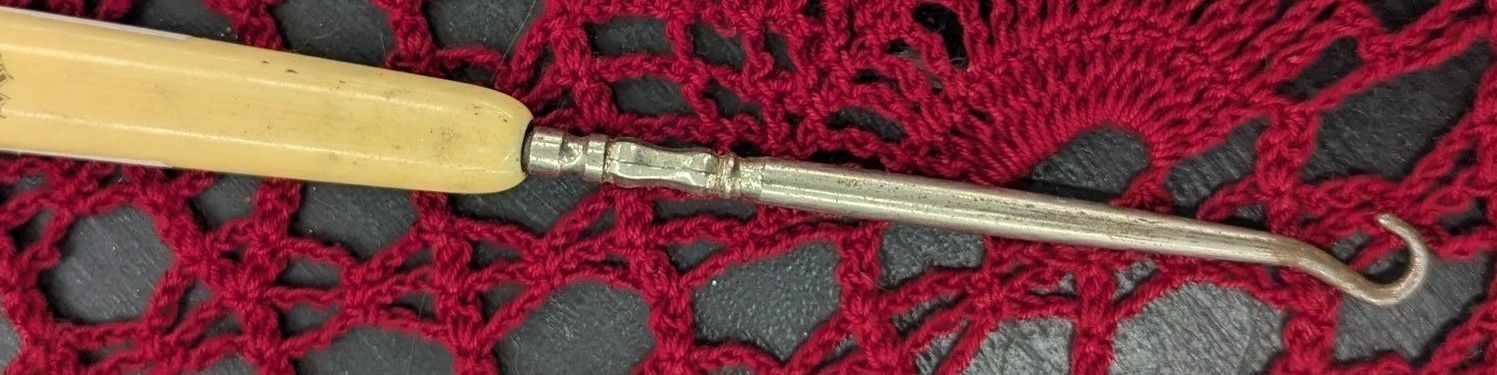
Late Victorian to early Edwardian button hook featuring a cream celluloid handle and steel hook shaft, used for fastening gloves and buttoned boots.
Button Hook (Personal Grooming / Dressing Tool)
circa 1890 – circa 1915
Victorian
Edwardian
France
Mass-produced personal accessory for the middle-class market
Button hooks were indispensable accessories during the late 19th and early 20th centuries, when footwear and gloves often featured long rows of closely spaced buttons. The introduction of mass-produced celluloid handles reflects industrial innovation and the democratization of fashionable dress. Once zippers and elastic closures became common after World War I, button hooks rapidly declined in daily use. Button hooks were essential dressing tools used to fasten: High-button leather boots Spats Gloves Bodices and undergarments The hook passed through a buttonhole to pull the button into place — especially useful when garments fit tightly.
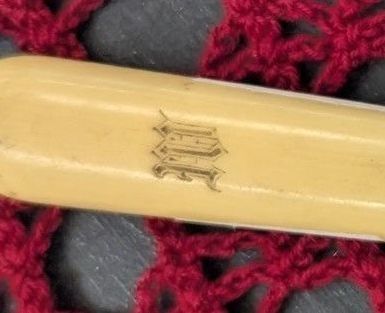
Stamp on bottom of Hair Receiver in this set says “France” M monogram on handle
Method of Manufacture Machine-formed steel shaft Forged or stamped hook end Molded celluloid handle (early thermoplastic) Press-fit or threaded attachment between shaft and handle Celluloid was one of the earliest synthetic plastics, widely used from the 1870s through the early 20th century as an ivory substitute. Materials Steel Celluloid (imitation ivory)
Ivory
Very Good
Mar 2, 2026
Minor surface wear to handle consistent with age Light oxidation visible on steel shaft No visible structural damage
Historical Note
This button hook, dating from approximately 1890 to 1915, illustrates the practical tools required to navigate the highly structured garments of the late Victorian and Edwardian eras. The cream-colored celluloid handle imitates carved ivory, reflecting both technological innovation and shifting material culture. The steel hook was designed to grasp and pull small buttons through tight buttonholes, particularly in women’s high-button boots and gloves. Such tools were common fixtures on dressing tables and in travel cases, emblematic of a period when personal attire required patience, precision, and assistance.