
Edwardian Handmade Lace & Embroidered Linen Table Centerpiece
Textile
An oval decorative linen centerpiece featuring hand-applied floral lace borders and embroidered silk floral motifs with drawnwork inserts, typical of refined domestic table linens of the early 20th century.
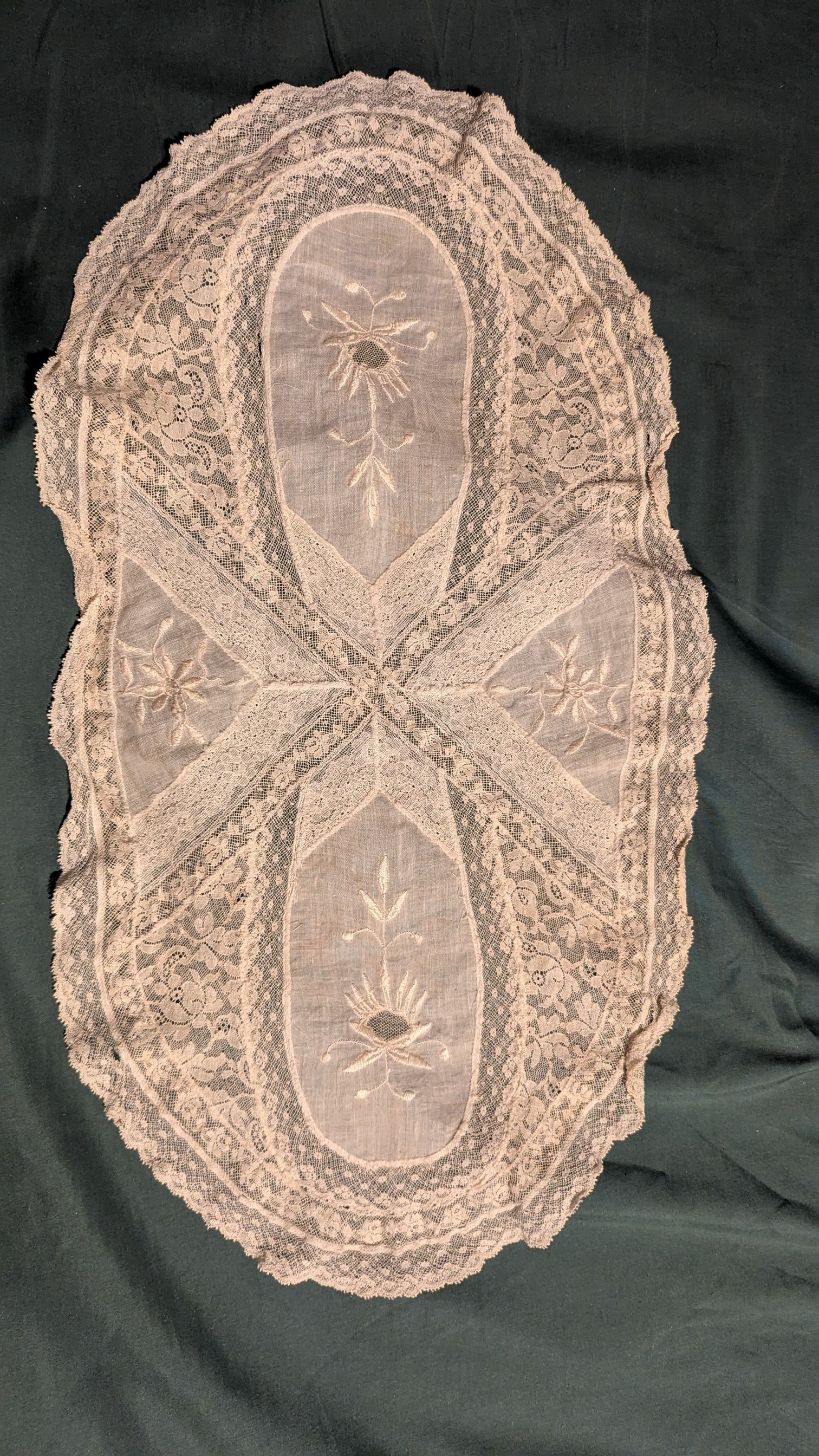
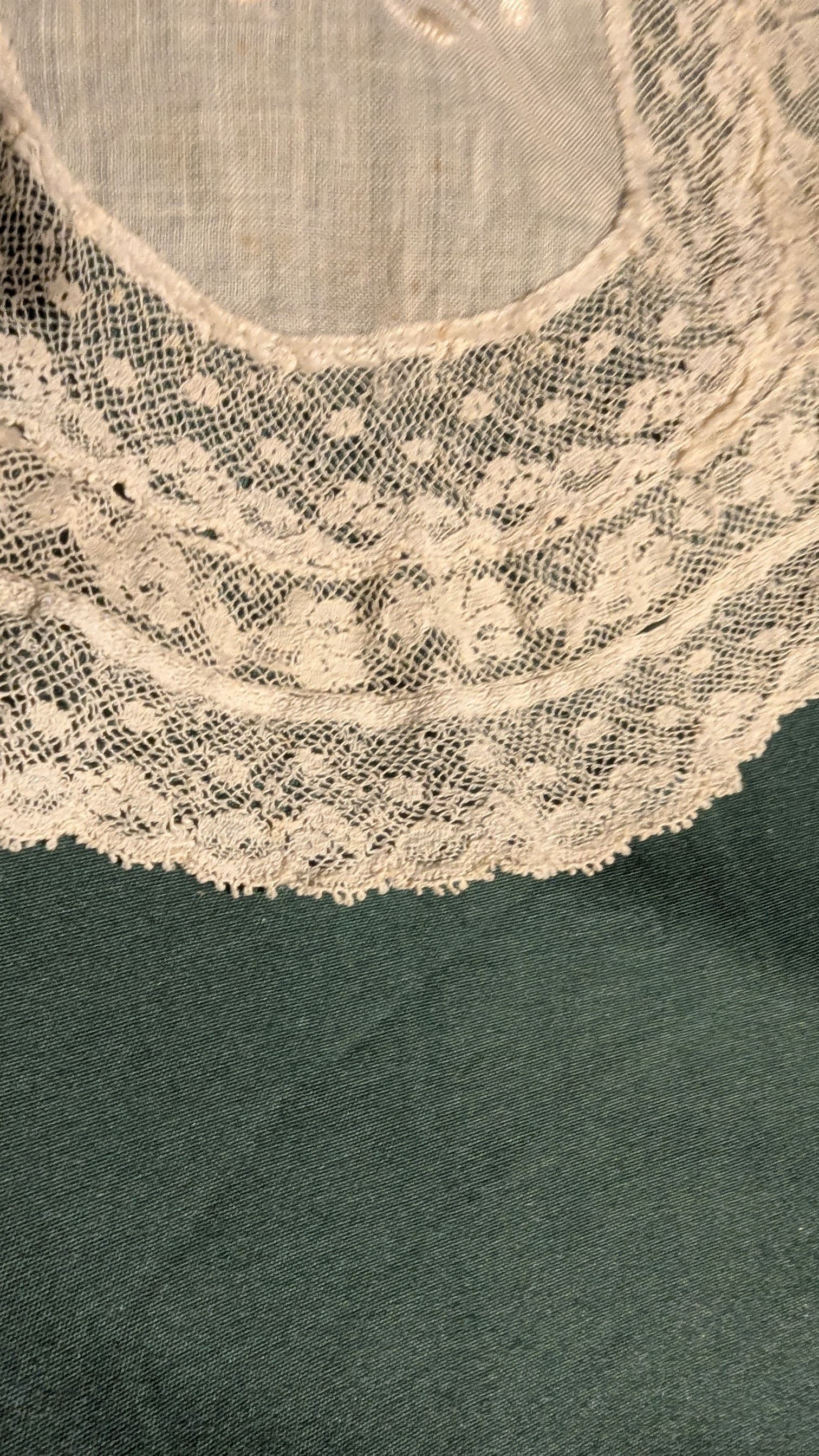
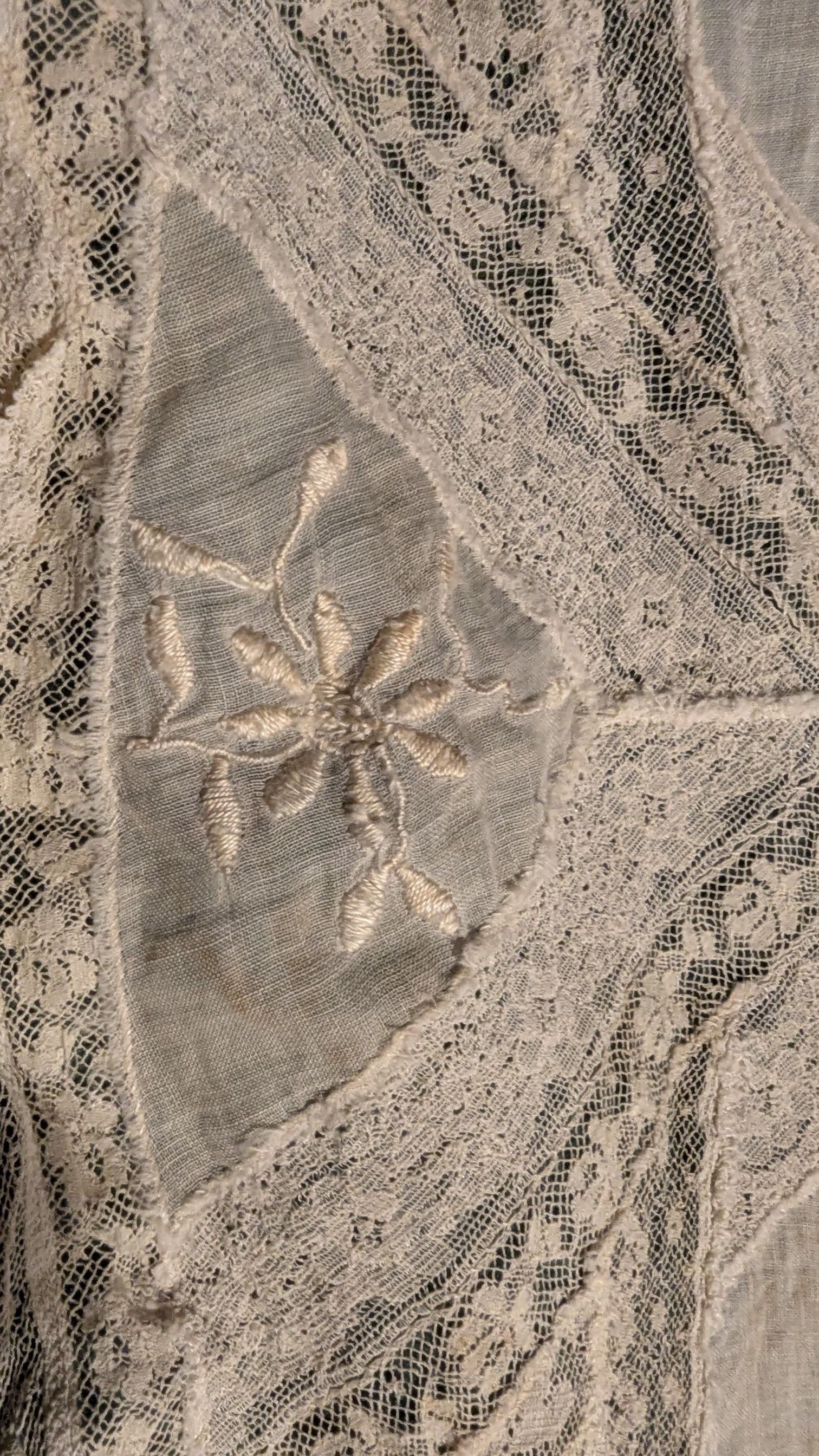
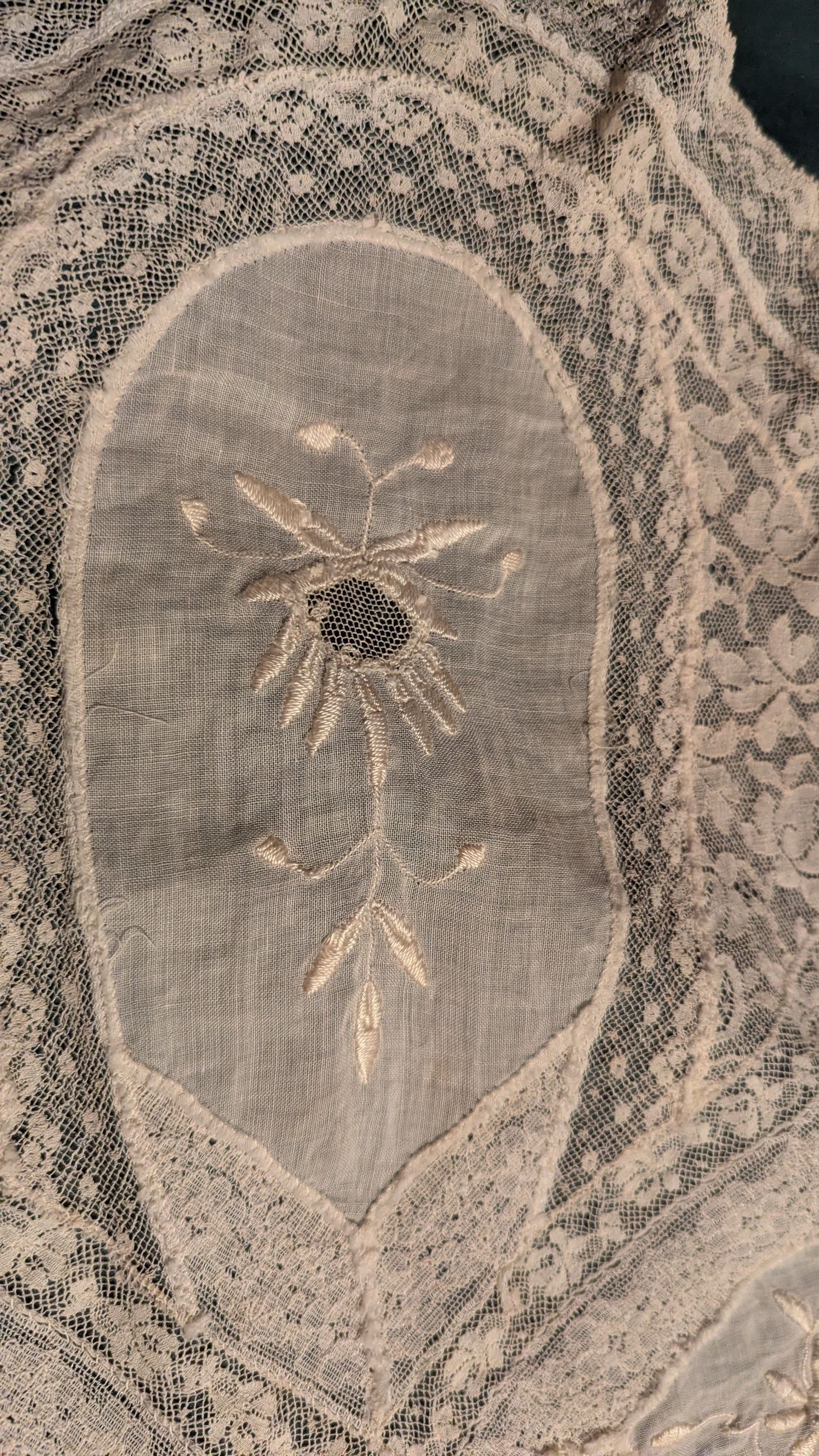
Table Cloth
Decorative domestic linen — table centerpiece or dresser scarf
circa 1895 – circa 1915
Edwardian
Western Europe
Europe
Likely Western Europe (possibly France or Belgium); similar examples also produced in fine American domestic needlework workshops.
During the late 19th and early 20th centuries, fine household linens were an important marker of refinement and domestic accomplishment. Middle- and upper-class households displayed elaborate lace centerpieces on parlor tables, sideboards, and bedroom dressers. This example reflects the transition from heavier Victorian ornamentation to lighter Edwardian elegance. The airy lace grounds, oval medallions, and restrained floral embroidery are characteristic of the period’s preference for delicacy and luminosity in interior décor. The combination of techniques suggests it was either: • produced in a skilled domestic needlework setting • assembled from purchased lace yardage and hand-embroidered linen panels • possibly part of a bridal trousseau set
Represents European-influenced domestic decorative arts traditions emphasizing skilled feminine needlework, household display, and textile refinement as symbols of taste and social standing.
Linen
The central panels appear to be fine handwoven linen, identifiable by slight irregularities in weave density. The lace shows characteristics of handmade bobbin lace rather than machine lace, including: • irregular thread thickness • non-uniform mesh ground • softly raised floral motifs The embroidered motifs appear to use silk thread, giving a subtle sheen typical of Edwardian decorative linens.
White
Slight Ivory hue, possibly due to age.
Very Good
Mar 6, 2026
Good antique condition. Observed issues include: • minor age toning to linen panels • slight fraying along lace edges • small stress areas at join points • gentle distortion from laundering and age No major structural damage visible.
This oval decorative centerpiece exemplifies the refined textile aesthetics of the late Victorian and Edwardian domestic interior. Constructed from fine linen panels joined by intricate lace insertions, the piece balances structural geometry with delicate ornamentation. The surrounding lace border displays floral and foliate motifs worked in a fine mesh ground, likely handmade using bobbin lace techniques. The lace forms a continuous decorative frame, softening the geometry of the central panels and creating a harmonious interplay between transparency and solid textile surfaces. Each linen medallion contains raised floral embroidery executed in lustrous silk thread. The floral motifs are stylized yet naturalistic, reflecting the era’s preference for botanical themes rendered with restraint and elegance. Small areas of drawnwork add further refinement by removing threads from the linen weave and reinforcing the remaining threads into decorative openwork patterns. The construction technique — combining lace appliqué, embroidered linen, and drawnwork — reflects the skilled needle traditions associated with European domestic craftsmanship and the decorative arts education popular among middle-class women during the period. Such textiles served both aesthetic and social functions. Displayed prominently on tables and dressers, they demonstrated refinement, cleanliness, and the domestic accomplishments of the household. Pieces of this quality were frequently included in bridal trousseaux and preserved as heirlooms. Today, this textile survives as a delicate example of early 20th-century decorative needlework, illustrating the intersection of utility, artistry, and domestic cultural identity.