
German Portrait Cabinet Plate with Art Nouveau Green Ground and Gilt Decoration
Ceramic
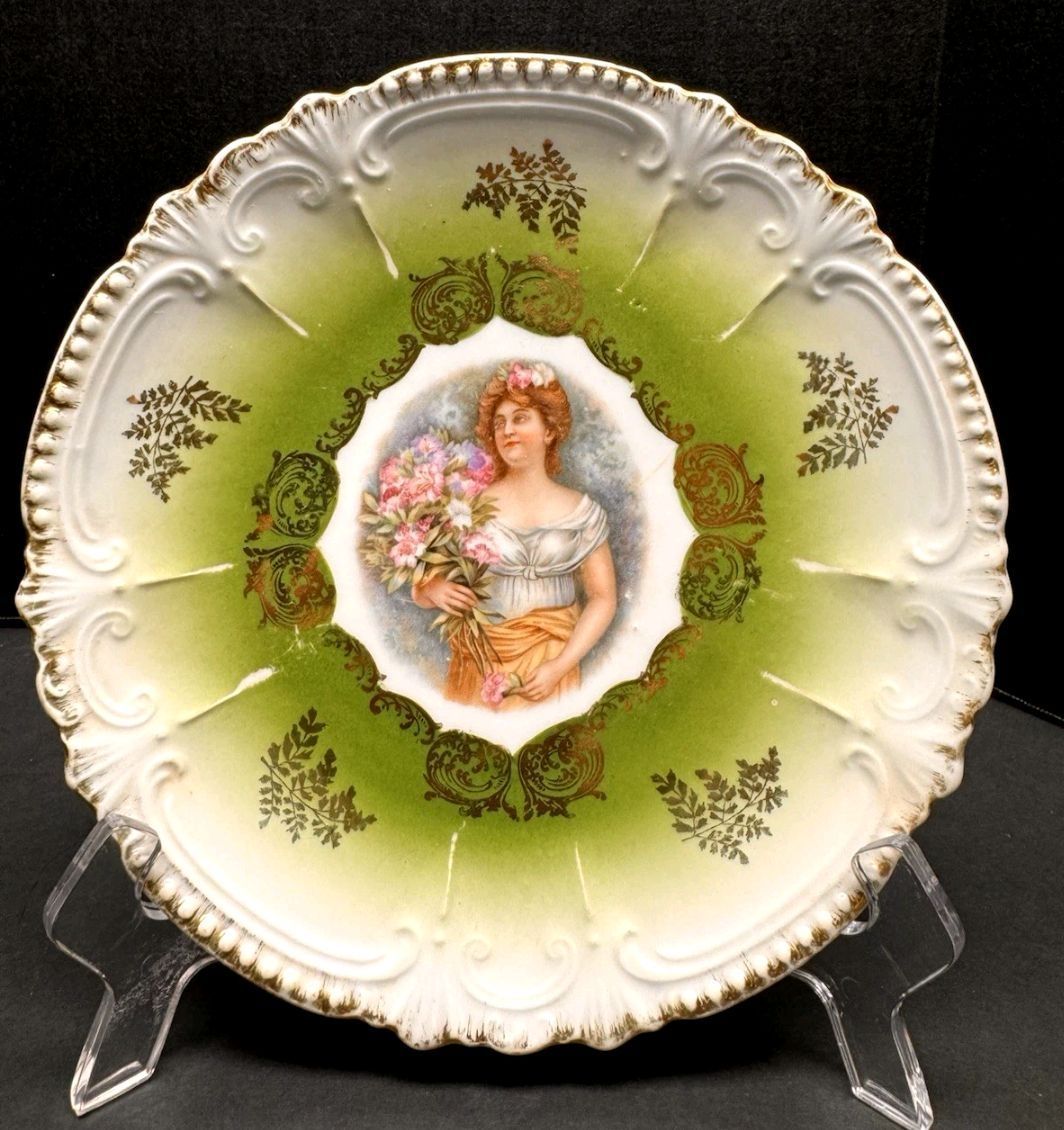
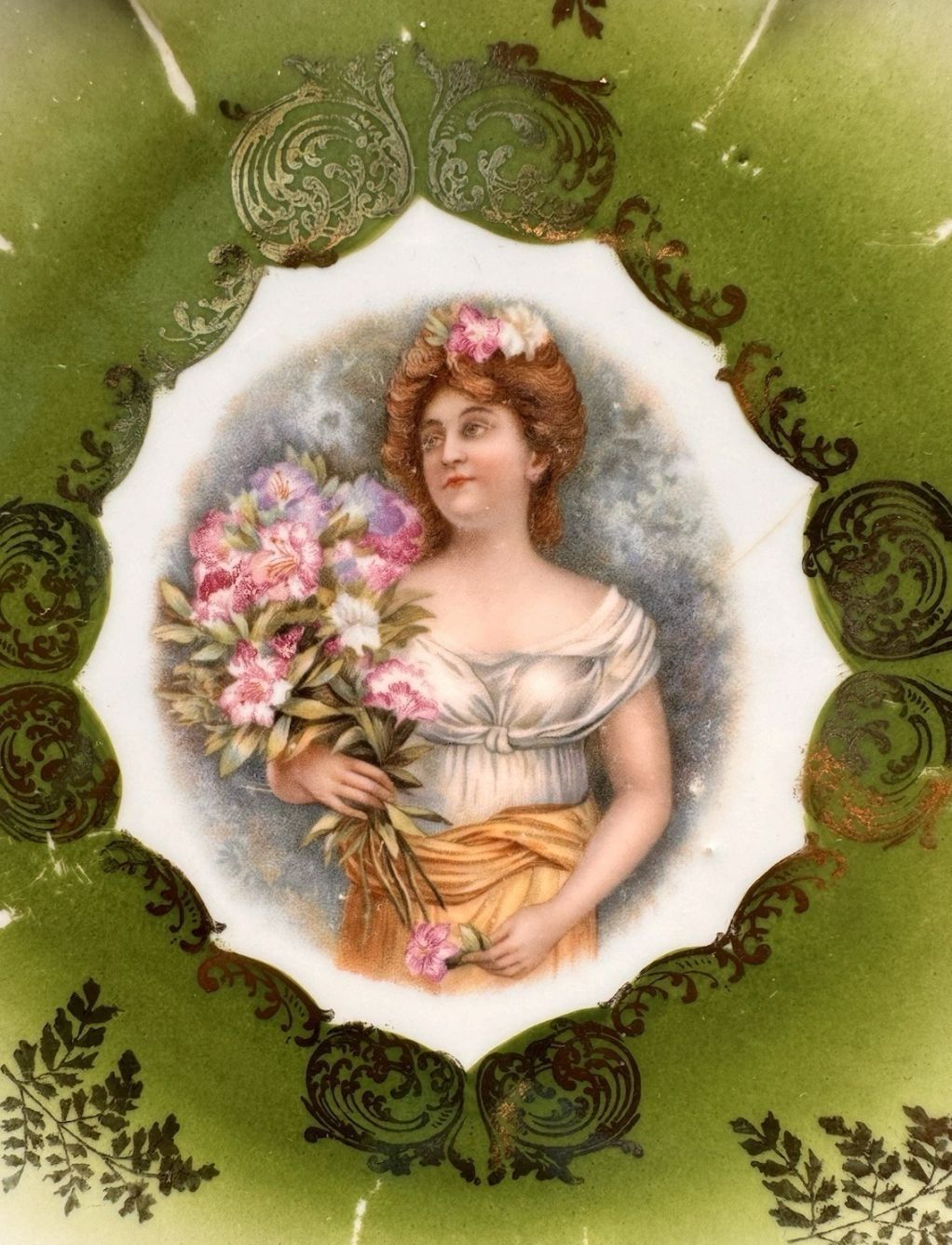
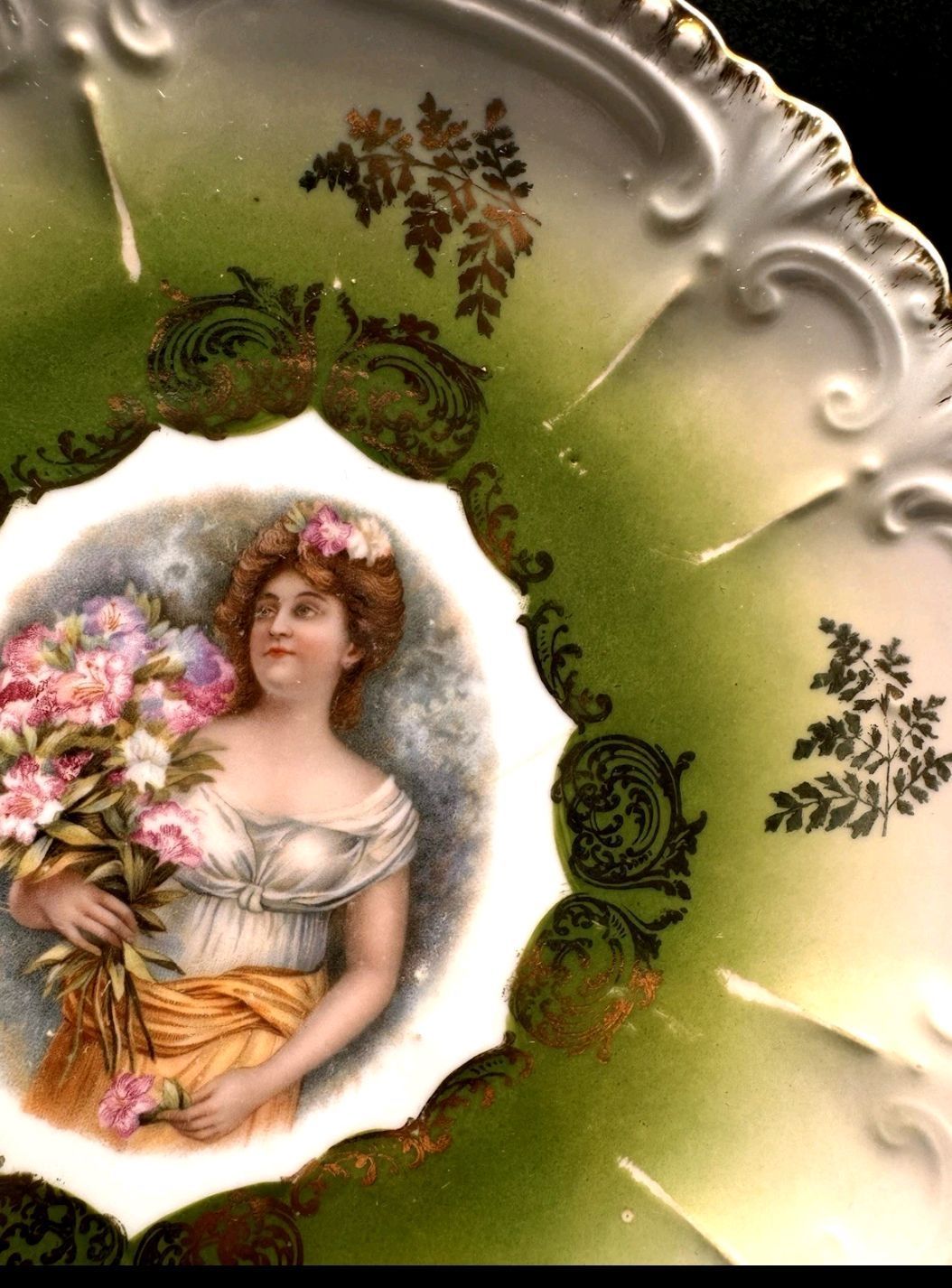
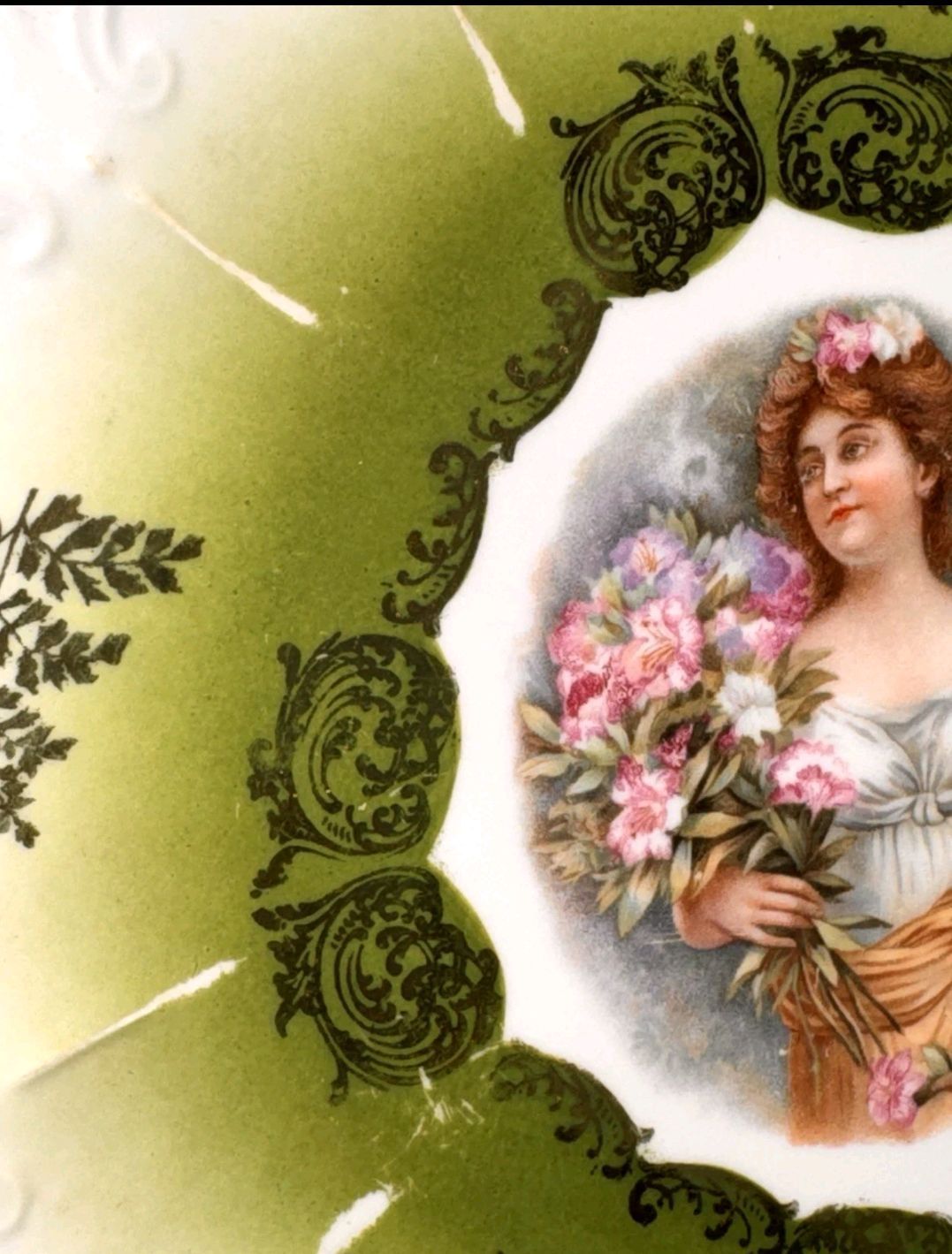
Turn-of-the-century German porcelain cabinet plate featuring a central portrait of a woman holding flowers, surrounded by green ground, gilt scrollwork, and molded rim detailing.
 German Portrait Cabinet Plate with Art Nouveau Green Ground and Gilt Decoration
 German Portrait Cabinet Plate with Art Nouveau Green Ground and Gilt Decoration – Image 2
 German Portrait Cabinet Plate with Art Nouveau Green Ground and Gilt Decoration – Image 3
 German Portrait Cabinet Plate with Art Nouveau Green Ground and Gilt Decoration – Image 4
 German Portrait Cabinet Plate with Art Nouveau Green Ground and Gilt Decoration – Image 5
 German Portrait Cabinet Plate with Art Nouveau Green Ground and Gilt Decoration – Image 6
Decorative Plate
1890’s
1900’s
Royal Bayreuth (Tettau, Bavaria, Germany)
circa 1895 – circa 1910
Victorian
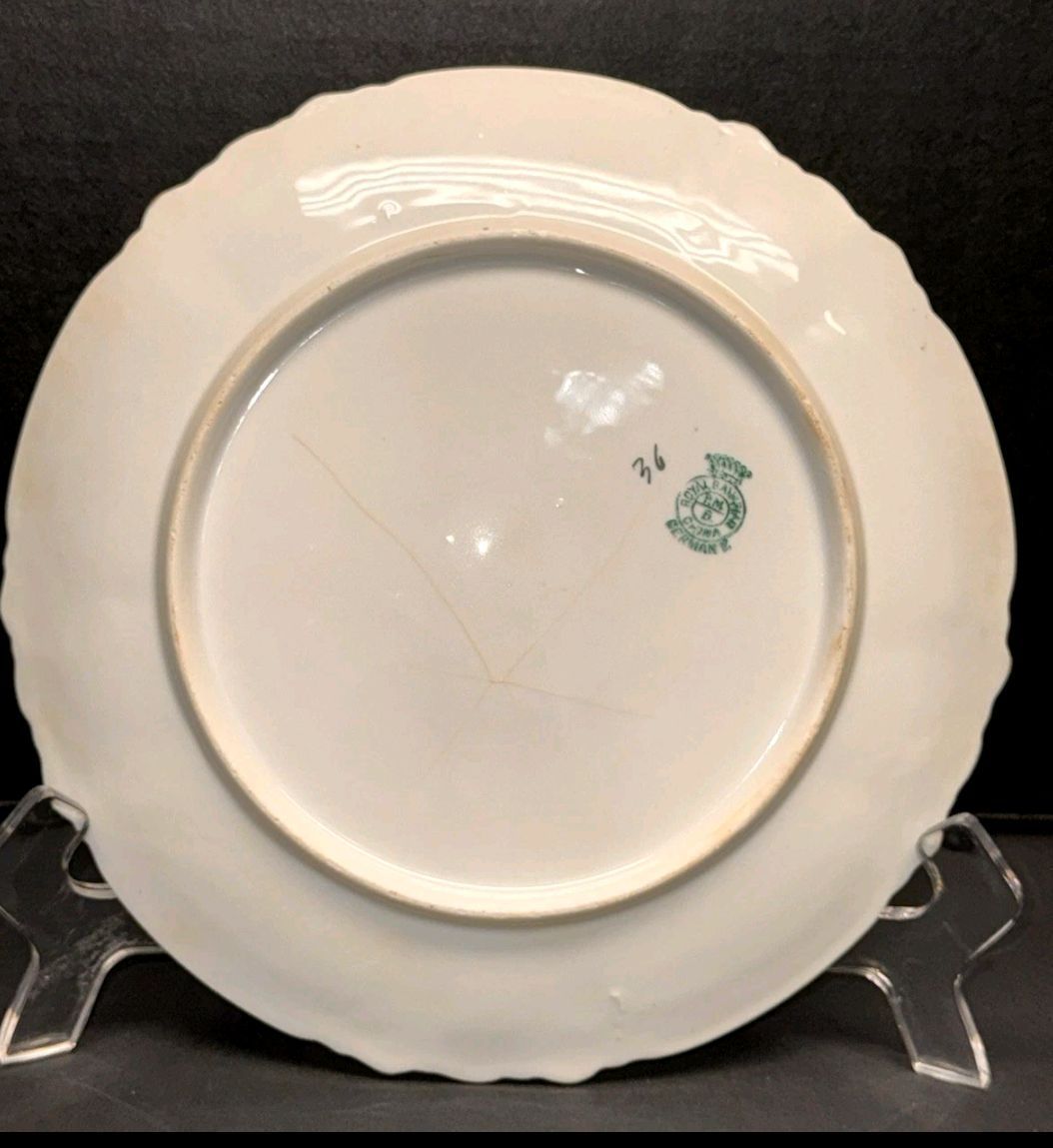
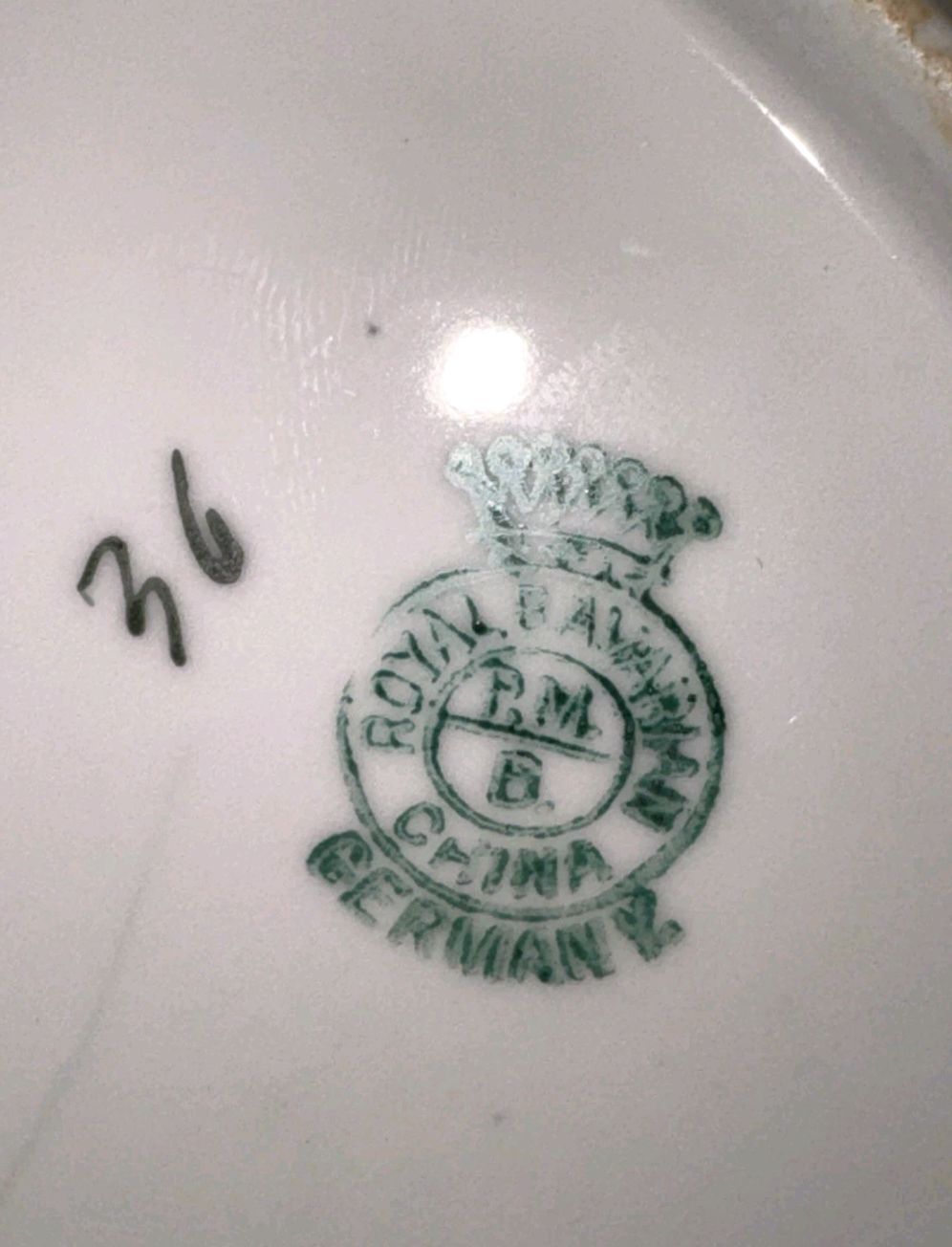
The green backstamp indicates: Royal Bayreuth (Tettau, Bavaria, Germany) The crowned circular mark with “Bavaria” and “Royal Bayreuth” is consistent with late 19th–early 20th century production. Royal Bayreuth was: Founded in 1794 Renowned for fine porcelain Particularly active in decorative export wares for the American market around 1890–1915 Materials & Construction Body Hard-paste porcelain Molded and pressed form Raised scrollwork rim with bead edging Decoration Techniques Transfer-printed central portrait (likely chromolithographic transfer) Hand-applied color accents Airbrushed or sponged green ground wash Gilt scroll ornament (likely hand-highlighted) The portrait appears to be a transfer print overglaze, enhanced with hand-painted detail. Design & Iconography Central Image Romanticized female figure Wearing neoclassical draped gown Holding bouquet of pink and white flowers Surrounded by soft vignette background This style of female portrait was common in: Late Victorian sentimental decorative art Belle Époque romantic imagery Export porcelain for American parlors The subject evokes: Idealized femininity Floral symbolism (possibly spring, love, purity) Aesthetic movement influence Border Decoration Olive-green ground Dark green and gilt scroll cartouches Fern-like botanical motifs Molded rococo revival rim The green wash with gilt detailing reflects transitional taste between Victorian Rococo revival and early Art Nouveau.
This plate represents: Middle-class parlor display culture The popularity of decorative cabinet plates in late 19th-century homes German porcelain export trade targeting American consumers Cabinet plates were: Displayed on wall racks or plate stands Symbols of taste and refinement Often purchased as giftware or souvenir pieces The romantic female portrait aligns with Victorian ideals of beauty and domestic sentimentality.
The green backstamp indicates: Royal Bayreuth (Tettau, Bavaria, Germany)
Green
White
Good
Feb 18, 2026
Visible observations: Minor gilt wear along raised rim Light surface scratches No visible major chips from provided images Hairline crack visible on reverse (important structural note) Glaze remains glossy and vibrant Color still strong and even The hairline crack does reduce structural value but does not eliminate display value.
Historical Note
This Royal Bayreuth porcelain cabinet plate, produced in Bavaria circa 1895–1910, features a romantic portrait of a young woman holding a bouquet of flowers within a softly shaded oval reserve. The surrounding field is decorated with a vibrant olive-green ground enhanced by gilt scroll cartouches and botanical motifs. The molded rim displays rococo revival scrollwork with bead edging. Exported during a period when German porcelain dominated decorative tableware markets, such plates were intended for parlor display rather than daily use. The imagery reflects late Victorian sentimental aesthetics transitioning toward Art Nouveau stylization. Despite minor wear and a hairline crack visible on the reverse, the plate retains strong color and decorative impact representative of turn-of-the-century cabinet ware.