
Hand-Painted Nippon Porcelain Hair Receiver with Cobalt and Gilt Decoration
Ceramic
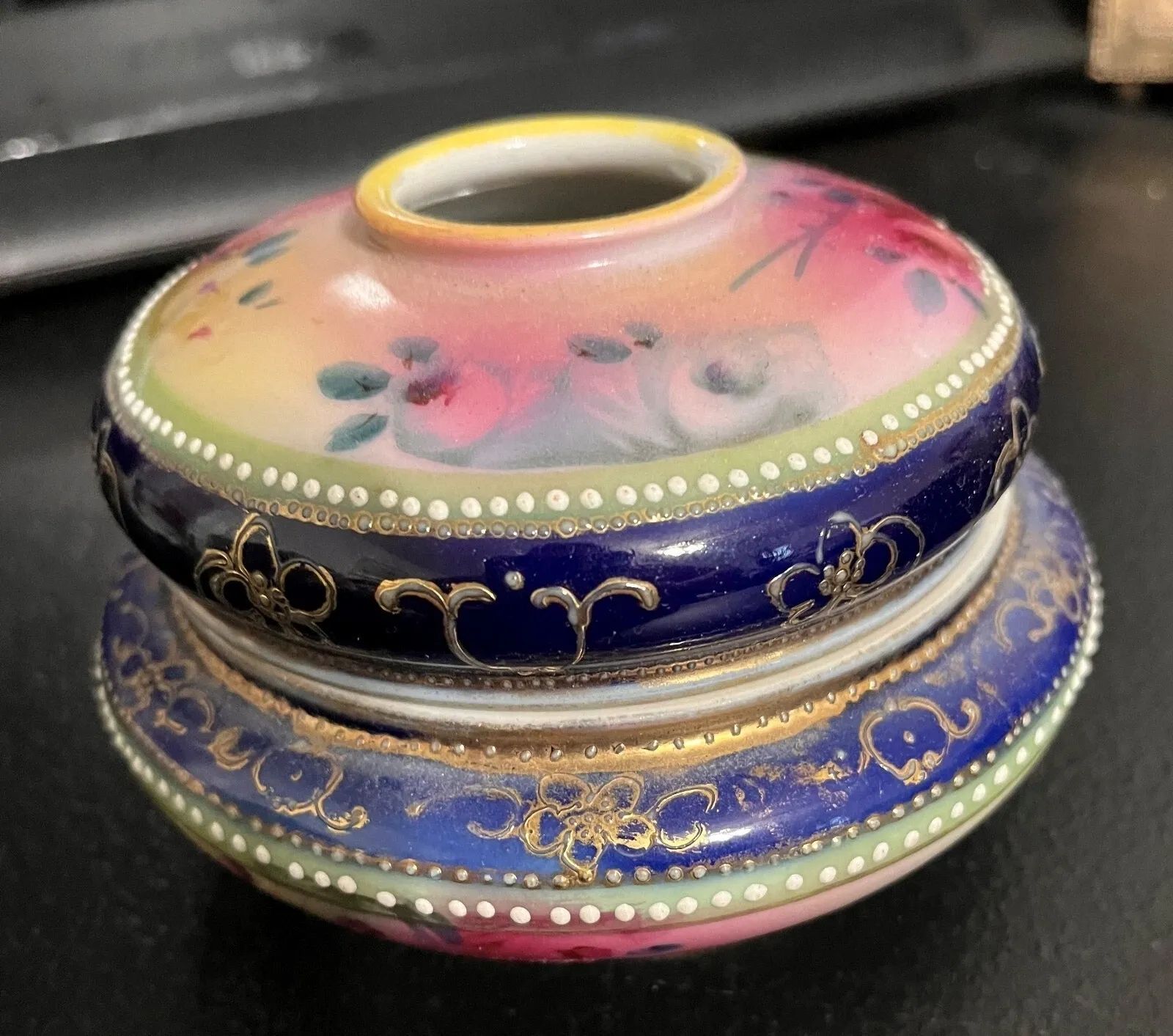
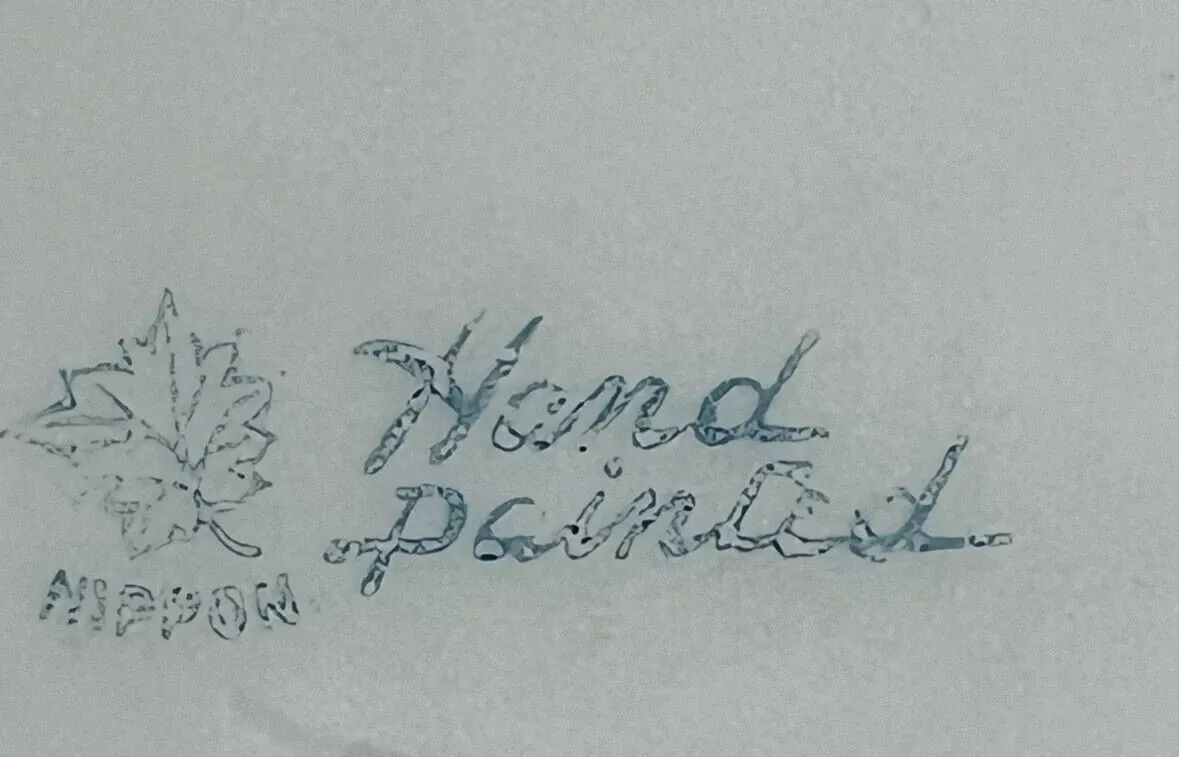
Late Victorian / early Edwardian porcelain hair receiver decorated with hand-painted roses, cobalt enamel banding, raised gilt scrollwork, and white enamel beading. Marked “Hand Painted” and “Nippon” beneath a maple leaf device.
Hair Receiver (Dressing Table Accessory)
circa 1895 – circa 1915
Victorian
Edwardian
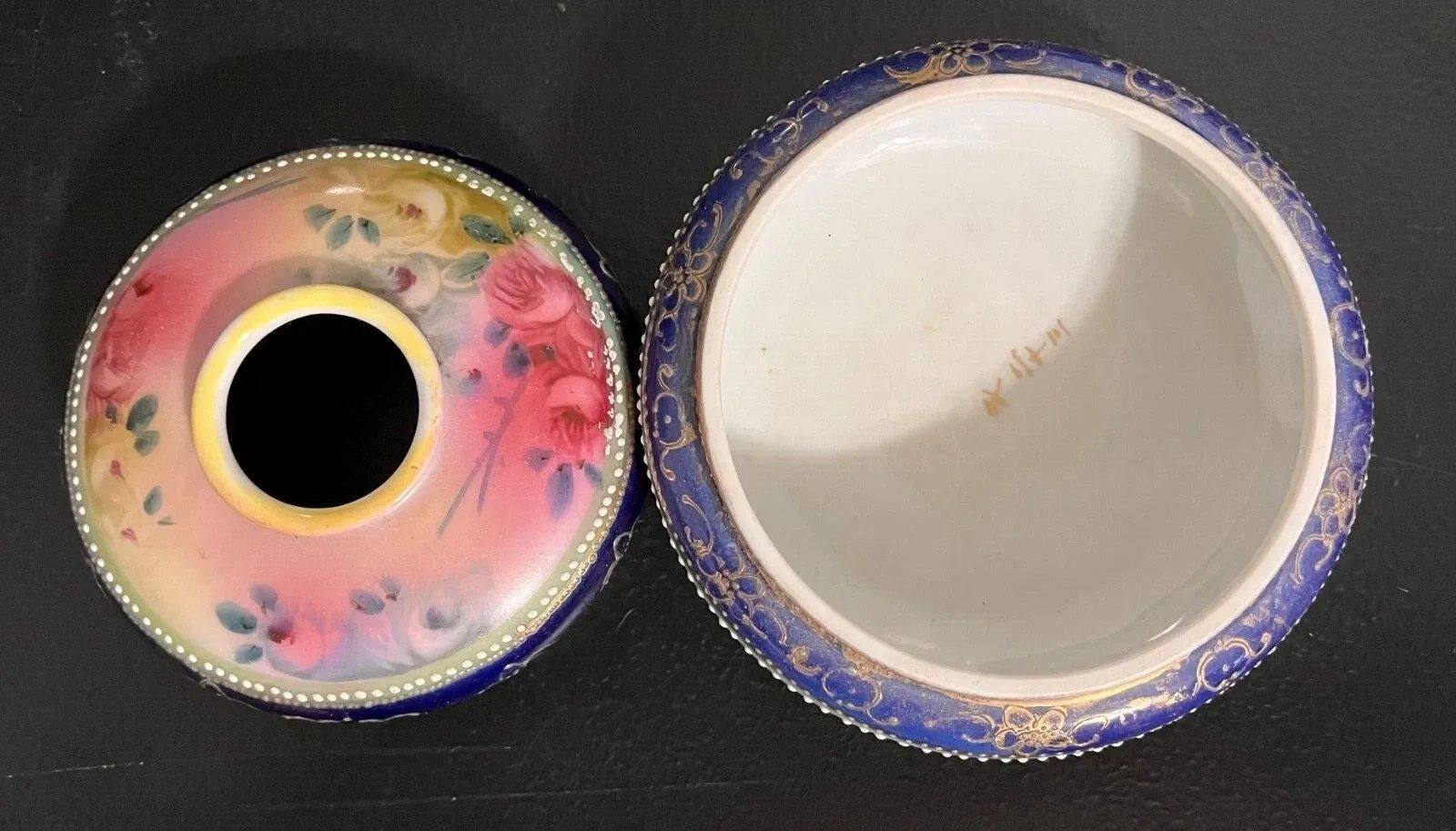
Export porcelain produced in Japan for the American market. Marked “Nippon” (pre-1921 export mark). Decorative Description The rounded, low-profile form features a narrow collar opening and fitted lid. The lid displays softly blended pink and cream shading with hand-painted roses and foliage in an Art Nouveau-influenced style. A deep cobalt band encircles the body, richly embellished with raised gold scroll motifs. White enamel beading outlines the decorative borders, enhancing contrast and dimensionality.
Japanese export porcelain, produced during the height of the Nippon trade period for middle-class American consumers. Hair receivers were integral components of late 19th and early 20th century dressing table sets, reflecting domestic ritual, femininity, and the Victorian practice of conserving hair for reuse in hairstyling and sentimental crafts.
Underside bears a maple leaf style emblem with: “Hand Painted” “Nippon” The “Nippon” designation was required on Japanese exports to the United States between 1891 and 1921, providing reliable dating parameters.
Method of Manufacture Molded fine porcelain body Kiln-fired white porcelain blank Hand-applied overglaze enamel painting Raised gilt scrollwork applied by hand Cobalt enamel banding Enamel dot border decoration The gilding and floral decoration appear hand-painted rather than transfer printed. Materials Porcelain Overglaze enamel Cobalt enamel Gilt (gold decoration)
Blue
Pink
Gold
Very Good
Mar 2, 2026
Light wear to gilt decoration consistent with age Small chip inside lid Interior clean and intact
Private collection, United States.
Historical Note
Function Hair receivers collected loose hair from brushes and combs. The saved hair was used to: Create hair padding (“rats”) for elaborate hairstyles Craft hair jewelry and wreaths Stuff small personal textile items They were typically paired with powder jars, ring trays, hatpin holders, and cologne bottles in coordinated vanity sets. This hand-painted Nippon porcelain hair receiver dates to the late Victorian or early Edwardian period, circa 1895–1915. Produced in Japan for export to the United States, the piece reflects the flourishing transpacific decorative arts trade of the era. The softly shaded blush ground and naturalistic rose motifs reveal Art Nouveau influences, while the cobalt enamel banding and raised gilt scrollwork evoke the ornate tastes of turn-of-the-century domestic interiors. Hair receivers were intimate dressing table objects, used to collect strands removed during daily grooming. The preserved hair could be repurposed into fashionable coiffure supports or sentimental craft objects. Today, such pieces serve as evocative artifacts of Victorian domestic ritual and feminine material culture, illustrating both aesthetic refinement and practical thrift.