
Hand-Painted Nippon Porcelain Hat Pin Holder with Violet Decoration
Ceramic
Hexagonal porcelain hat pin holder decorated with hand-painted violets and gilt accents, produced in Japan for export during the Nippon porcelain period and designed for storing and displaying ladies’ hat pins.
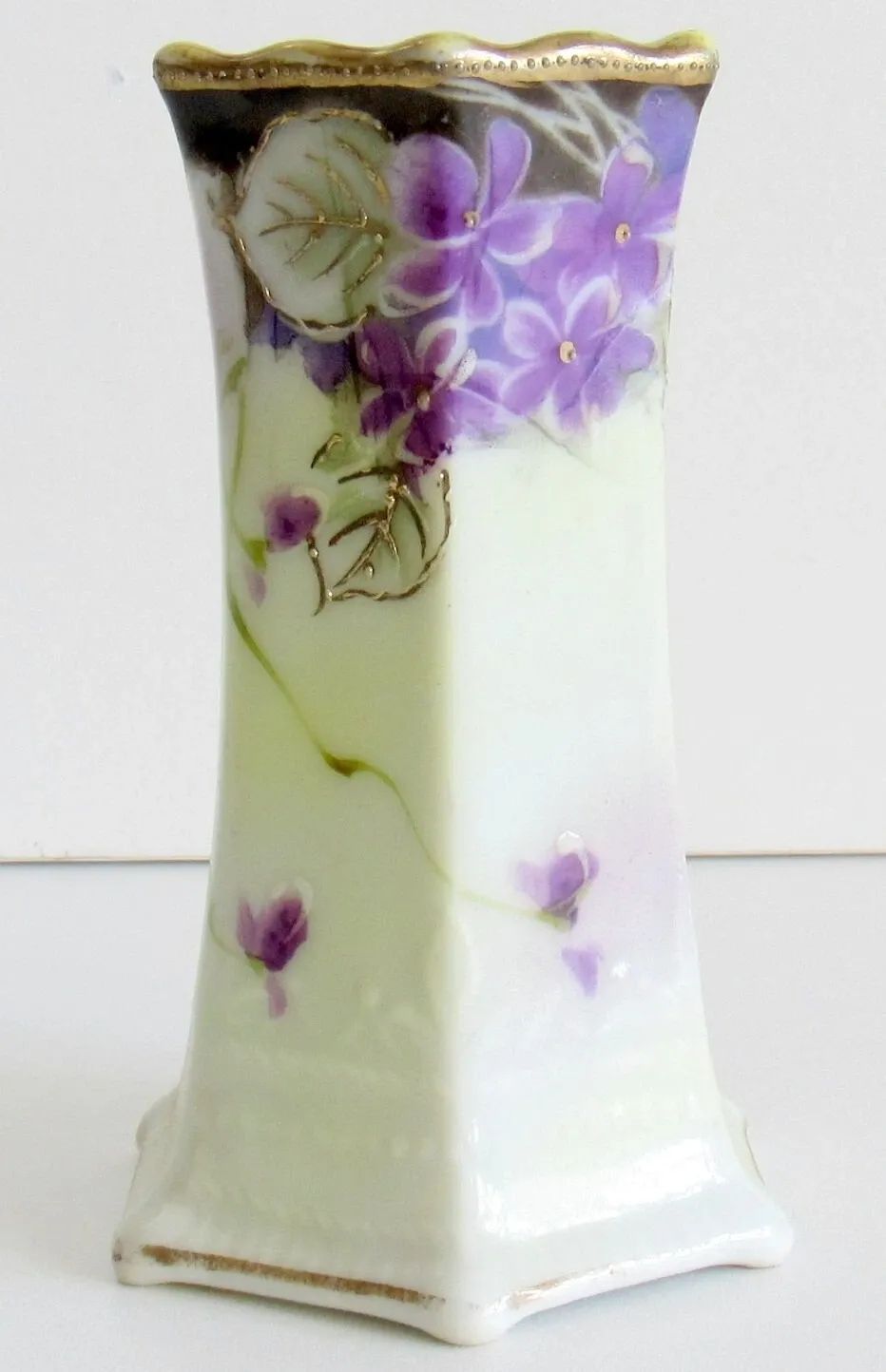 Hand-Painted Nippon Porcelain Hat Pin Holder with Violet Decoration
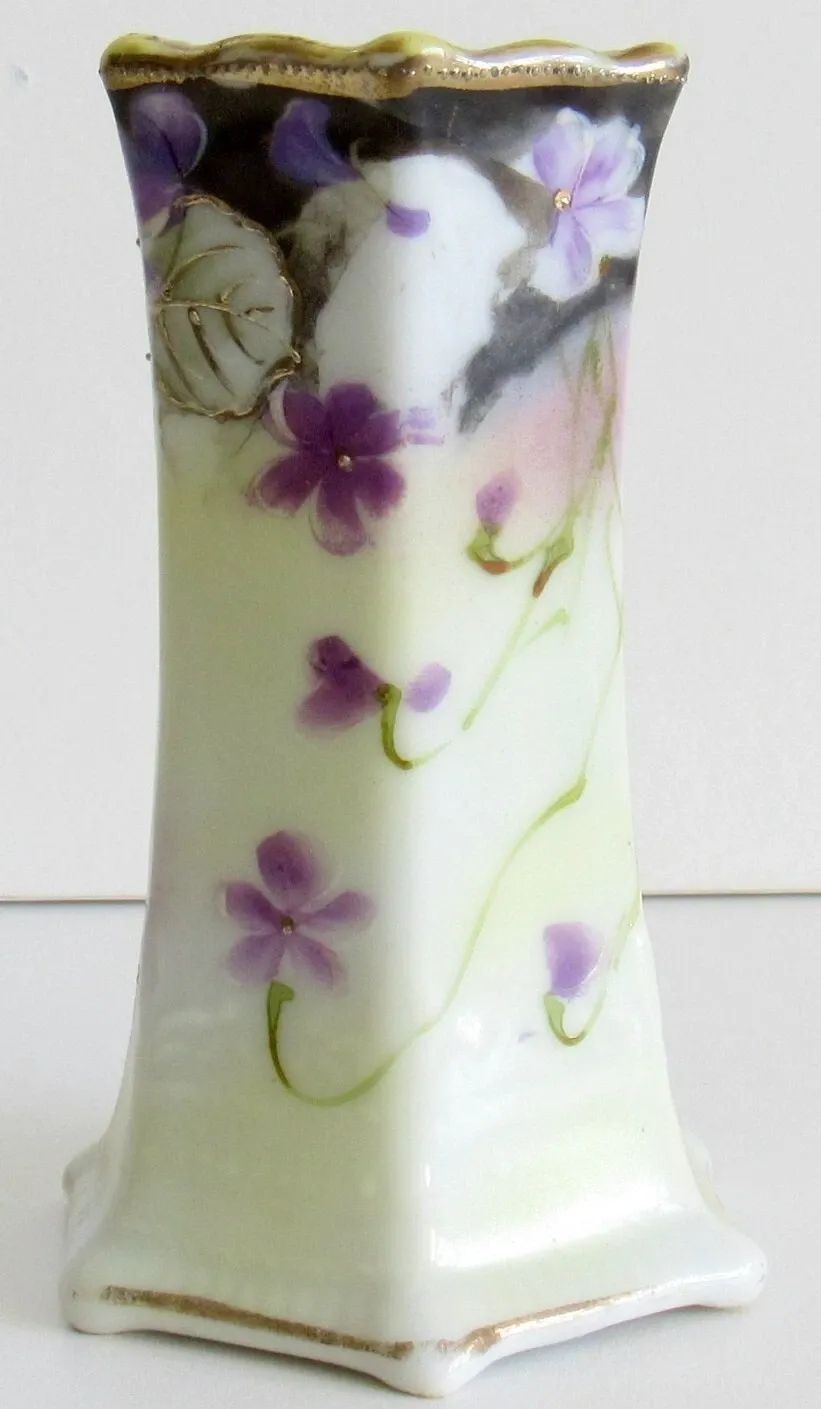 Hand-Painted Nippon Porcelain Hat Pin Holder with Violet Decoration – Image 2
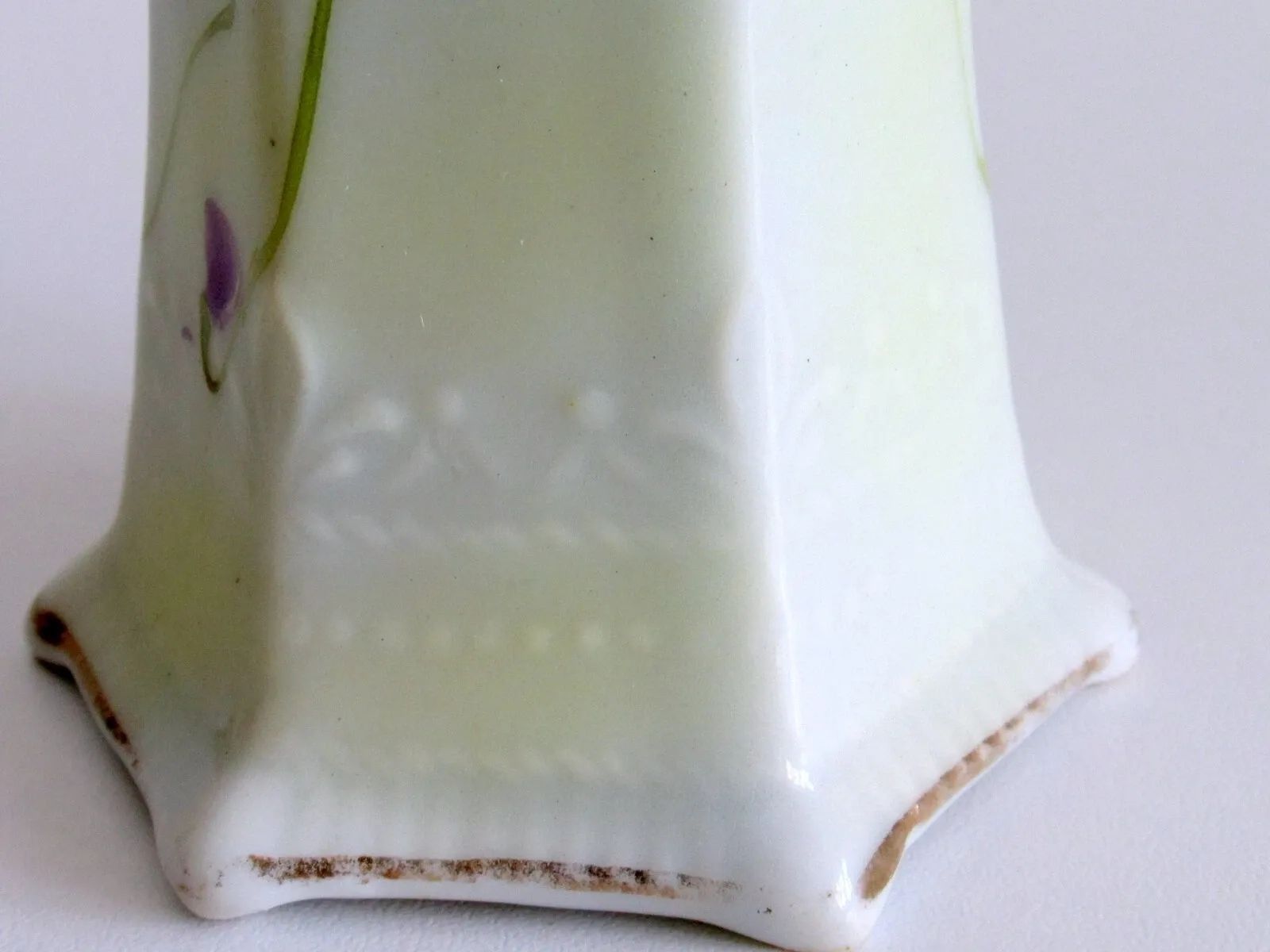 Hand-Painted Nippon Porcelain Hat Pin Holder with Violet Decoration – Image 3
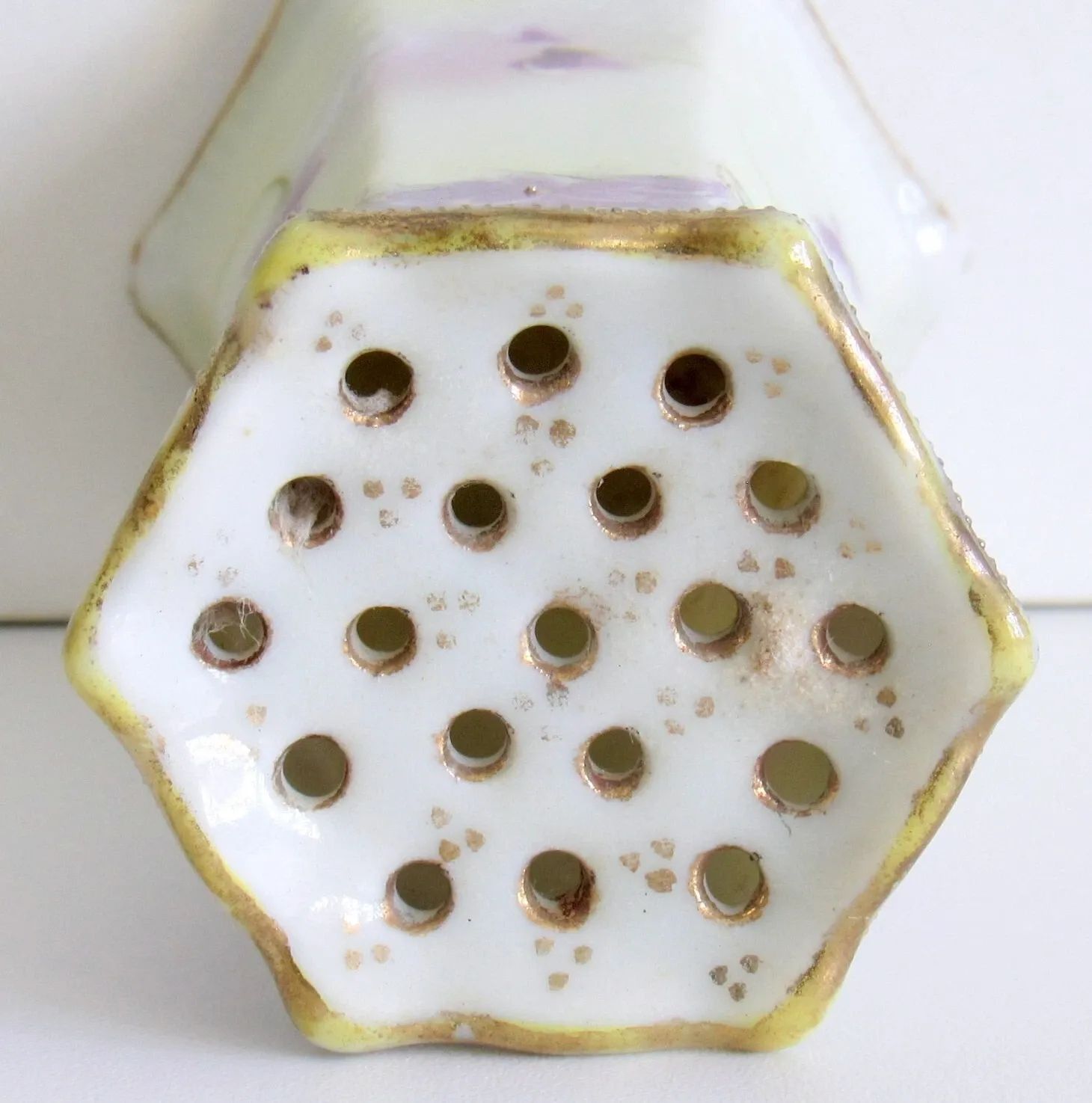 Hand-Painted Nippon Porcelain Hat Pin Holder with Violet Decoration – Image 4
 Hand-Painted Nippon Porcelain Hat Pin Holder with Violet Decoration – Image 5
Hat Pin Holder
1890’s
1920’s
circa 1895 – circa 1921
Victorian
Edwardian
Nippon Export Period
Hat pin holders emerged alongside the enormous popularity of women’s hats between 1890 and World War I, when elaborate hats required long pins for secure placement. Women frequently owned multiple hat pins and needed safe storage solutions that protected both pins and household surfaces. Japanese porcelain manufacturers rapidly adapted to Western domestic fashions, producing decorative vanity objects specifically for export markets. Nippon wares blended: Western floral aesthetics Art Nouveau naturalism Japanese ceramic craftsmanship Middle-class affordability Violets were a particularly meaningful motif symbolizing: modesty remembrance feminine virtue Hat pin holders were typically displayed on dressing tables or vanities, forming part of a woman’s personal grooming environment alongside hair receivers, perfume bottles, and jewelry boxes.
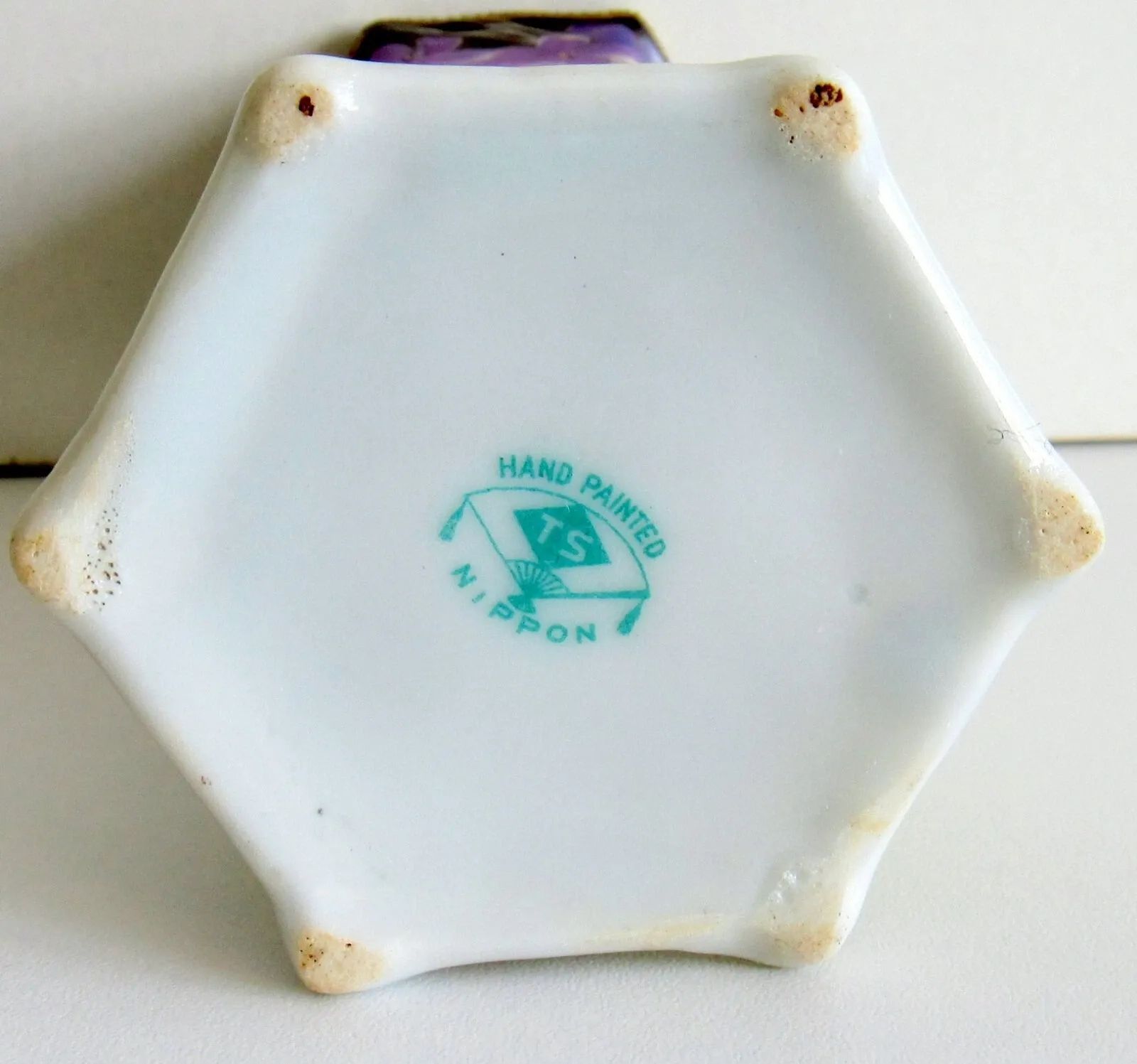
Underside green transfer mark: “HAND PAINTED NIPPON” Fan motif with TS Meaning: Made in Japan for export to the United States Produced before stricter “Made in Japan” marking laws after 1921 Indicates hand-decorated porcelain rather than transfer-only decoration
Hard-paste porcelain Overglaze enamel pigments Gilt decoration (gold wash)
Purple
Very Good
Feb 25, 2026
Light wear to gilt edges consistent with age Minor base wear from surface contact No major structural damage observed Decoration remains vibrant Interior piercing intact and functional Typical kiln and glaze irregularities present
Produced for export to the United States during the Nippon trade period and likely owned as part of a lady’s dressing-table set. Survived as a standalone object after the decline of large hat fashions following World War I.
Historical Note
This hand-painted Nippon hat pin holder represents the intersection of global trade, fashion, and domestic ritual at the turn of the twentieth century. As Western women embraced increasingly elaborate millinery styles, accessories developed to support the maintenance and organization of personal adornment. The hat pin holder became a small but essential component of the Edwardian dressing table. Japanese porcelain workshops, responding to strong American demand for decorative household goods, produced finely painted export wares combining European floral motifs with Japanese ceramic precision. The softly rendered violets and flowing stems reflect Art Nouveau influence, emphasizing natural movement and delicacy. Marked “Hand Painted Nippon,” the piece belongs to a defined historical window before international trade regulations standardized country-of-origin labeling. Today, Nippon porcelain serves as important evidence of early global consumer culture, illustrating how fashion trends shaped international manufacturing networks. The object stands not only as decorative porcelain but also as material testimony to the daily rituals of dress and identity during the age of the hat pin.