
Monogrammed French Celluloid Hair Receiver (M monogram set 2 of 3)
Object/Artifact
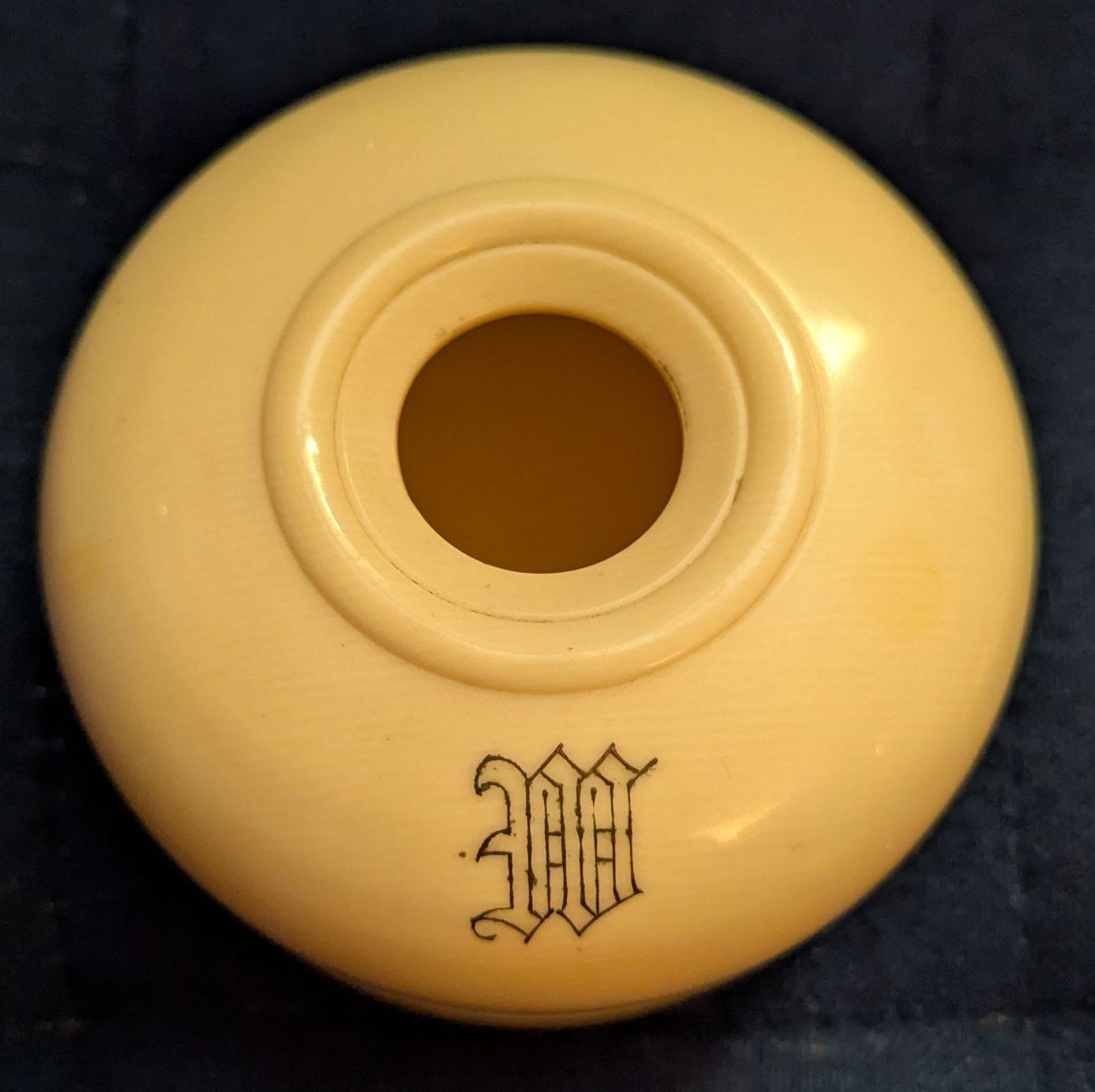
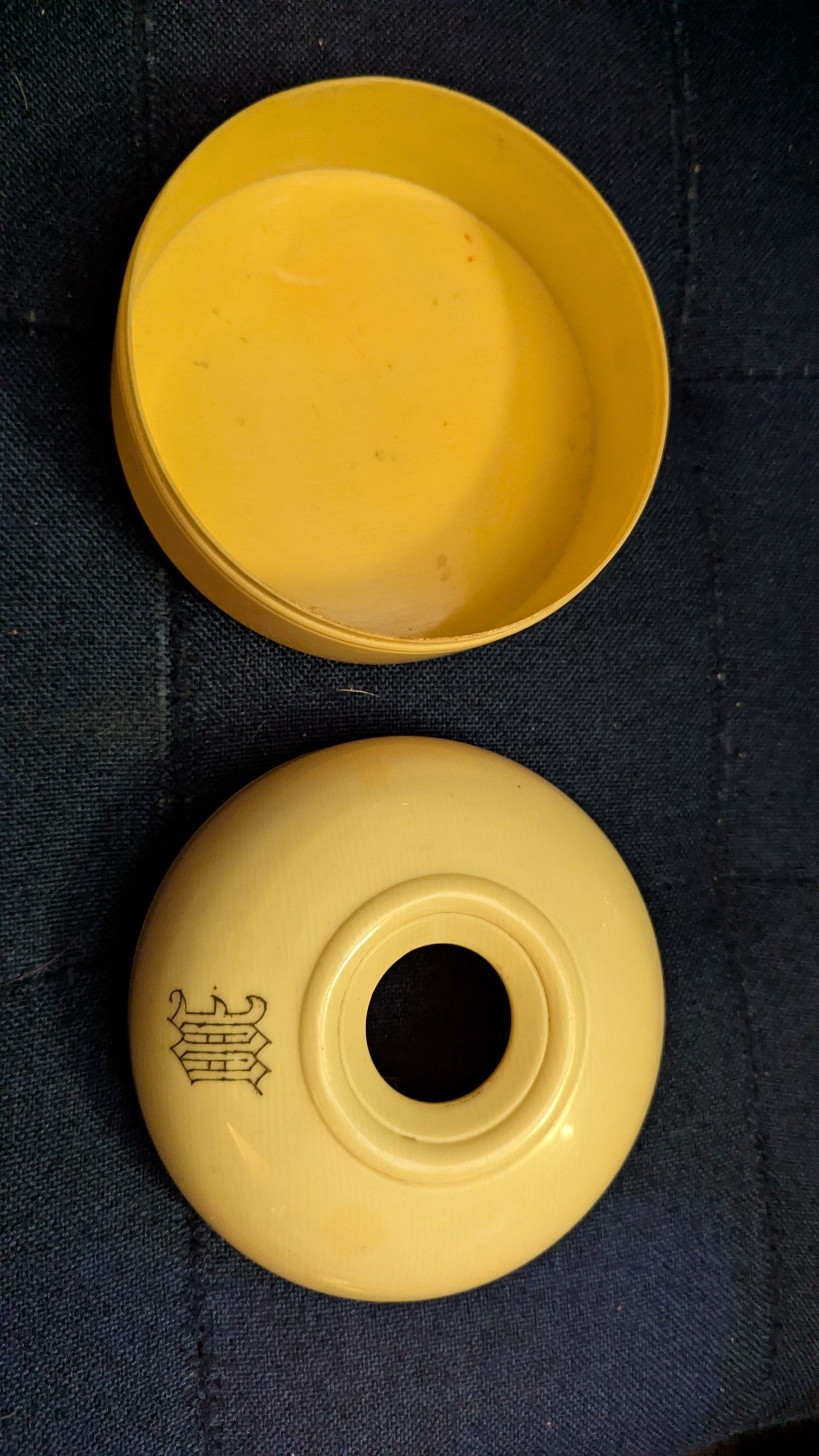
Early 20th-century molded celluloid hair receiver in ivory-tone finish, featuring a black Gothic-style “M” monogram and marked “France” on the underside.
Hair Receiver (Dressing Table Accessory)
circa 1900 – circa 1915
Victorian
Edwardian
France
The receiver features a smooth, rounded form with warm ivory coloration typical of aged celluloid. The lid contains a central opening for depositing collected hair. A stylized Gothic-script “M” monogram decorates the lid surface, suggesting personalization or ownership identification. The restrained design reflects early 20th-century shifts toward cleaner, more modern dressing table aesthetics.
Hair receivers collected loose strands removed during brushing and grooming. The saved hair was commonly reused to: Create hair padding (“rats”) for fashionable coiffures Support pompadour and Gibson Girl hairstyles Produce hair jewelry or sentimental keepsakes Such objects were standard components of personal vanity sets. French celluloid vanity wares became widely popular between 1900 and the 1920s as industrial plastics transformed domestic goods. These objects represent a transitional moment between Victorian ornamentation and modern industrial design. The monogram reflects personal identity and ownership, reinforcing the intimate nature of dressing table objects within early 20th-century domestic life.
Underside stamped: “France” Top decorated with applied black Gothic-style monogram “M.”
Method of Manufacture Molded celluloid body (early thermoplastic) Two-part construction (base and fitted lid) Machine-polished surface finish Applied monogram transfer or stamped decoration Celluloid allowed manufacturers to imitate ivory at a fraction of the cost and weight. Materials Celluloid (imitation ivory plastic)
Ivory
Very Good
Mar 2, 2026
Even age toning to celluloid consistent with natural oxidation Minor interior wear from use No visible cracking or warping observed
Historical Note
This French-made celluloid hair receiver dates to the early 20th century, when new synthetic materials began reshaping everyday domestic objects. Molded to imitate ivory, the piece reflects both technological innovation and changing aesthetic preferences moving away from heavily ornamented Victorian decoration toward simpler, modern forms. The Gothic-style “M” monogram personalizes the object, suggesting ownership and daily intimate use. Hair receivers played an important role in grooming rituals, preserving hair for reuse in elaborate hairstyles characteristic of the Edwardian period. Today, such objects provide insight into personal care practices and the early adoption of plastics within domestic material culture.