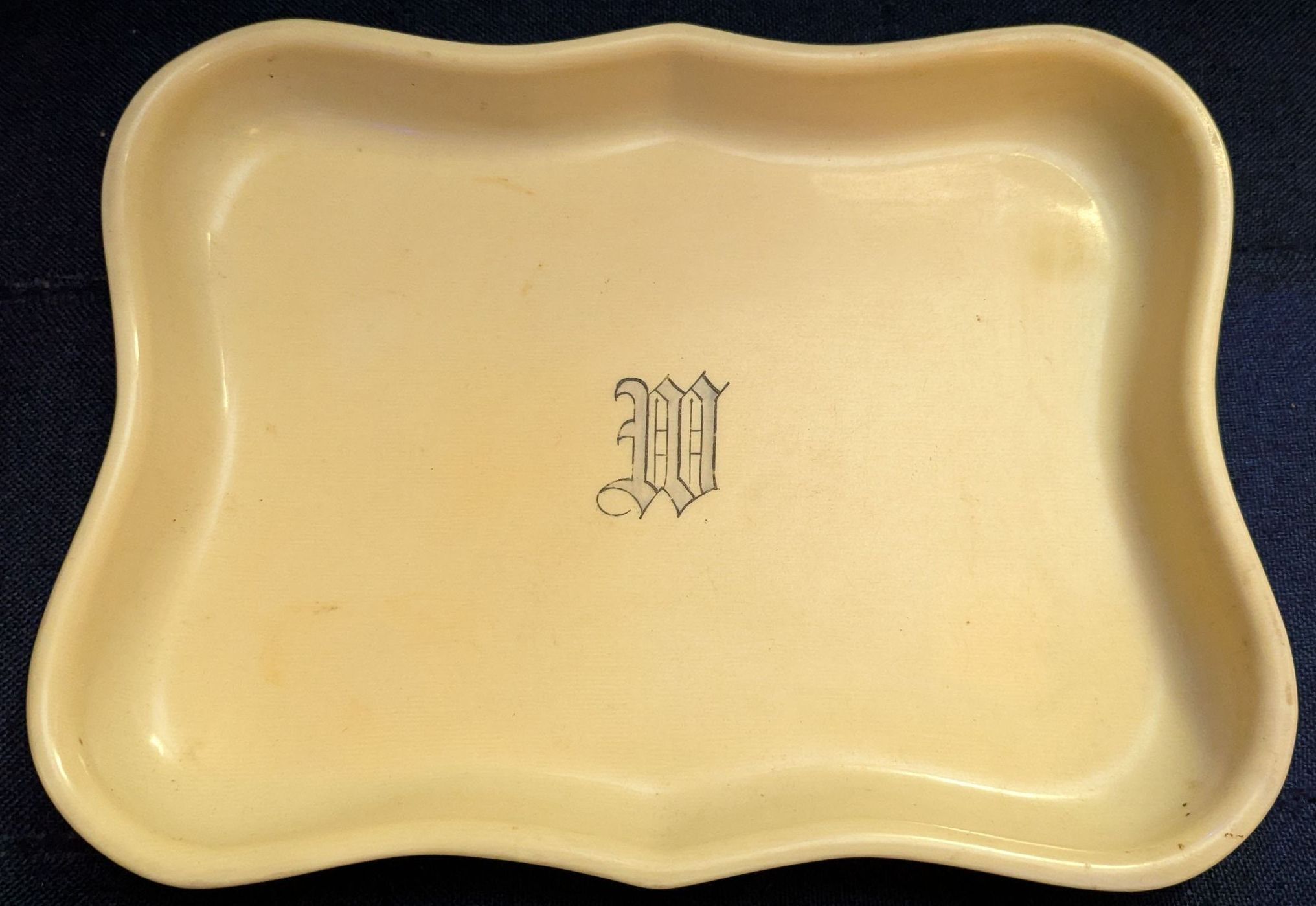
Monogrammed French Celluloid Vanity Tray (M monogram set 3 of 3)
Object/Artifact
Cream-colored molded celluloid vanity tray with softly scalloped rectangular form and central black Old English “M” monogram. Part of a coordinated Edwardian dresser set including matching hair receiver and button hook.
Late Edwardian
circa 1905 – circa 1925
France
Material Celluloid (early thermoplastic) Decoration Black Old English (Gothic) style monogram “M” Method of Manufacture Molded celluloid sheet pressed into form Heat-shaped with rolled lip edge Printed or transfer-applied monogram Mass-produced decorative personal toiletry accessory Design Notes The tray features: Gently scalloped contour (soft quatrefoil-like silhouette) Raised rim to contain small grooming items Central monogram in period Gothic script Warm ivory patina typical of aging celluloid The monogram style is consistent with: Edwardian personalization trends Bridal trousseau sets Upper- and middle-class dressing table accessories
Celluloid was one of the earliest commercially successful plastics, widely used between the 1890s and 1920s as an imitation ivory substitute. It allowed households to own elegant, “ivory-like” goods at affordable prices. Vanity sets commonly included: Hair receiver Button hook Brush & mirror Powder box Glove stretcher Tray Monogramming was a hallmark of personal identity and refinement during this era. The Gothic script “M” suggests a formal presentation — possibly a wedding or coming-of-age gift. This object reflects the ritual of early 20th-century feminine grooming culture and the growing accessibility of luxury aesthetics through industrial materials.
Celluloid
Ivory
Very Good
Mar 3, 2026
Mild yellowing consistent with aged celluloid Minor surface wear Small scattered speckling No cracks
Historical Note
This molded celluloid vanity tray represents early 20th-century domestic material innovation. Manufactured to imitate ivory, celluloid allowed decorative personal grooming objects to become widely accessible. The softly scalloped silhouette and Gothic “M” monogram align stylistically with Edwardian and early post-Edwardian dressing table culture. Part of a coordinated monogrammed set including a hair receiver and button hook, the tray would have held small grooming implements on a lady’s dressing table. Such objects speak to ritualized self-care practices and the personalization trends characteristic of the era. The warm patination of the material enhances its ivory-like appearance, illustrating both the aesthetic ambition and technological novelty of early plastic production.