
Presentation Mantel Clock
Object/Artifact
1900-1915
RE-AR-2026-0008
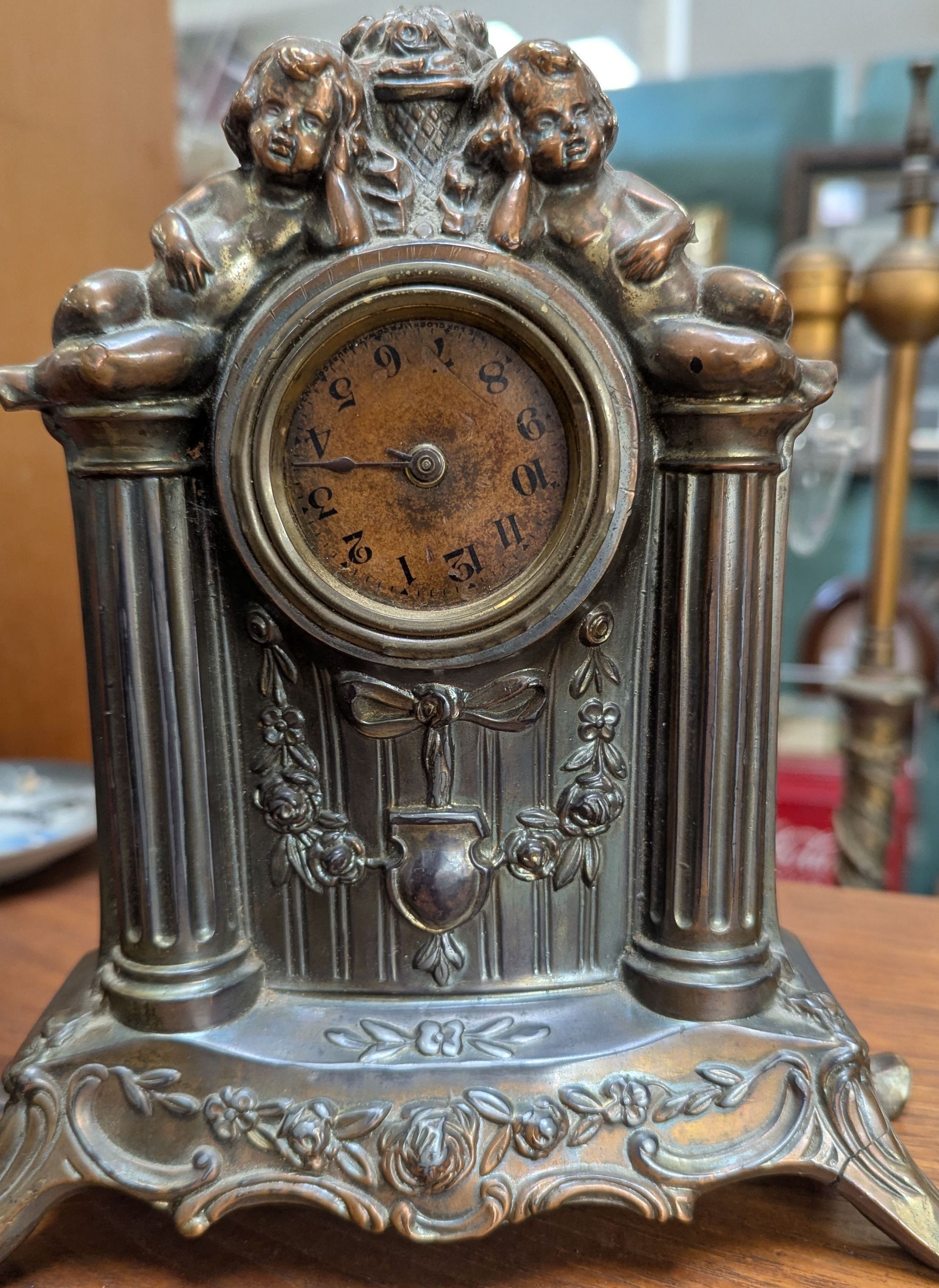
Mantel clock with Figural cherubs, classical columns, floral garlands.
Floral
Clock
Victorian
circa 1900 – circa 1915
20th Century
Europe
Metal
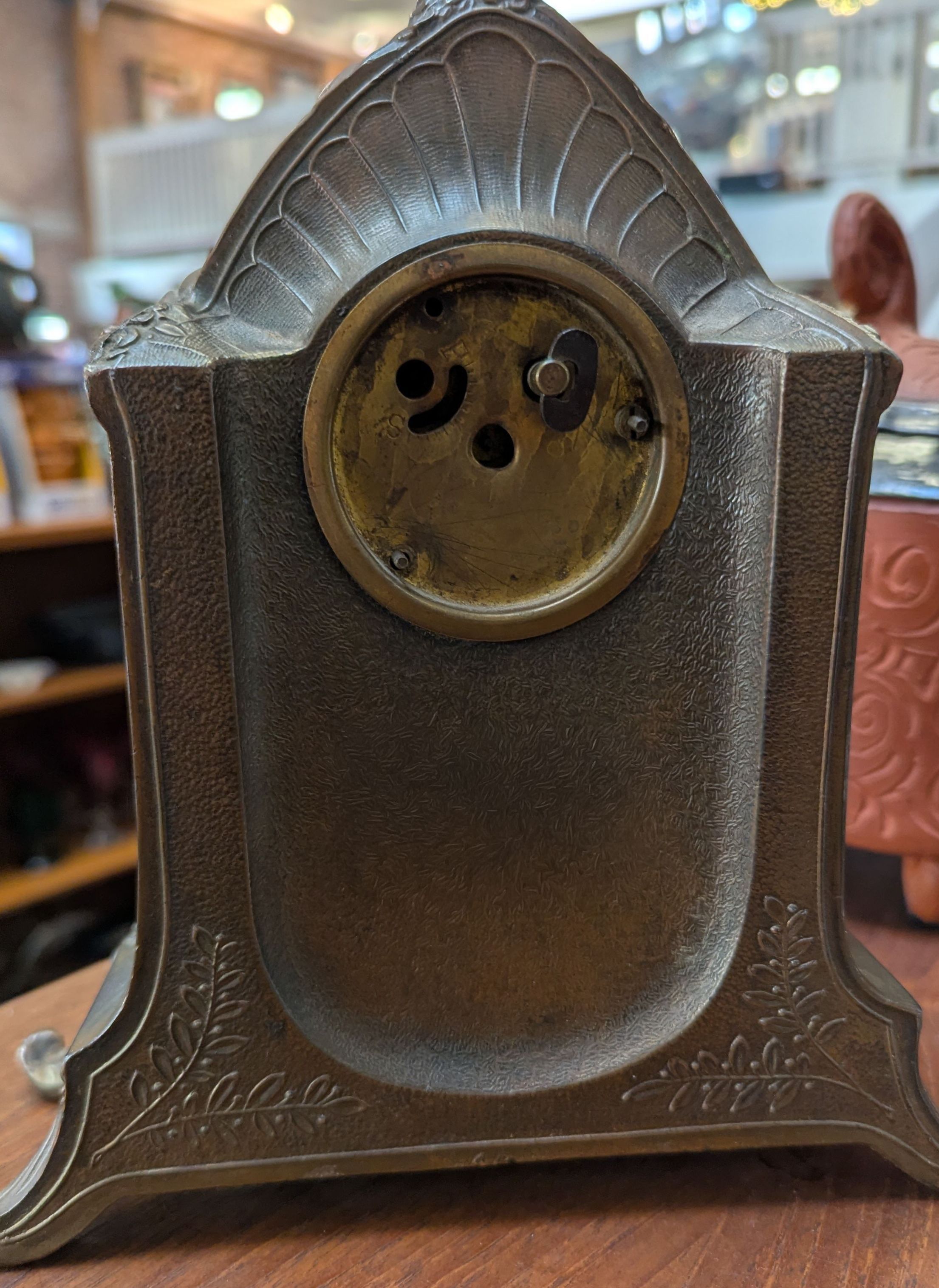
Spelter (white metal), possibly silvered originally. The rear shows a round brass movement plate with key-wind apertures consistent with early 20th-century mechanical mantel clocks, often using German movements even when cased elsewhere.
Brass
Good
Jan 22, 2026
Description
Possibly Germany or United States c. 1900–1915 (Late Victorian–Edwardian period) Spelter (cast white metal), brass clock movement This ornate mantel clock exemplifies the richly decorative taste of the late Victorian and early Edwardian era. The architectural case is cast in white metal (spelter) and modeled in high relief with classical columns, floral garlands, and scrolling ornament, culminating in a figural group of two seated cherubs flanking a central cartouche at the crest. The circular clock face is set into the façade and protected by a brass bezel. The numerals are printed directly on the dial, which displays a naturally aged patina consistent with long use. The clock is powered by a key-wound mechanical movement, visible from the rear through a round brass backplate with winding and regulation apertures, characteristic of early 20th-century mantel clocks. Movements of this type were frequently produced in Germany and exported internationally, even when housed in cases assembled elsewhere. The overall design draws on classical revival motifs, popular at the turn of the century, while the cherubs reflect the period’s enduring fascination with allegorical and sentimental imagery. Such clocks were often presented as commemorative or presentation pieces, given to mark milestones such as retirements, anniversaries, or achievements, and were intended to occupy a prominent place in the domestic interior. The surface shows wear and oxidation consistent with age, preserving its historical character and evidence of use. As both a functional timepiece and a sculptural decorative object, this clock reflects the intersection of craftsmanship, ornament, and domestic ritual in the early modern home.