
Early French Administrative Manuscript Letter (Fragmentary)
Letter
A fragmentary handwritten French administrative or legal letter written in brown ink on laid paper, likely dating to the late 1500s or early 1600s.
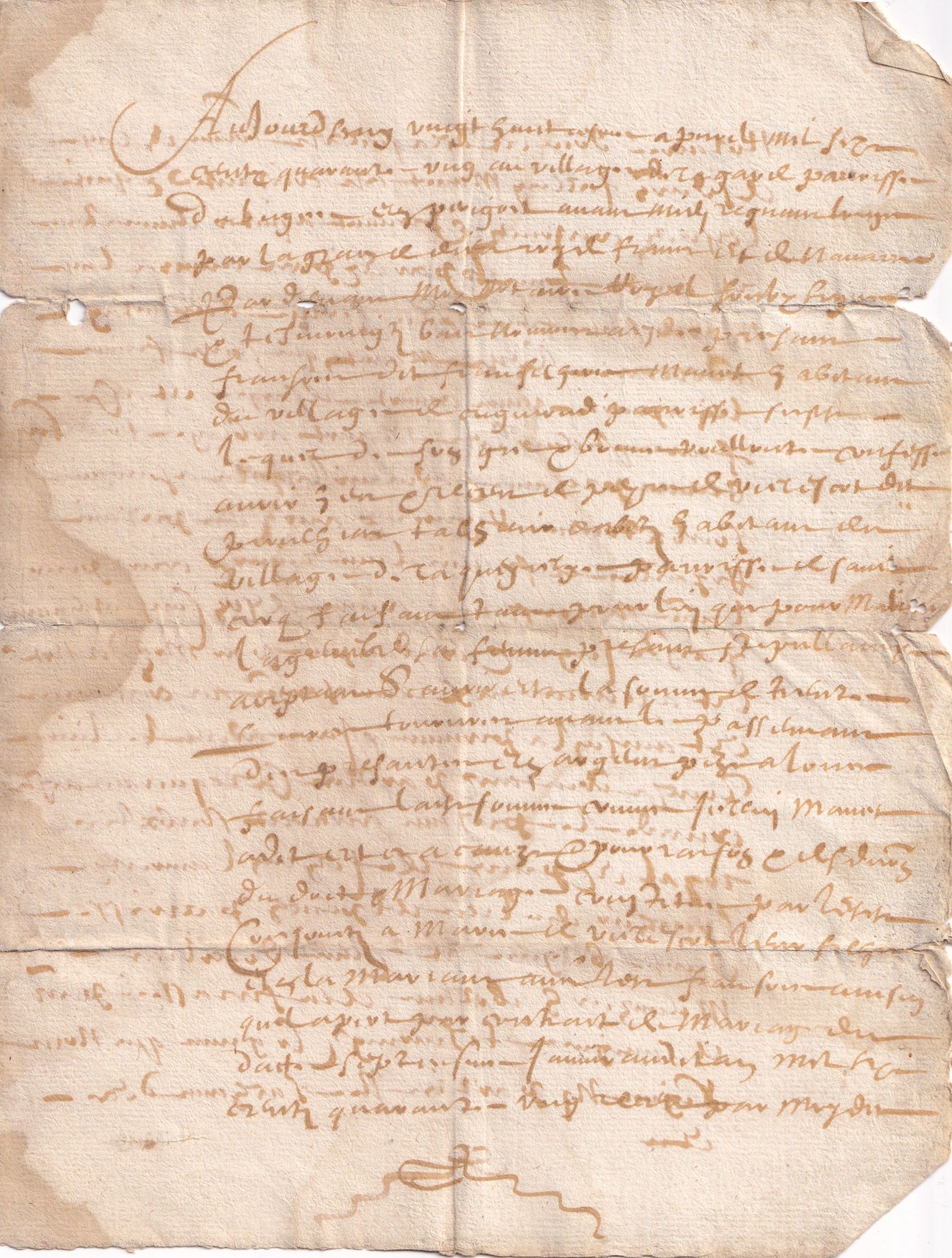
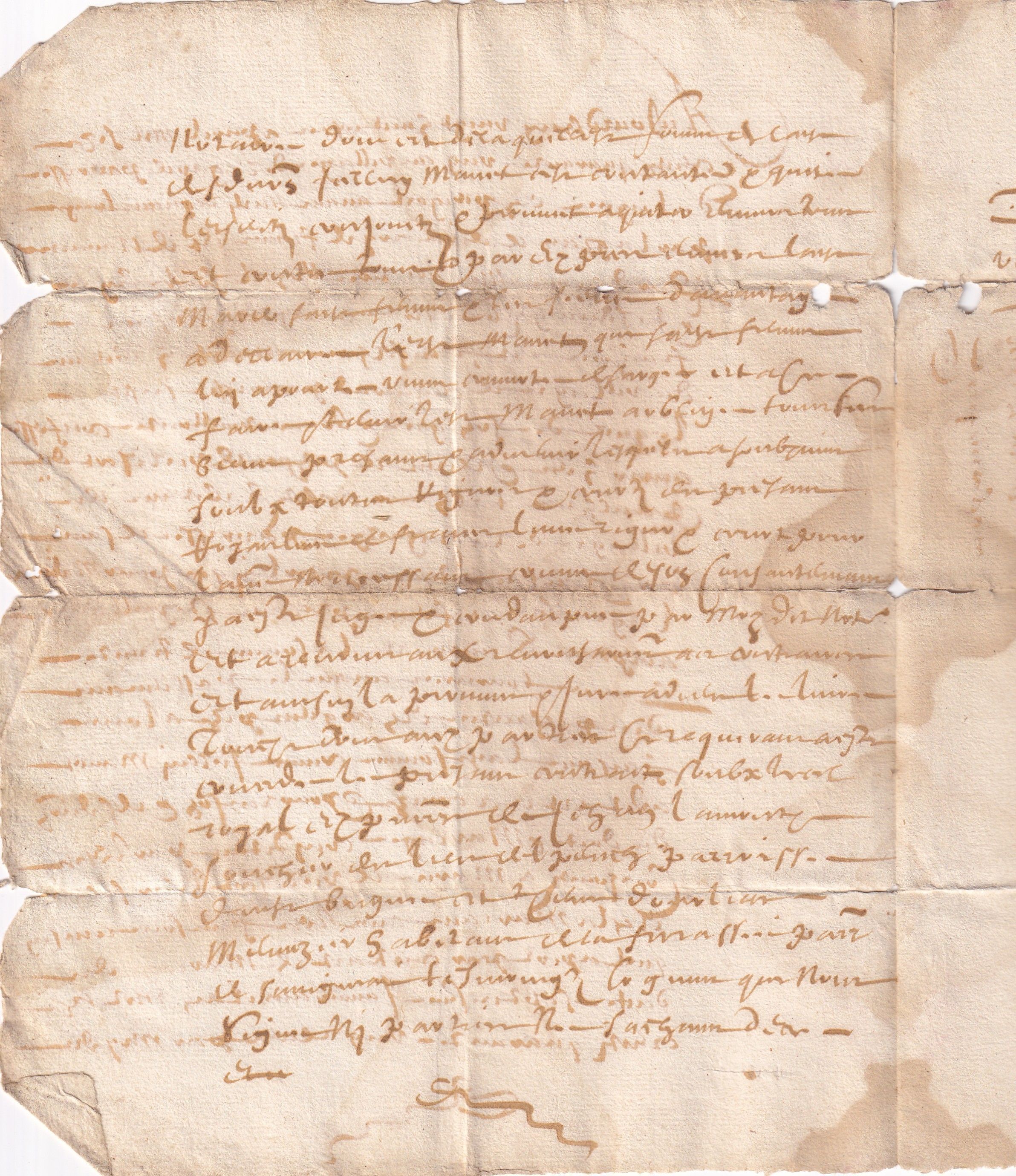
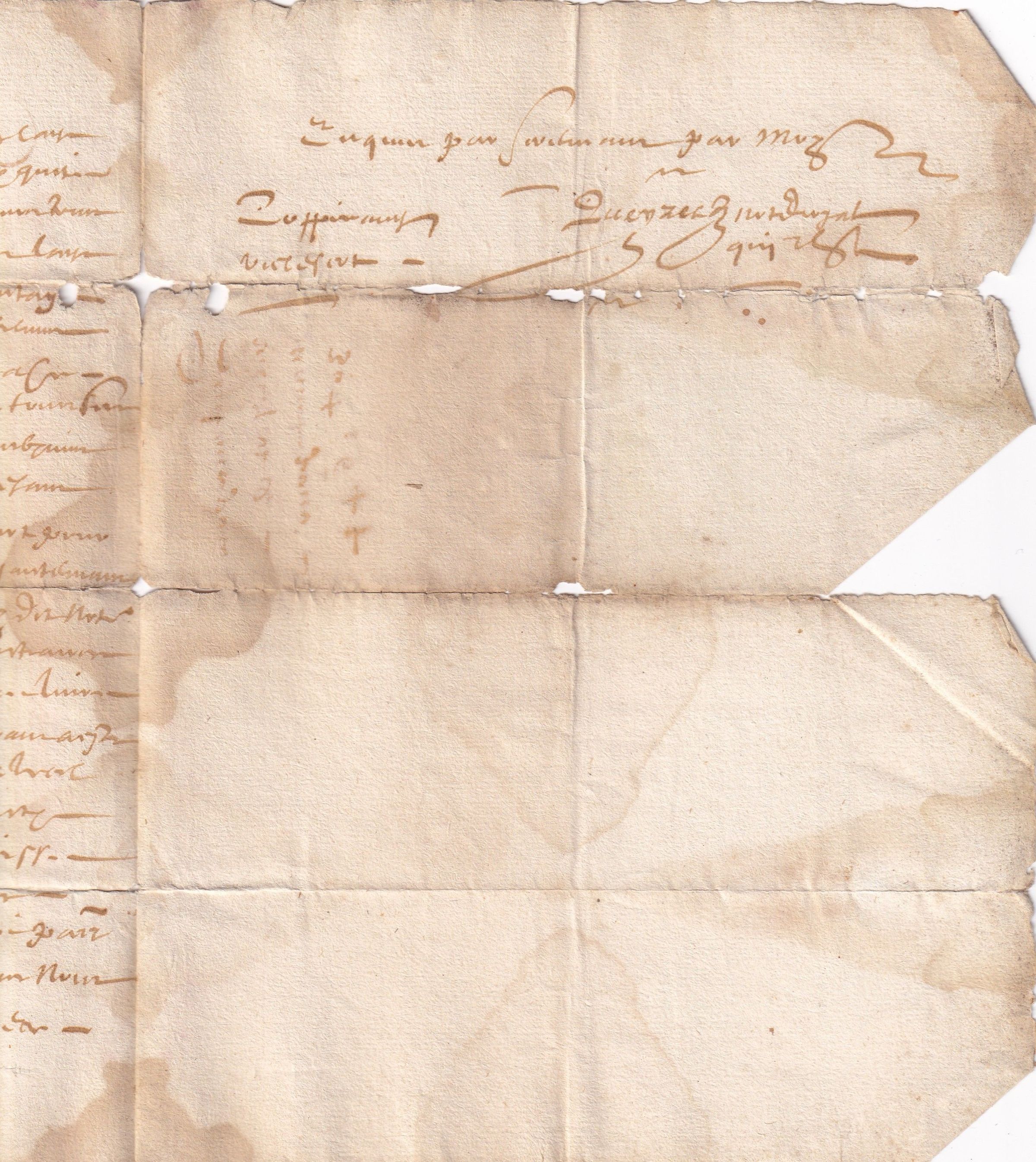
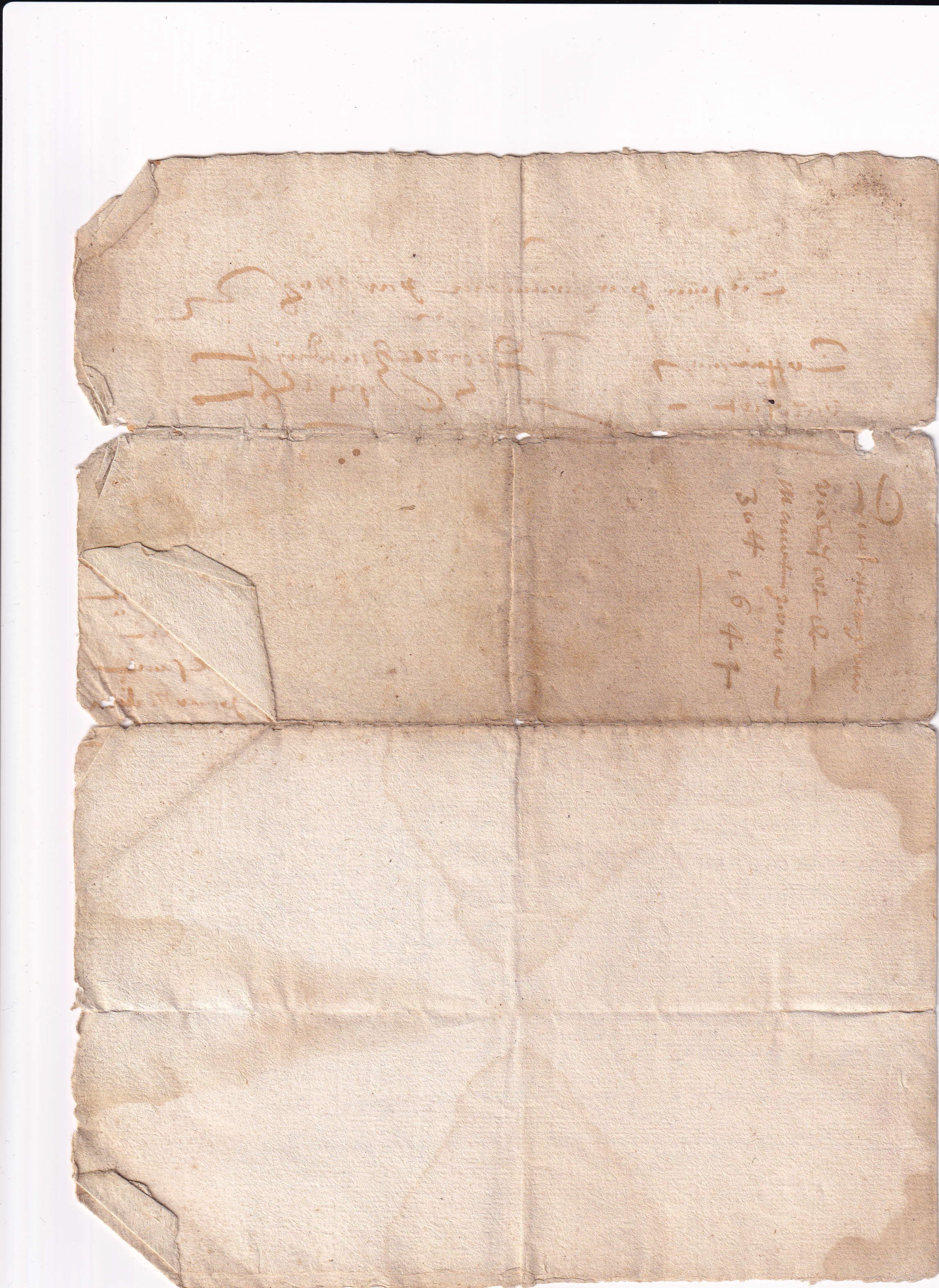
RE-LE-1644-0008
Formal administrative correspondence concerning official matters, likely involving local governance or legal procedure.
France
Business & Legal Documents
1644
17th Century
Transcription (Very Partial – Legible Phrases) … administré … … au village … … en présence de … … signé … (Majority obscured by fading and paper loss.) English Translation (Modernized Summary) … administered / managed … … in the village … … in the presence of … … signed …
French
This manuscript reflects the administrative culture of early modern France, when governance depended on handwritten correspondence produced by clerks trained in professional legal scripts. Documents of this type were used to record official decisions, legal declarations, property matters, or municipal governance. The dense cursive secretary hand reflects the rapid writing style required for bureaucratic record-keeping. Such manuscripts provide insight into local administration before the widespread standardization of printed forms. Even fragmentary examples are valuable for understanding literacy practices, document production, and the mechanics of governance in provincial France.
Description
This fragmentary manuscript represents an early example of French administrative correspondence dating to the transitional period between the late Renaissance and early modern bureaucratic systems. Written in iron gall ink on laid rag paper, the document exhibits characteristic secretary script used by clerks and legal officials. Although much of the text is obscured by fading and physical damage, surviving phrases indicate official administrative activity conducted in a village setting and validated through formal witnessing and signatures. Documents of this type formed the infrastructure of governance, allowing authorities to record decisions, enforce regulations, and maintain legal continuity. The artifact offers insight into early documentary practices prior to the dominance of printed legal forms and illustrates the material culture of governance in pre-modern Europe. Visible fold lines and ink oxidation are consistent with prolonged archival storage and handling.