
Letter from S. A. Spleinsted to J. McMillan Concerning Bank Draft Dispute
Letter
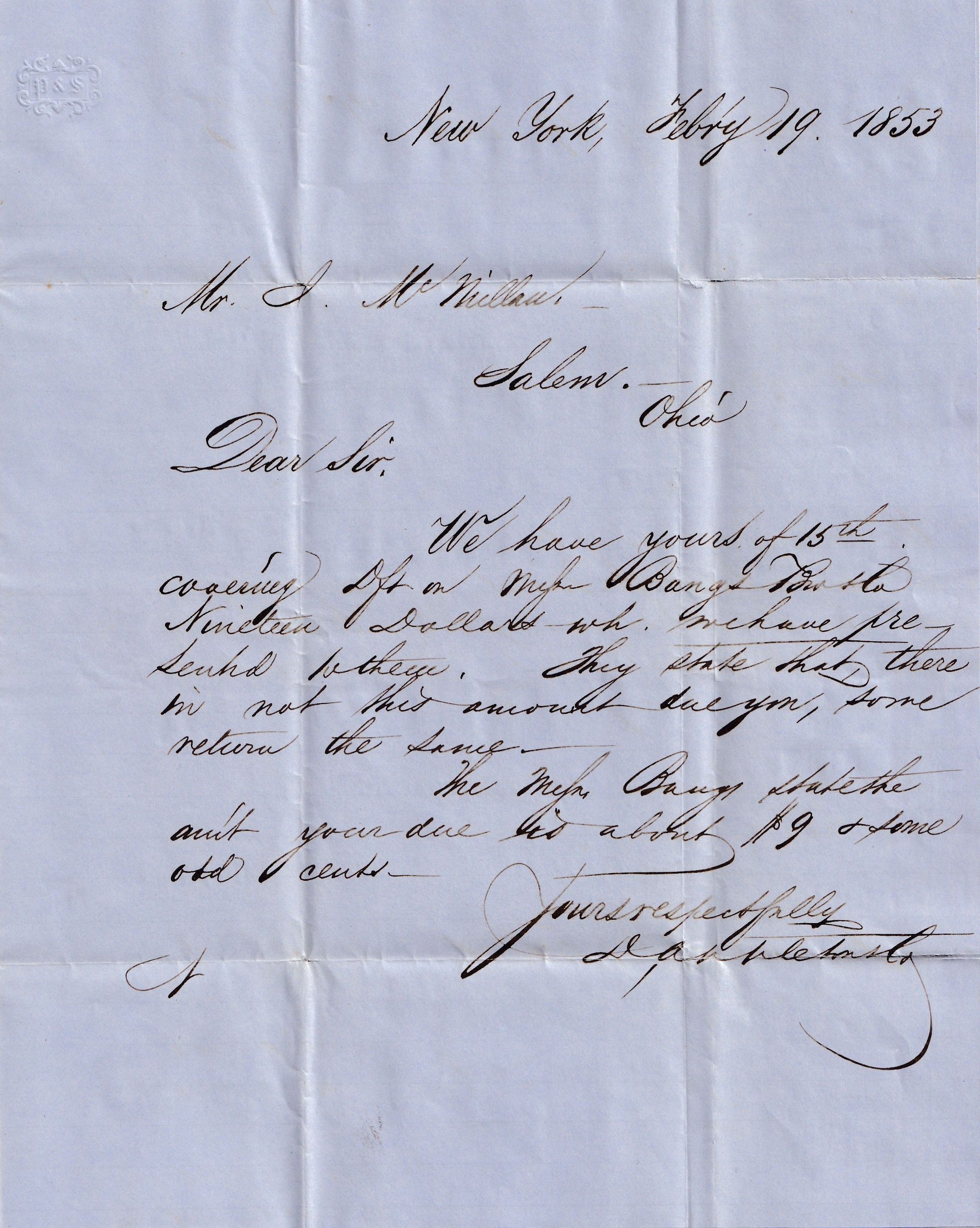
An 1853 business letter written in New York regarding a disputed bank draft for nineteen dollars drawn on the Merchants Bank and addressed to J. McMillan of Salem, Ohio.
RE-LE-1853-2022
Communication regarding a financial draft and clarification of a disputed payment involving Merchants Bank.
New York
Business & Legal Documents
19th Century
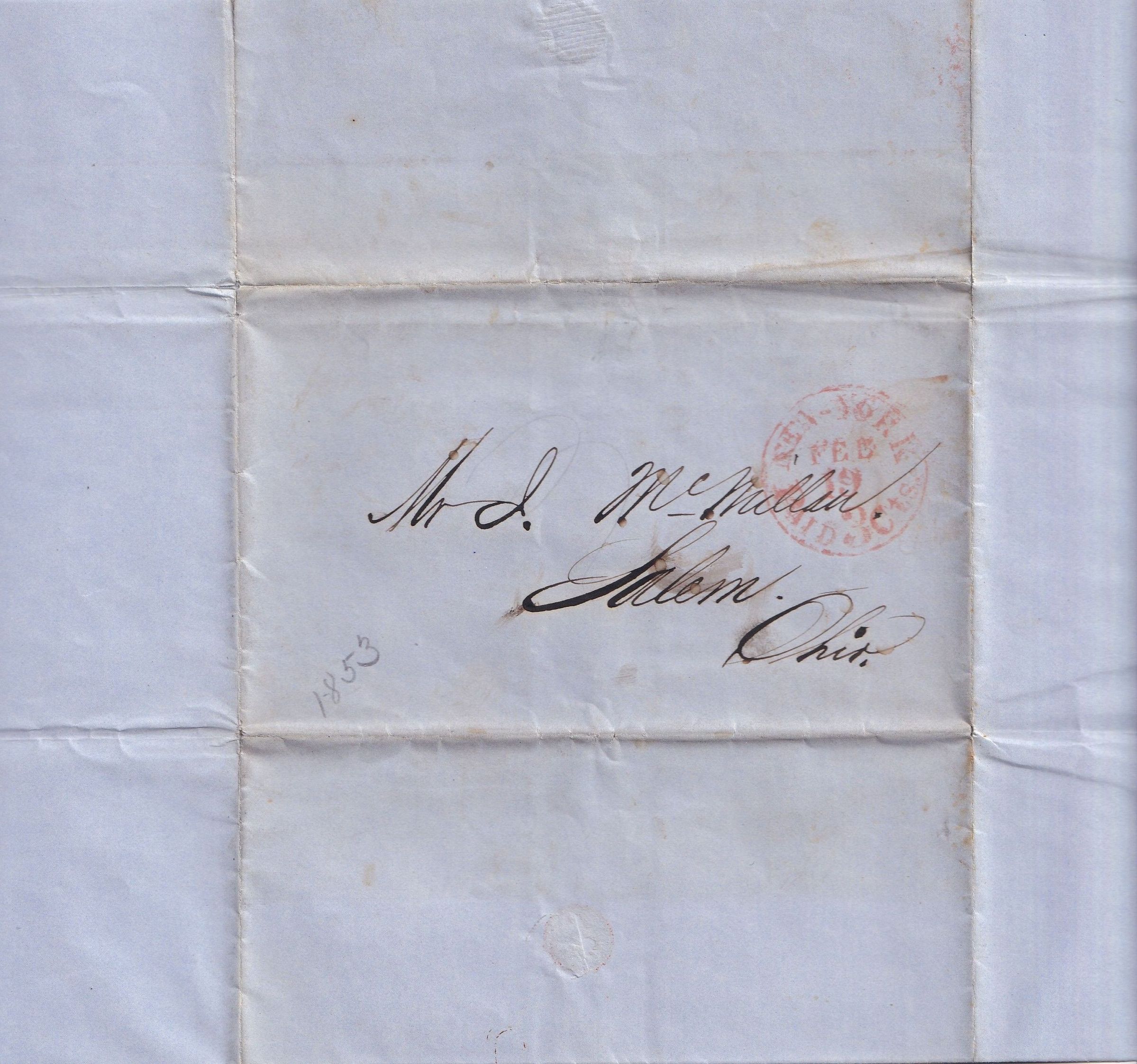
New York City Addressed to Salem, Ohio
New York Febry 19. 1853 Mr J. McMillan Salem — Ohio Dear Sir We have yours of 15th covering draft on Mch Bank for the sum of nineteen dollars which Enclose we return to these. They state that there is not this amount due you, therefore return the same. The Merch Bank states the amount you have due is about $9 & some odd cents. Yours respectfully S. A. Spleinsted
English
This letter reflects the everyday financial communications of mid-nineteenth-century American commerce. Drafts drawn on banks were commonly used for transferring funds between individuals and businesses, particularly across long distances. When discrepancies occurred between the expected and recorded balances, correspondence such as this was used to resolve the matter. The reference to the Merchants Bank suggests a typical financial intermediary of the era. Before modern electronic banking systems, drafts and letters served as the principal means of verifying and correcting financial transactions. Such letters also demonstrate the importance of postal networks in supporting commerce between cities such as New York and smaller towns like Salem, Ohio. The folded format and external address indicate the letter originally functioned as its own envelope, a common mailing practice prior to the widespread use of separate envelopes later in the nineteenth century.
Description
This handwritten letter dated February 19, 1853 was sent from New York to J. McMillan of Salem, Ohio. The writer, identified as S. A. Spleinsted, responds to a previously received letter that included a bank draft drawn on the Merchants Bank for nineteen dollars. According to the bank, however, the balance owed was only approximately nine dollars and several cents. The draft was therefore returned to the sender with an explanation. Letters such as this document the routine financial transactions that underpinned nineteenth-century American commerce. In an era before electronic communication and modern banking systems, drafts, receipts, and letters formed the backbone of financial verification. The document also illustrates the role of the postal service in linking commercial centers like New York with smaller towns in the expanding American economy.