
Royal Court Summons Issued by the Sénéchaussée of Limoges
Letter
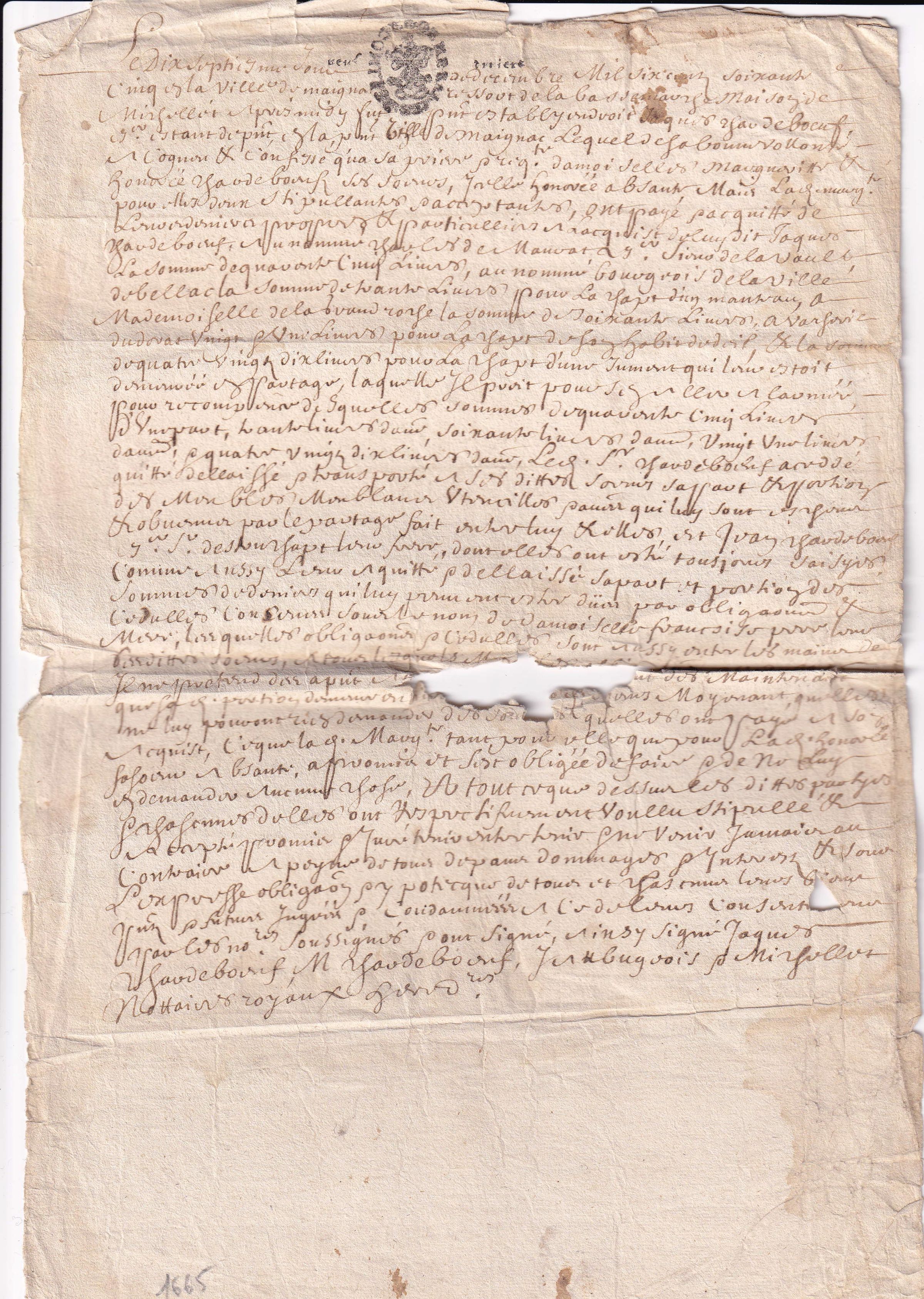
Official French legal summons ordering an individual to appear before the royal court regarding an unresolved financial obligation.
RE-LE-1675-0009
Judicial enforcement of debt and legal obligation
Business & Legal Documents
May 22, 1675
17th Century
Transcription (Original French — standardized spelling for readability) (Partial; most legible portions) Par devant les officiers de la Sénéchaussée de Limoges… Fut comparu Sieur Jacques Verger… Lequel a été sommé de comparaître en justice pour répondre de la somme due… À peine d’y être contraint par voie de justice… Fait et signifié par sergent royal… Donné audit Limoges le vingt-deuxième jour de mai mil six cent soixante-quinze. English Translation Before the officers of the Royal Court of Limoges… There appeared Sir Jacques Verger… Who was formally summoned to appear before the court to answer for the sum owed… Under penalty of legal enforcement should he fail to appear… Executed and delivered by a royal court officer… Given at Limoges on the twenty-second day of May, 1675.
French
This document reflects the administrative and legal culture of ancien régime France, where royal courts exercised authority through regional judicial districts known as sénéchaussées. Legal actions were formal, highly procedural, and written in formulaic script. Debt enforcement was a common function of these courts, illustrating the growth of regulated commerce and state legal oversight. The elaborate handwriting and structured phrasing demonstrate professional scribal training and bureaucratic standardization.
Description
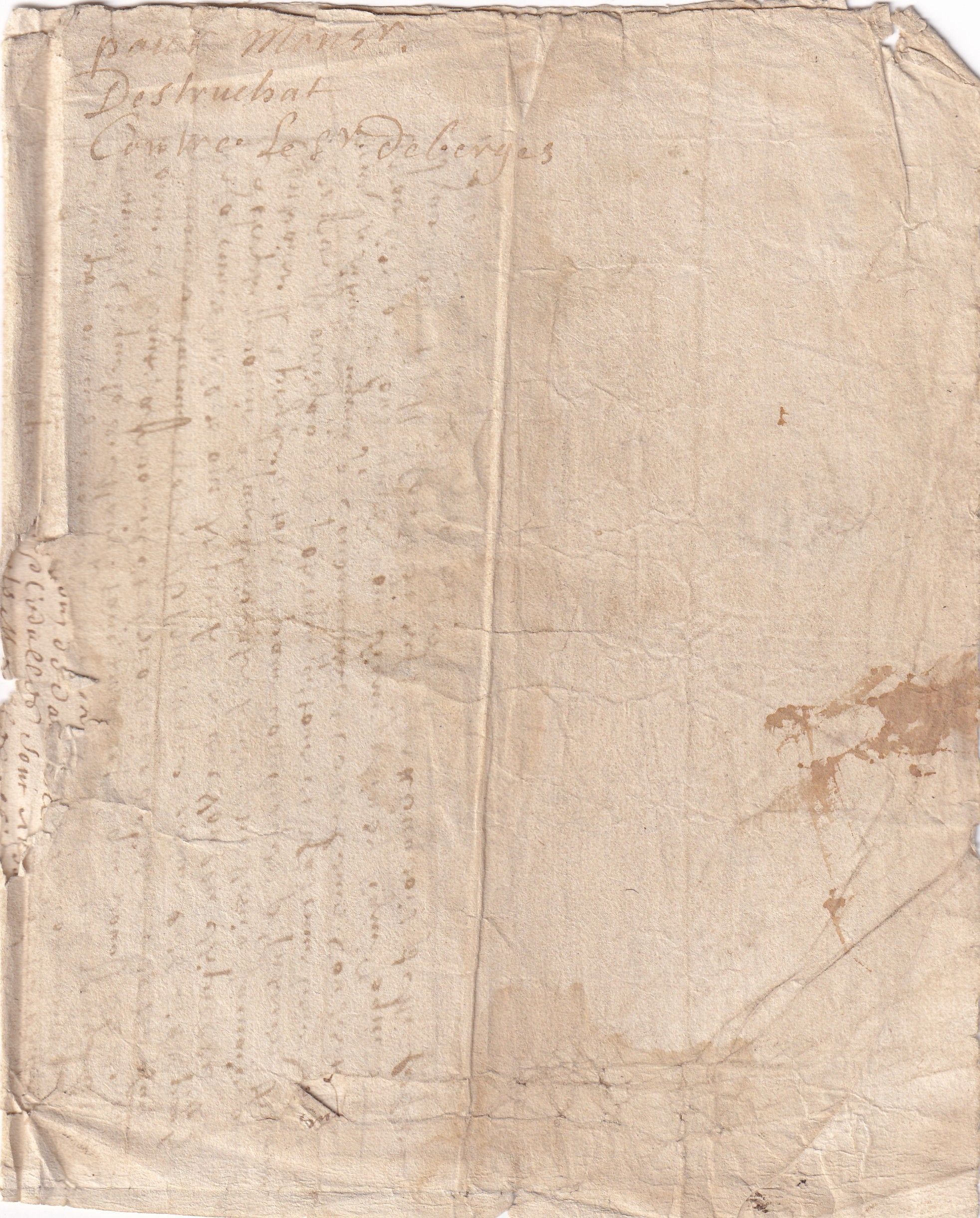
This manuscript is an official legal summons issued by the Royal Court (Sénéchaussée) of Limoges in 1675. Written in iron gall ink on laid rag paper, the document exemplifies the bureaucratic structure of provincial French justice during the reign of Louis XIV. Such summonses were formal instruments compelling individuals to appear before the court to resolve debts, contractual disputes, or civil obligations. The script is characteristic of professional legal scribes, featuring elongated ascenders, compressed spacing, and formulaic legal phrasing common to seventeenth-century administrative records. The survival of the exact date and place of issue enhances the document’s historical value, linking it directly to the functioning of royal judicial authority in rural France. Documents of this type illustrate the expansion of centralized governance, the regulation of private financial obligations, and the formalization of legal process that shaped early modern European society. Its preservation offers insight into the daily mechanics of justice beyond elite or noble correspondence.