
Royal Court Summons — Sénéchaussée de Limoges
Letter
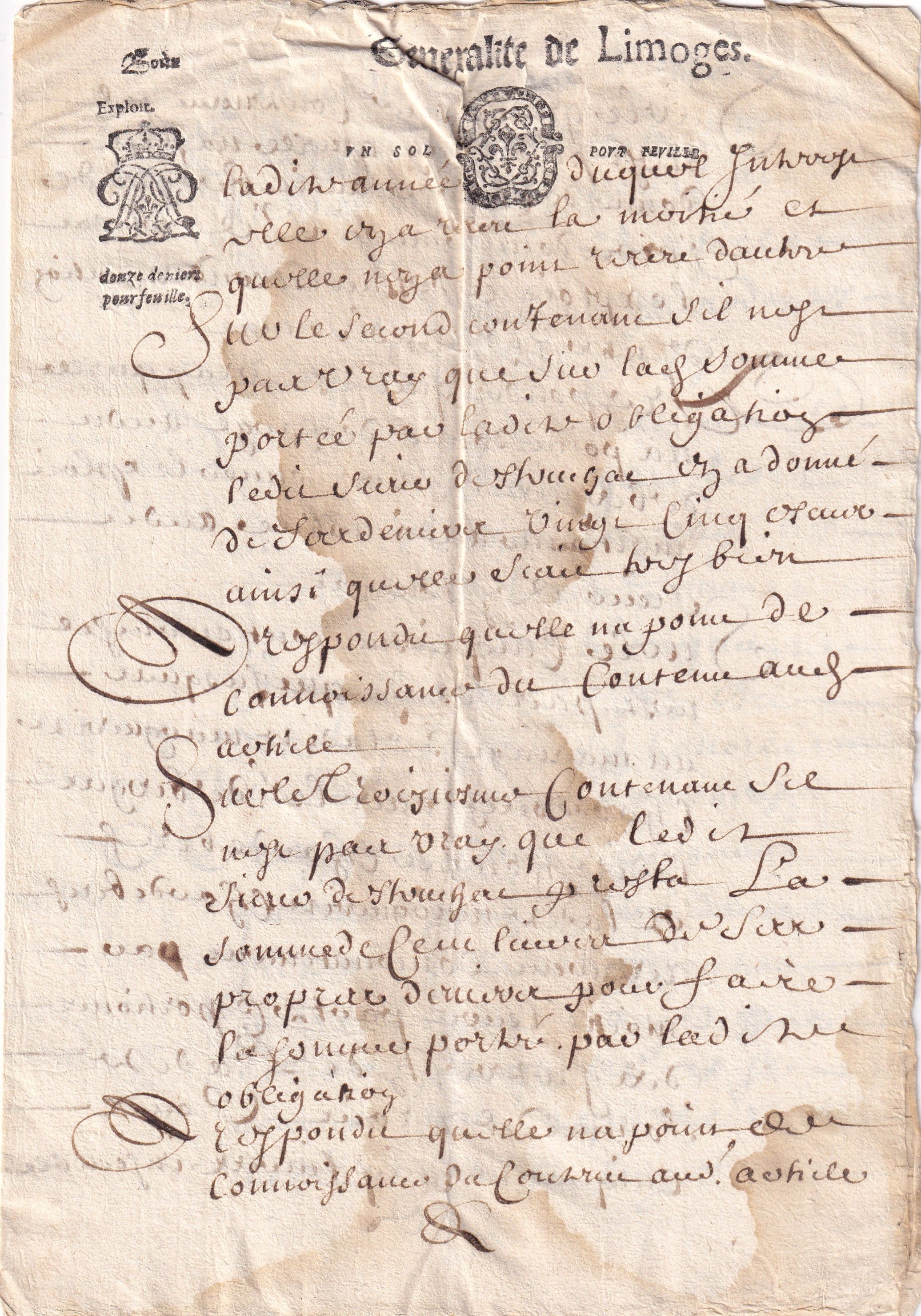
An official French royal court summons issued in Limoges requiring an individual to appear before judicial authorities, printed with court insignia and completed in manuscript.
RE-LE-1700-0002
Formal legal notification compelling court appearance in response to a civil complaint.
France
Business & Legal Documents
1670 – 1699
17th Century
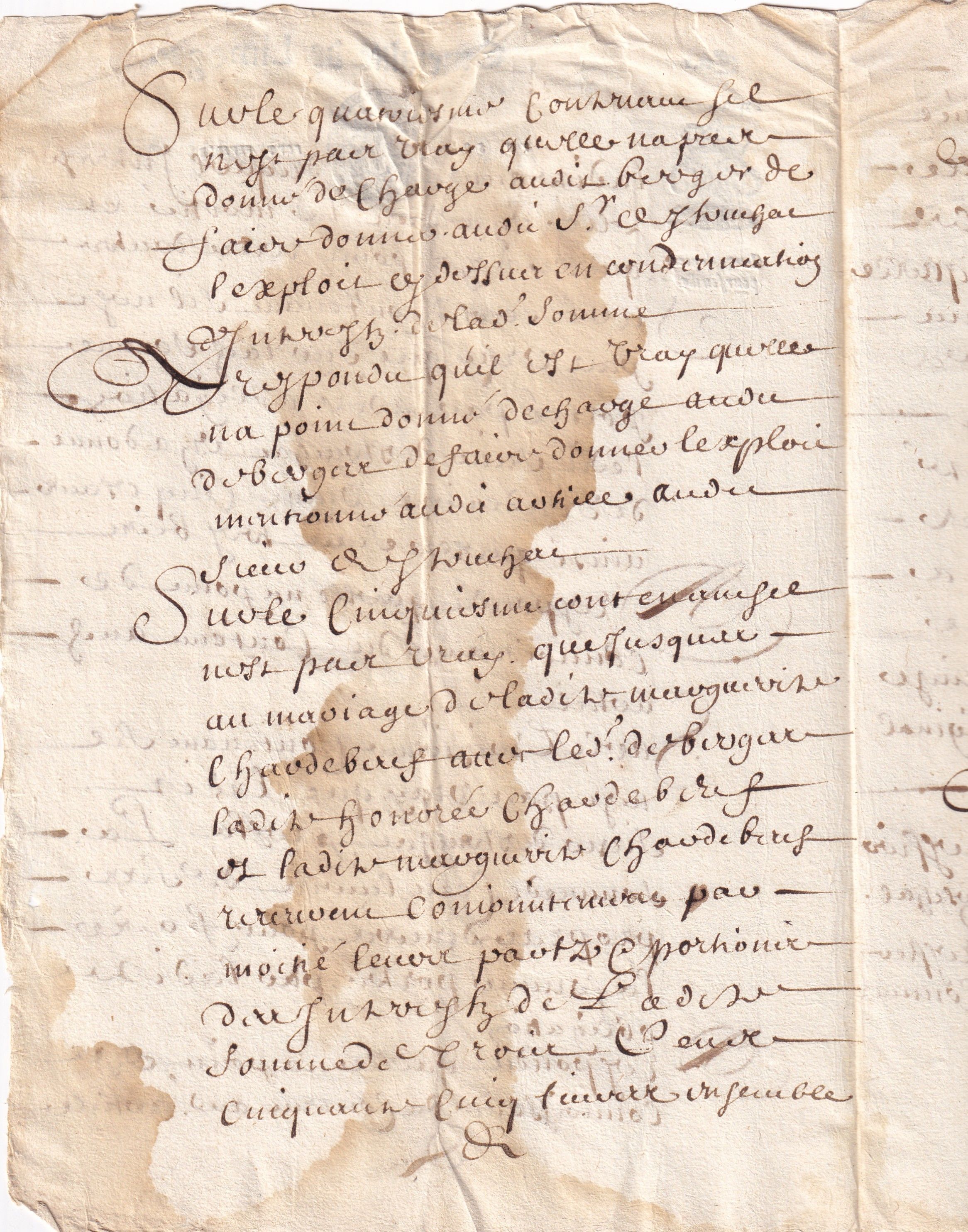
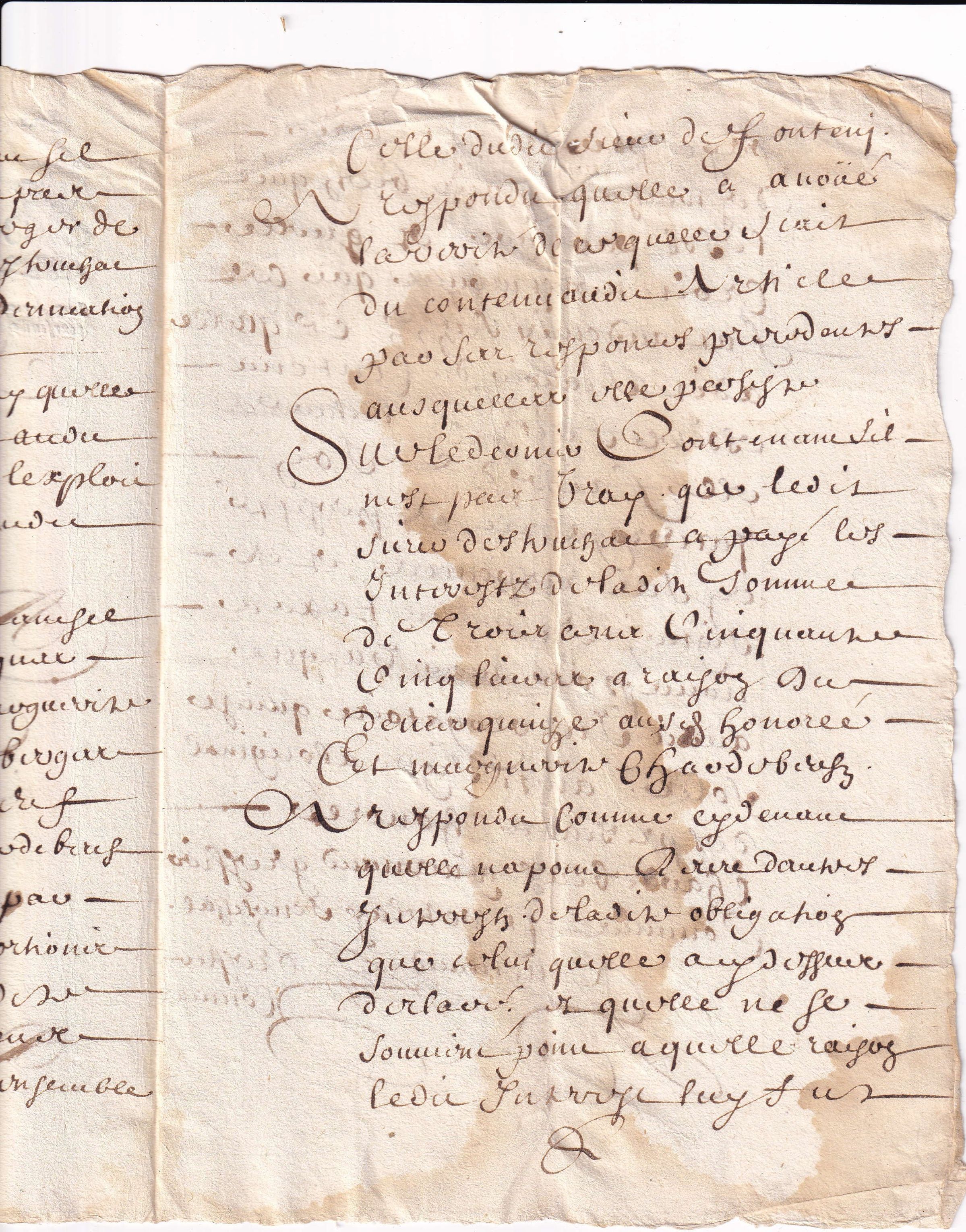
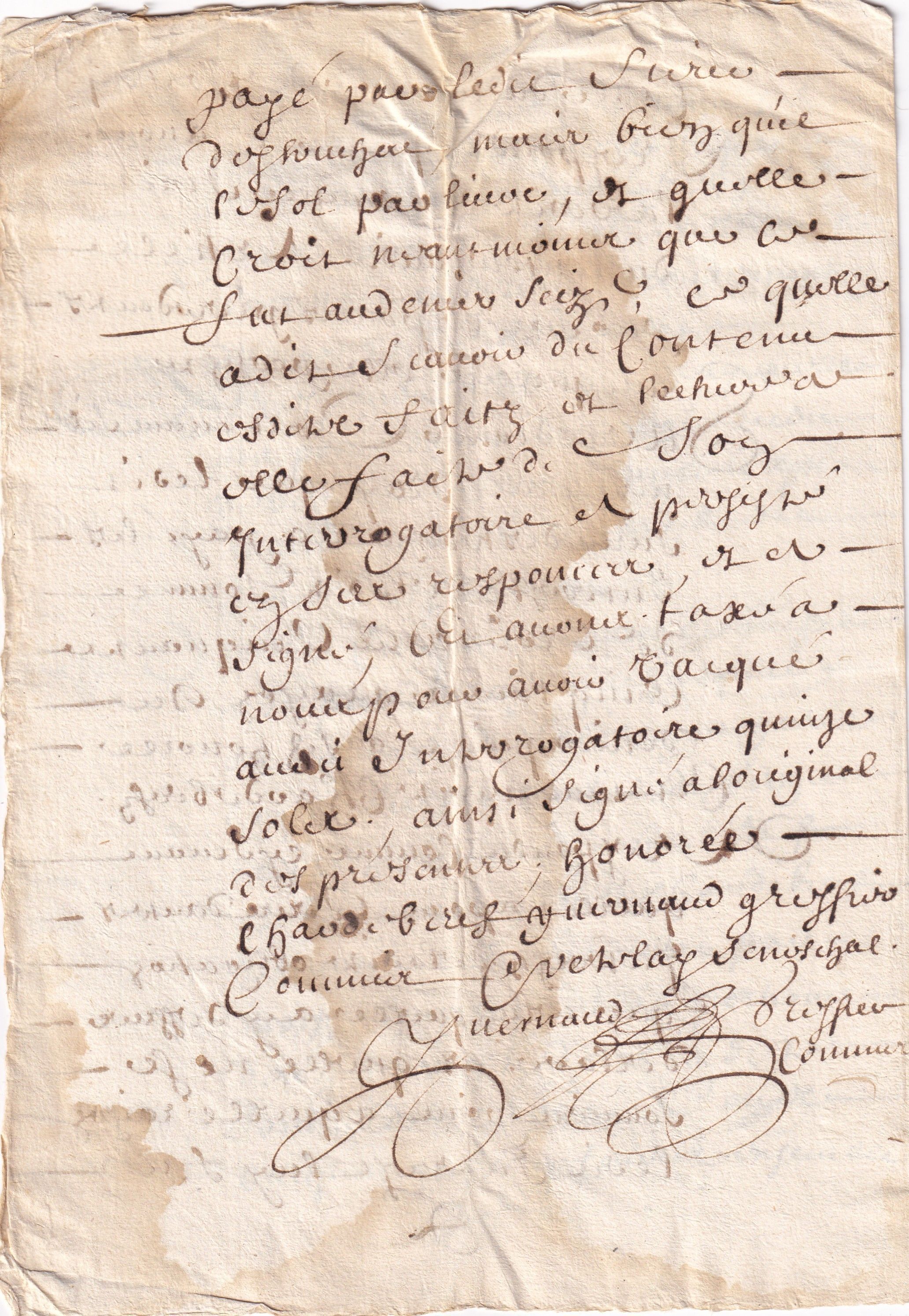
English Translation (Modernized Summary) Royal Court of Limoges An official summons ordering Sieur Jacques Jubrou to appear before the court. The document states that: • A legal action has been brought against him. • He is formally notified to appear in court to respond to the complaint. • The summons was delivered by a court officer (sergeant / bailiff). • He is required to present himself in person. • Failure to appear may result in a judgment being rendered against him. • Court costs and legal penalties may apply. Later sections record: • Certification that the summons was properly delivered. • Identification of the officers involved. • Legal recording of compliance with procedure. • Clerk and court official signatures validating the act. Transcription (Partial – Original French) Sénéchaussée de Limoges Exploit … à la requête … … assigné … … comparoir en personne … … répondre aux causes contenues audit exploit … … faute de ce faire … sera procédé contre lui … … ainsi signé … (Sections abbreviated where damage or heavy script obscures reading.) English Translation (Modernized) Royal Court of Limoges Official Writ At the request of the petitioner… [The named individual] is hereby summoned to appear in person before the court to answer to the matters contained in this writ. Failure to comply will result in legal proceedings being carried out against him. Executed and signed by the proper court officers.
This document reflects the formal legal culture of Early Modern France, when royal courts administered justice through regional jurisdictions known as sénéchaussées. Legal proceedings relied on officially delivered written summonses carried by court officers. The language demonstrates the highly standardized procedural formulas used across France to assert royal judicial authority. Such documents illustrate how ordinary citizens encountered the legal system: through formal notices requiring physical appearance, under threat of penalties or default judgment. They also show the layered bureaucracy of clerks, bailiffs, and magistrates responsible for maintaining judicial order.
Description
This manuscript is an official court summons issued by the Royal Sénéchaussée of Limoges, a provincial judicial authority operating under the French crown. Combining printed and handwritten elements, the document exemplifies the administrative practices of Early Modern French legal institutions. Court officers delivered such writs to formally notify defendants of legal actions brought against them. Recipients were required to appear in person before magistrates to answer civil or criminal complaints. Failure to comply could result in judgments rendered in absentia, fines, or seizure of property. The printed header and insignia reflect increasing bureaucratic standardization, while the handwritten entries personalize the legal action. Surviving examples provide insight into regional governance, legal communication methods, and the lived experience of justice prior to modern court systems. Materially, the paper shows period rag composition with age toning, creasing, and staining consistent with handling and storage across centuries. The document remains a strong representative artifact of pre-Revolutionary French judicial administration.