
Royal Judicial Notice — Sénéchaussée de Limoges (Debt & Obligation Case)
Letter
An official French court document issued by the Royal Sénéchaussée of Limoges concerning a financial obligation and legal summons related to unpaid debt.
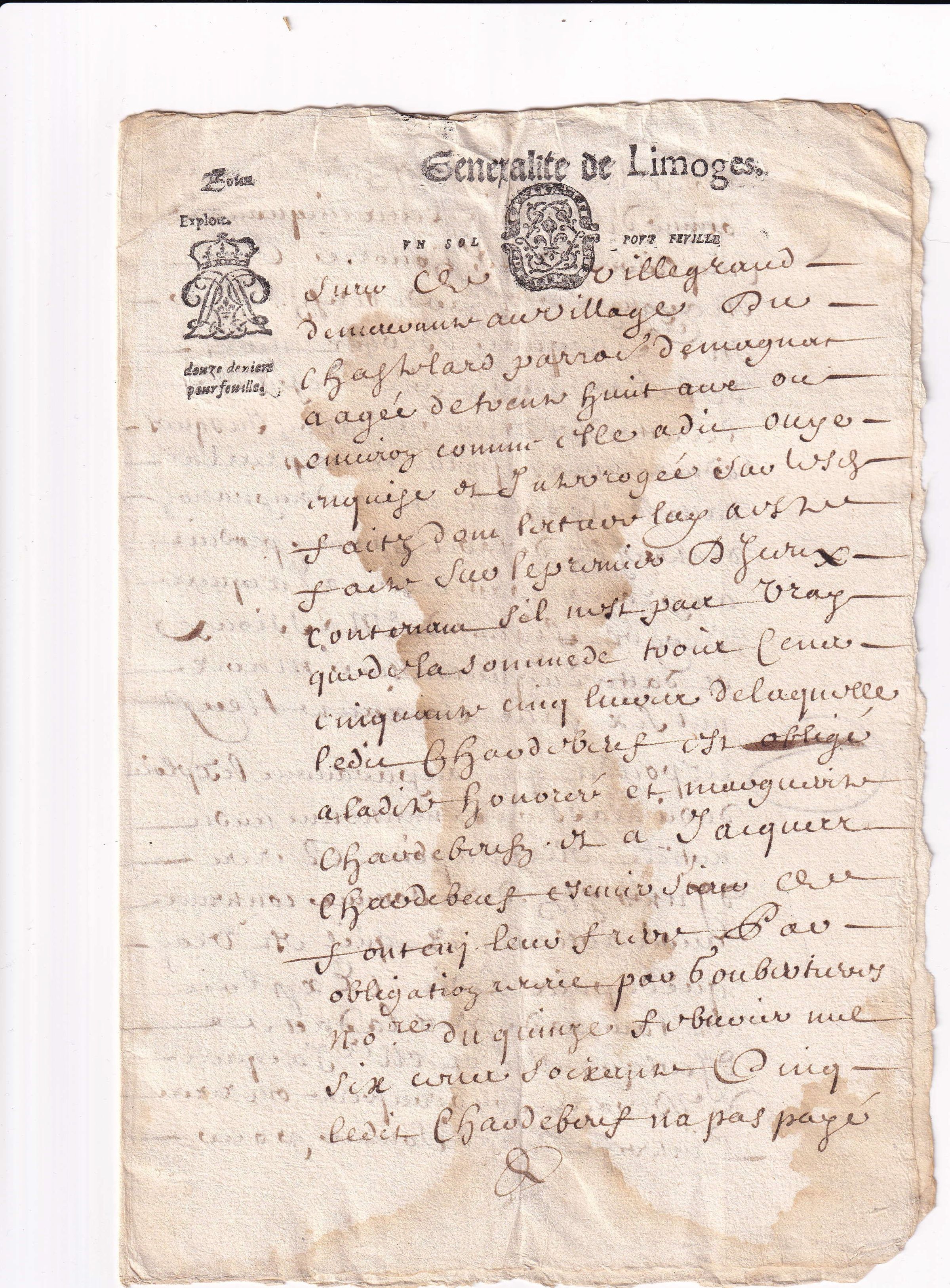
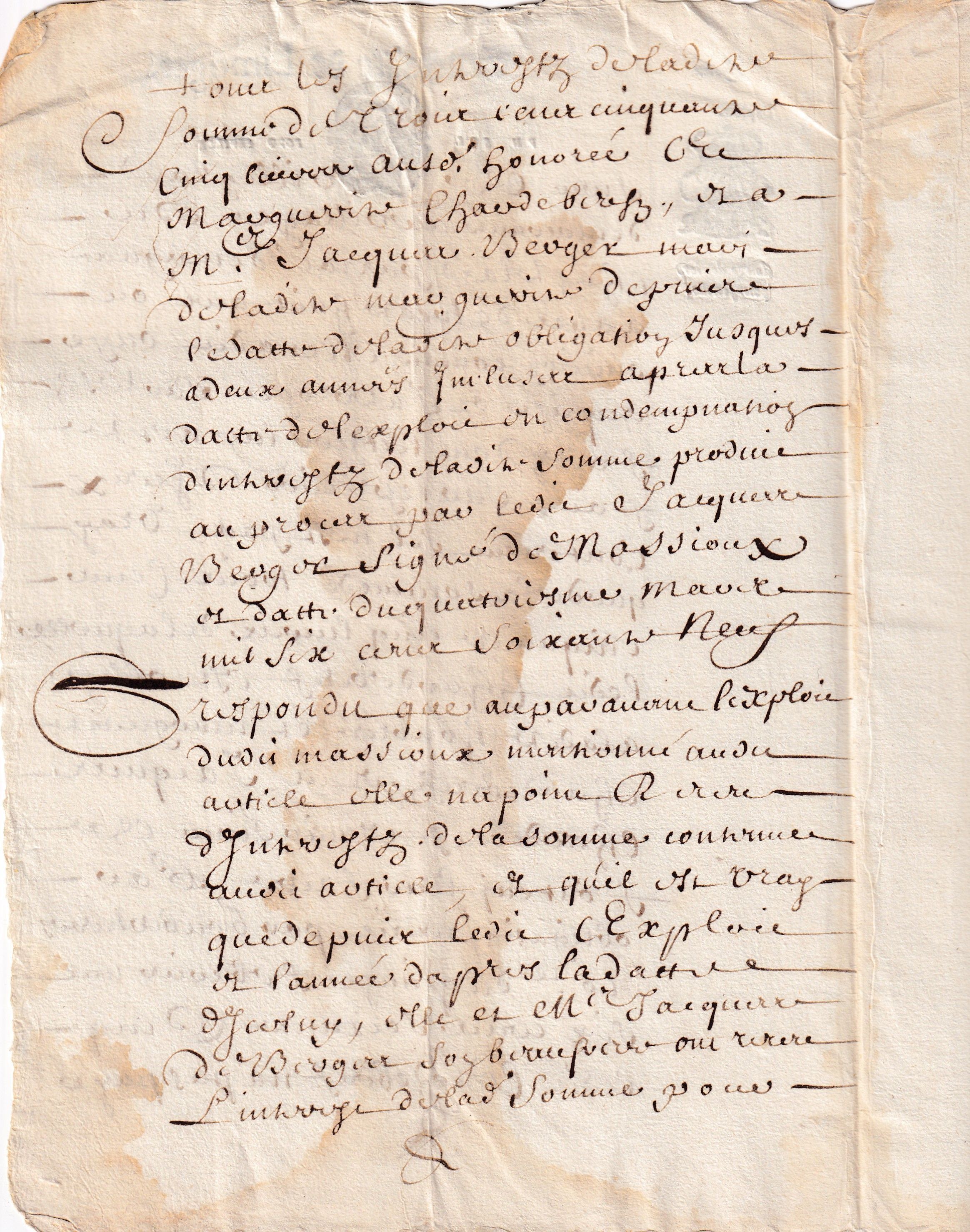
RE-LE-1700-0003
Legal action regarding unpaid monetary obligations and formal notification to appear before court authorities.
France
Business & Legal Documents
1650 – 1699
17th Century
Limoges, France
Transcription (Partial – Original French) Sénéchaussée de Limoges Exploit … demeurant au village de Chastelard … … obligé à payer la somme de trois livres cinq sols … … suivant obligation reçue par notaires … … lequel n’a pas payé ladite somme … … sommé de comparoir … … faute de quoi sera procédé contre lui … … signé et scellé … English Translation (Modernized Summary) Royal Court of Limoges Official Writ A resident of the village of Chastelard is legally bound to pay the sum of three livres and five sols, according to an obligation previously recorded by notaries. The individual has not paid the said amount. He is therefore formally summoned to appear before the court. Failure to comply will result in legal action being taken against him. Executed, signed, and sealed by the court authorities.
This document reflects the practical enforcement of debt law in Early Modern France. Financial obligations were formalized through notarial contracts, and failure to satisfy these debts led to court intervention. The Sénéchaussée courts served as regional judicial authorities empowered to compel payment, seize assets, or impose legal penalties. The text illustrates how civil financial disputes were processed within hierarchical legal systems that blended local administration with royal authority. Such documents offer valuable insight into historical credit systems, rural economies, and the mechanisms used to enforce contracts.
Description
This manuscript represents an official debt enforcement document issued by the Royal Sénéchaussée of Limoges during the 17th century. It records legal proceedings against an individual who failed to satisfy a notarized financial obligation. Courts of this type functioned as regional instruments of royal justice, ensuring compliance with civil contracts and maintaining economic order. The document exemplifies the procedural formalities of early modern legal administration. Written in iron gall ink on laid rag paper, it combines standardized legal formulas with individualized case details. Such summonses were served by court officers and constituted a crucial step in escalating financial disputes to formal judicial proceedings. Surviving examples help scholars understand historical debt practices, contract enforcement, and the social realities of rural financial life. The paper exhibits period wear, creasing, and staining consistent with centuries of preservation.