
Manuscript Legal Case Notes on Trusts and Powers of Appointment
Letter
Legal analysis of inheritance law, trusts, and testamentary powers of appointment.
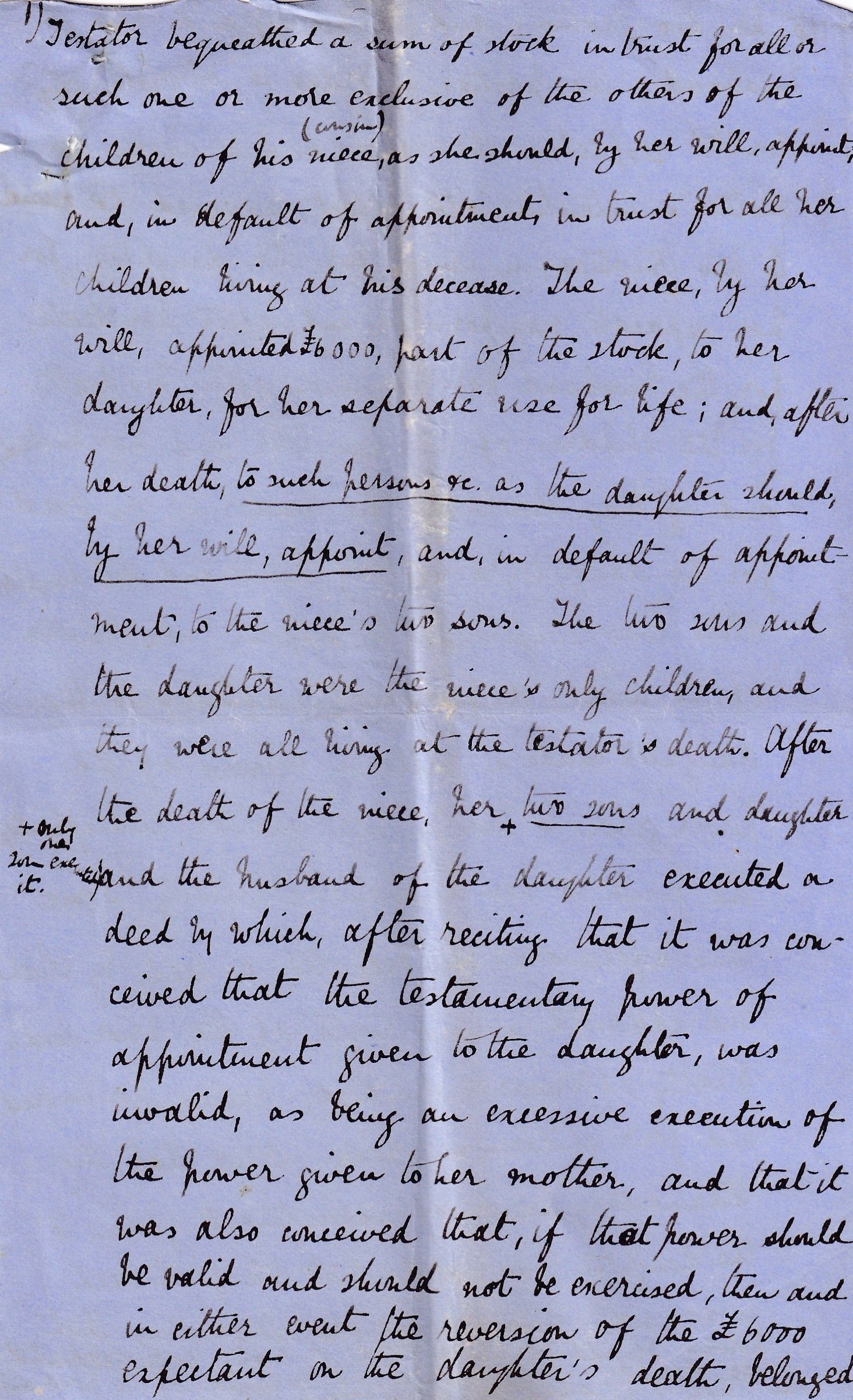 Manuscript Legal Case Notes on Trusts and Powers of Appointment
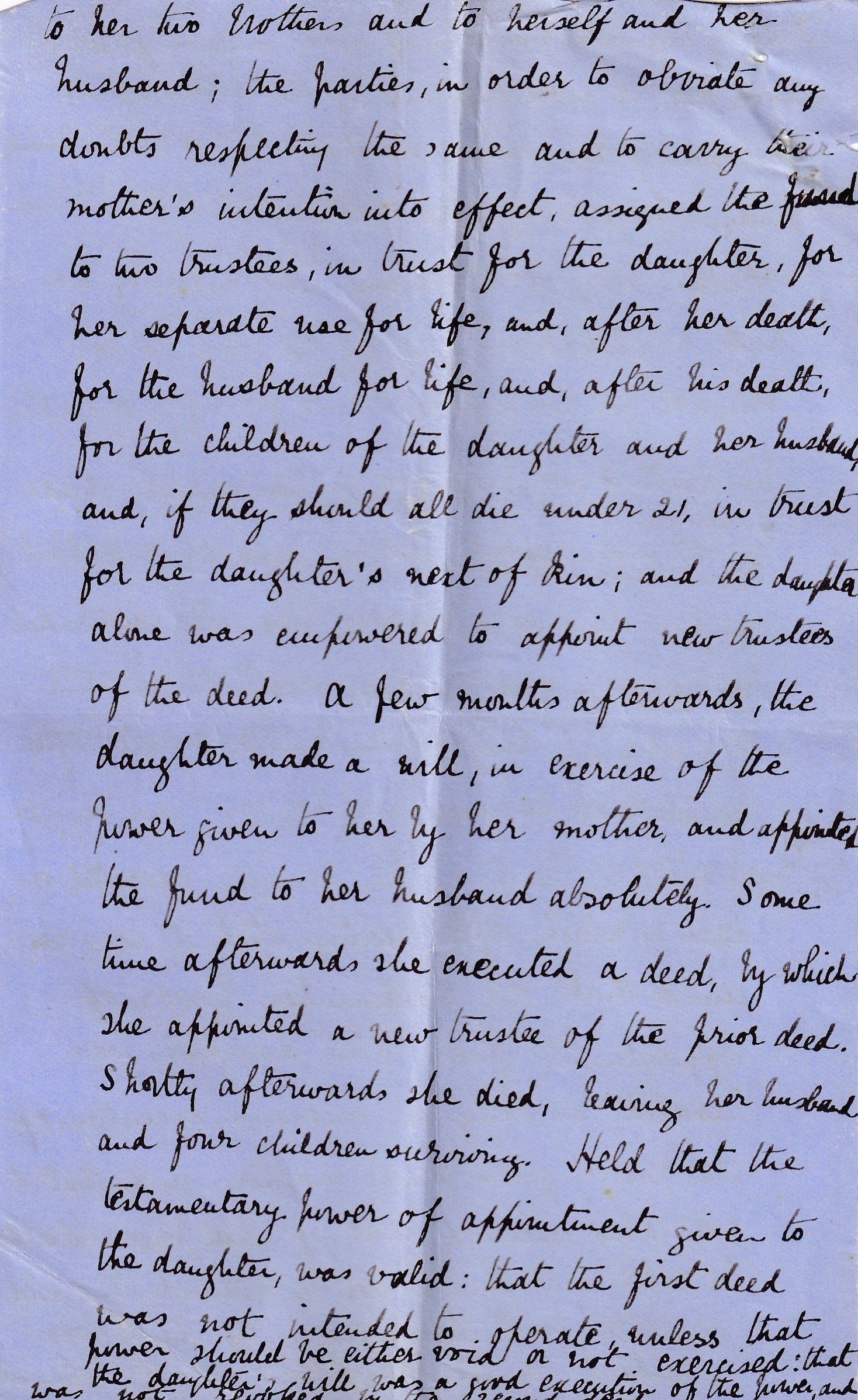 Manuscript Legal Case Notes on Trusts and Powers of Appointment – Image 2
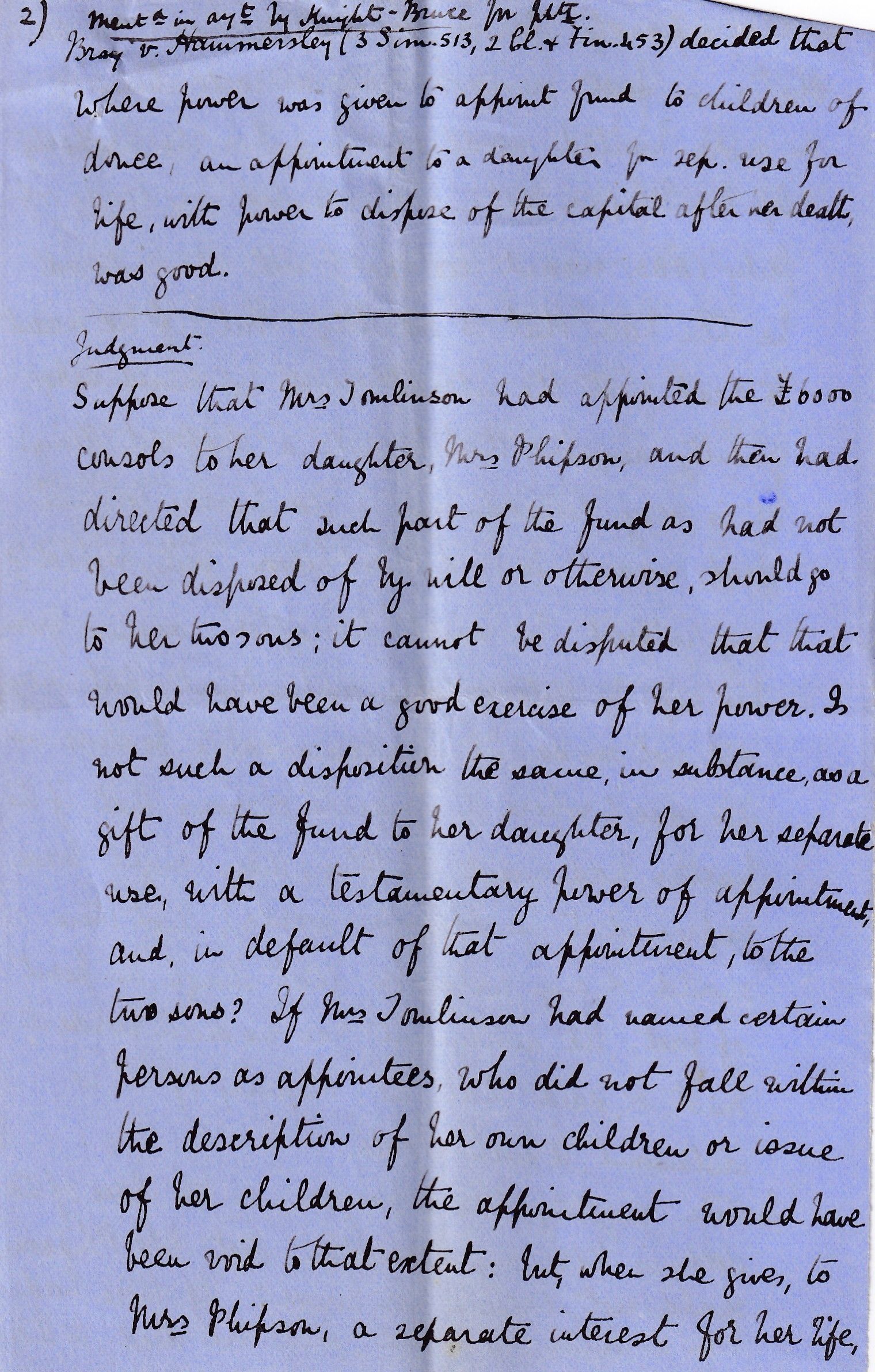 Manuscript Legal Case Notes on Trusts and Powers of Appointment – Image 3
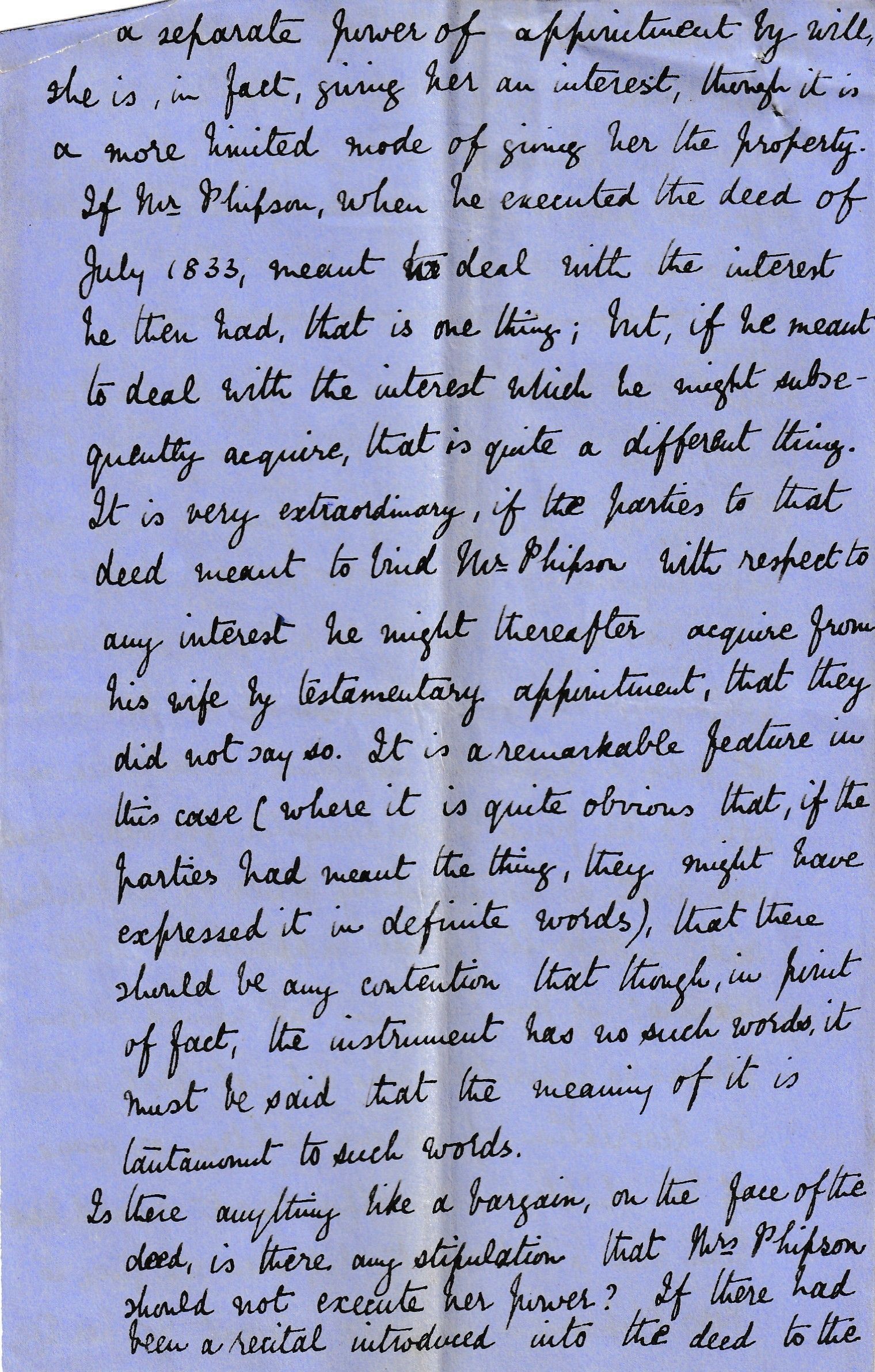 Manuscript Legal Case Notes on Trusts and Powers of Appointment – Image 4
 Manuscript Legal Case Notes on Trusts and Powers of Appointment – Image 5
 Manuscript Legal Case Notes on Trusts and Powers of Appointment – Image 6
 Manuscript Legal Case Notes on Trusts and Powers of Appointment – Image 7
 Manuscript Legal Case Notes on Trusts and Powers of Appointment – Image 8
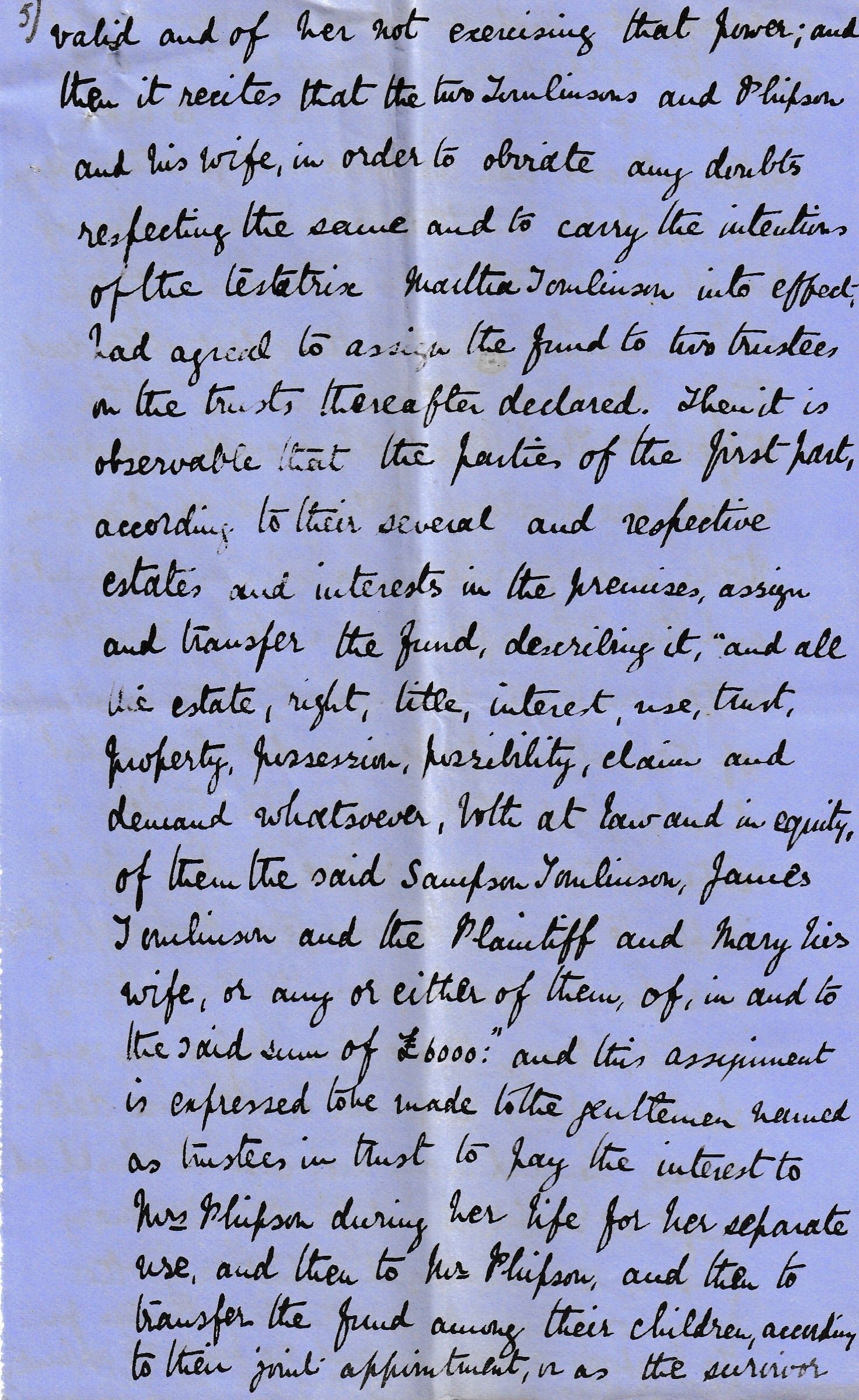 Manuscript Legal Case Notes on Trusts and Powers of Appointment – Image 9
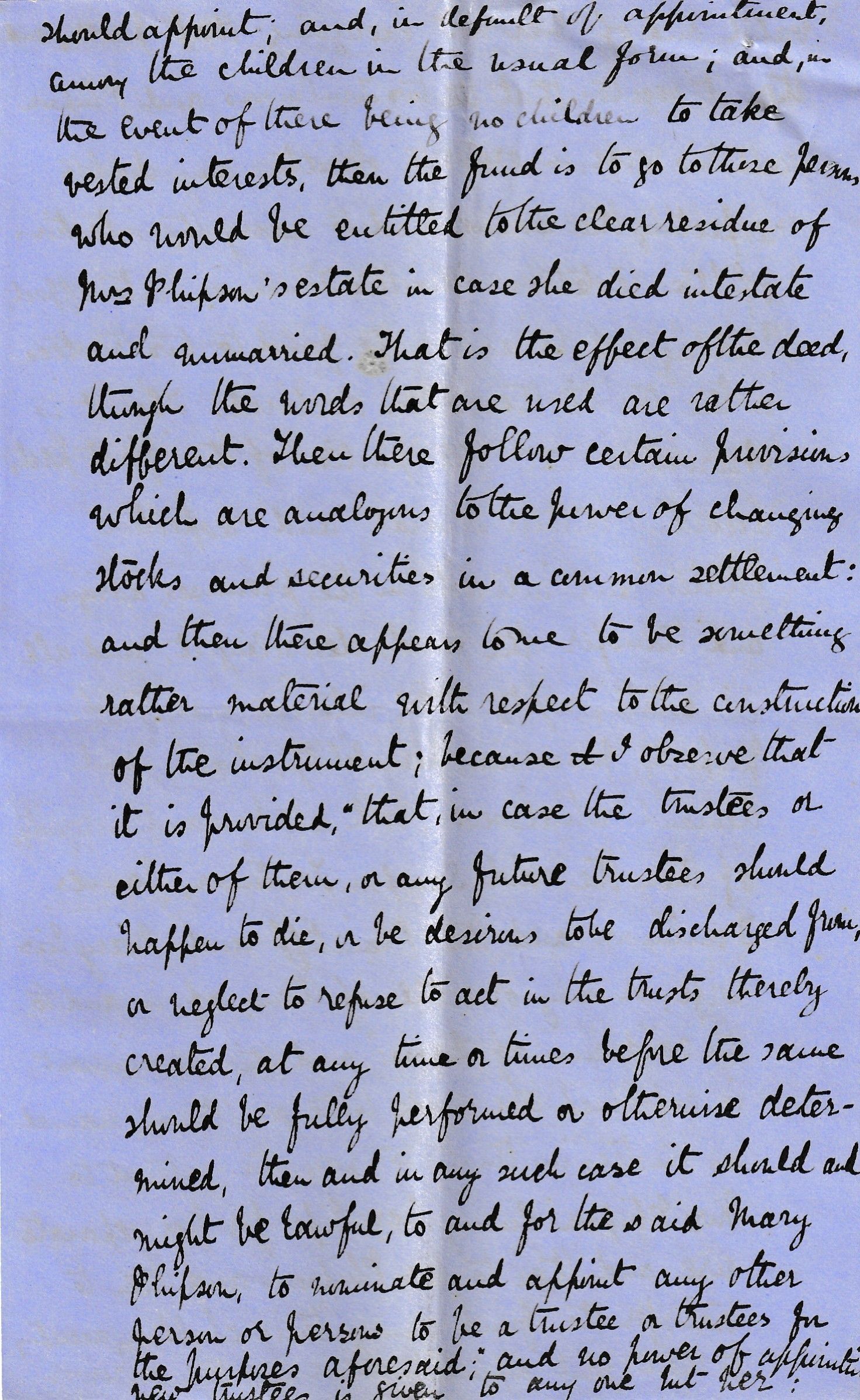 Manuscript Legal Case Notes on Trusts and Powers of Appointment – Image 10
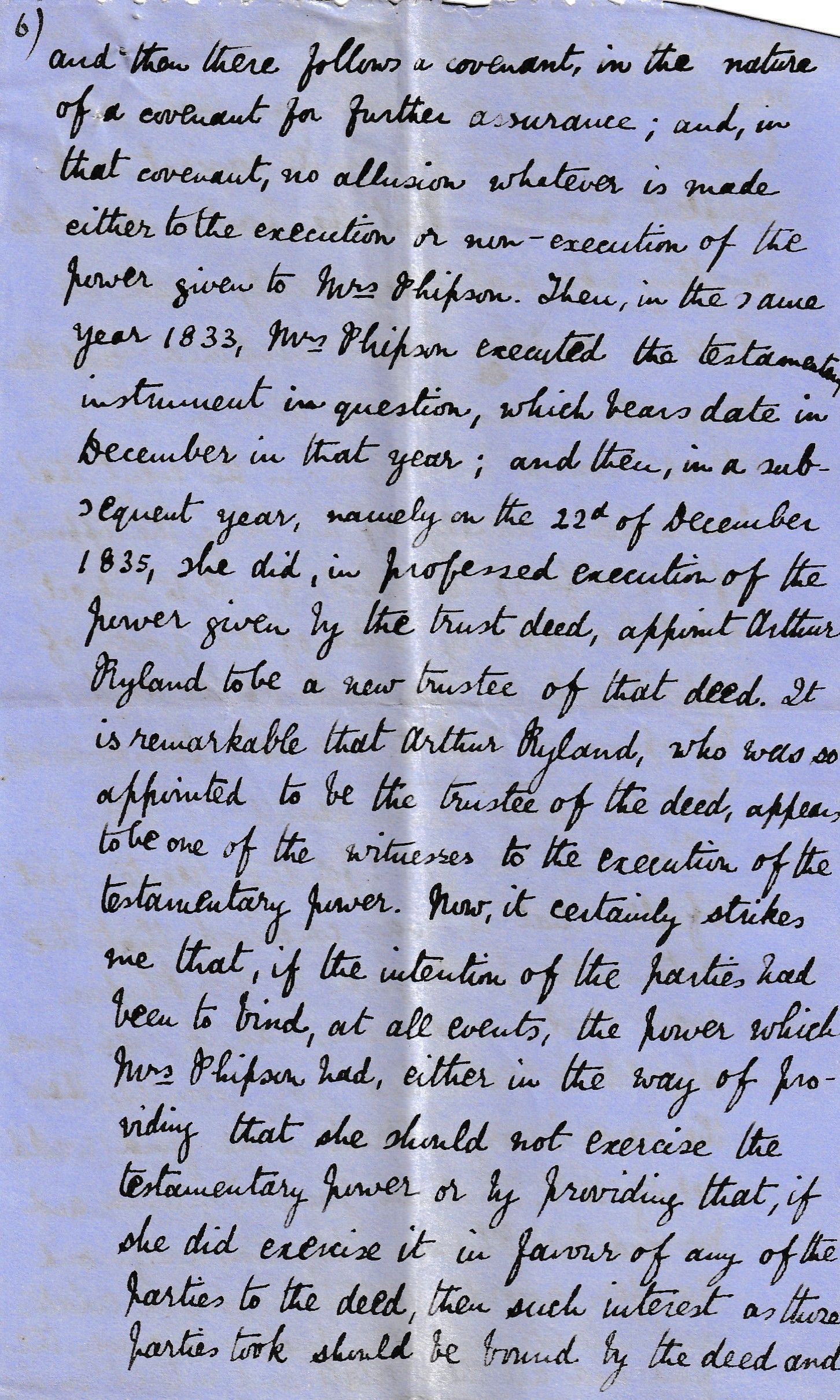 Manuscript Legal Case Notes on Trusts and Powers of Appointment – Image 11
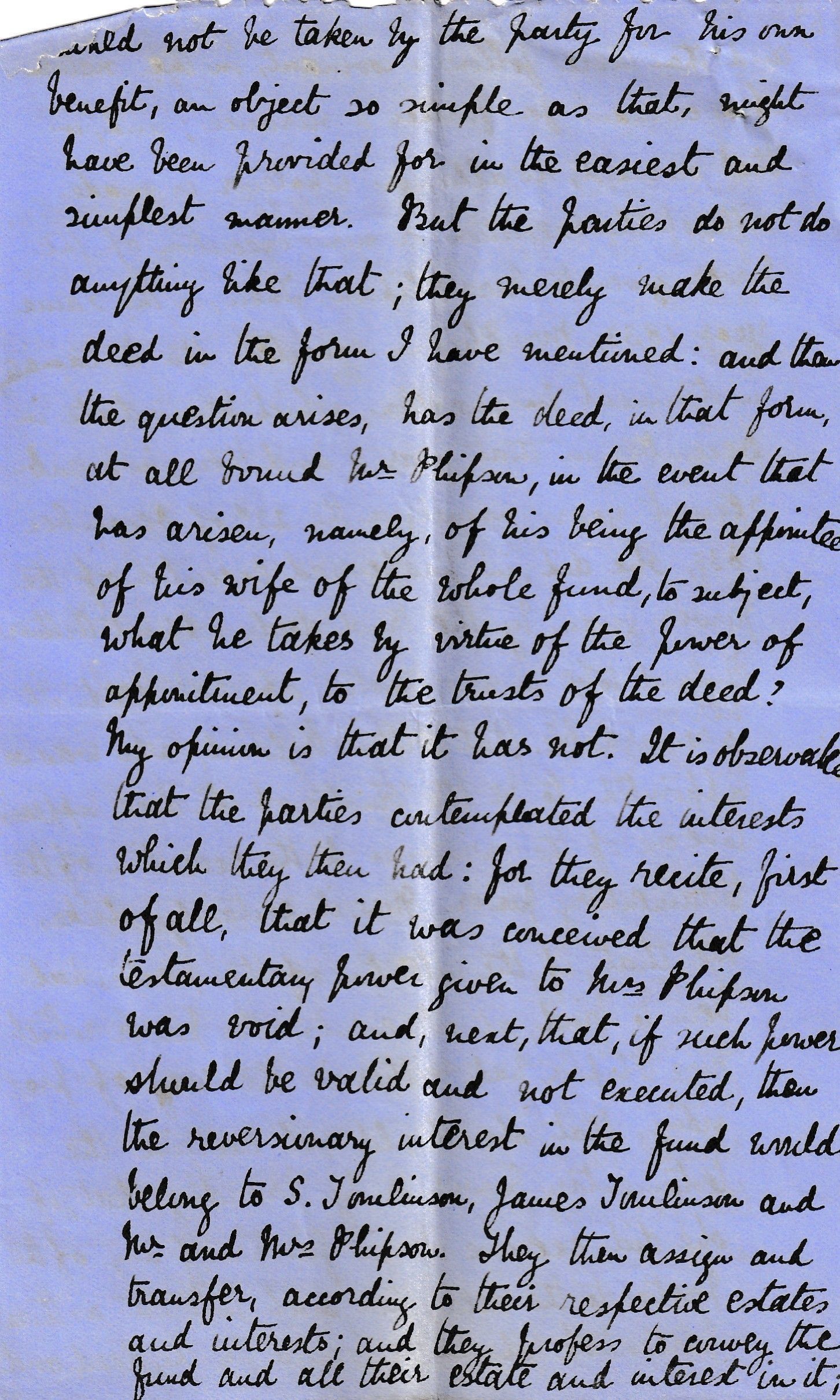 Manuscript Legal Case Notes on Trusts and Powers of Appointment – Image 12
 Manuscript Legal Case Notes on Trusts and Powers of Appointment – Image 13
 Manuscript Legal Case Notes on Trusts and Powers of Appointment – Image 14
RE-LE-1835-0031
The text discusses trust law and the “power of appointment” relating to a fund of £6000 in consols (government bonds).
England
Estate & Financial Documents
Jul 1833
19th Century
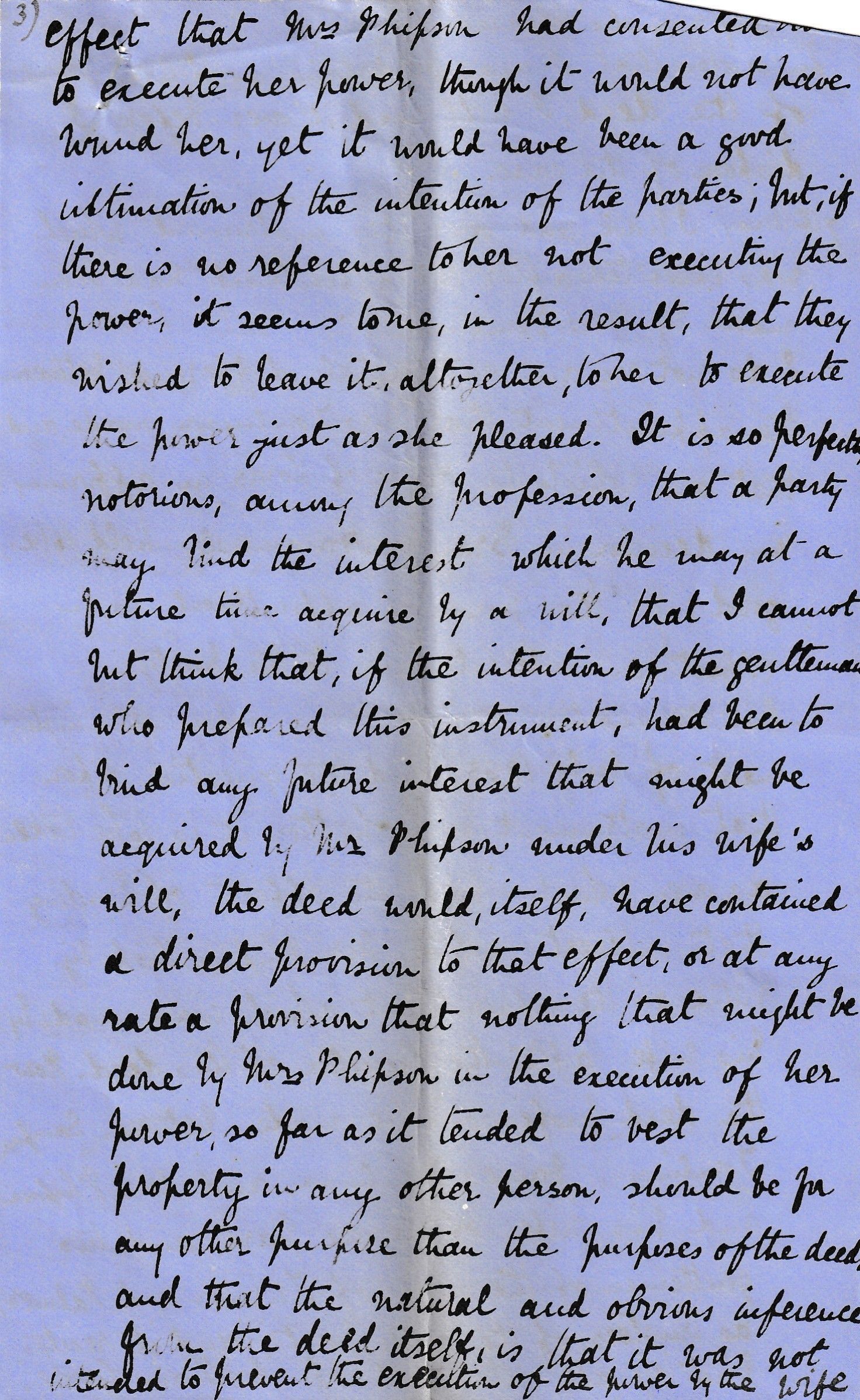
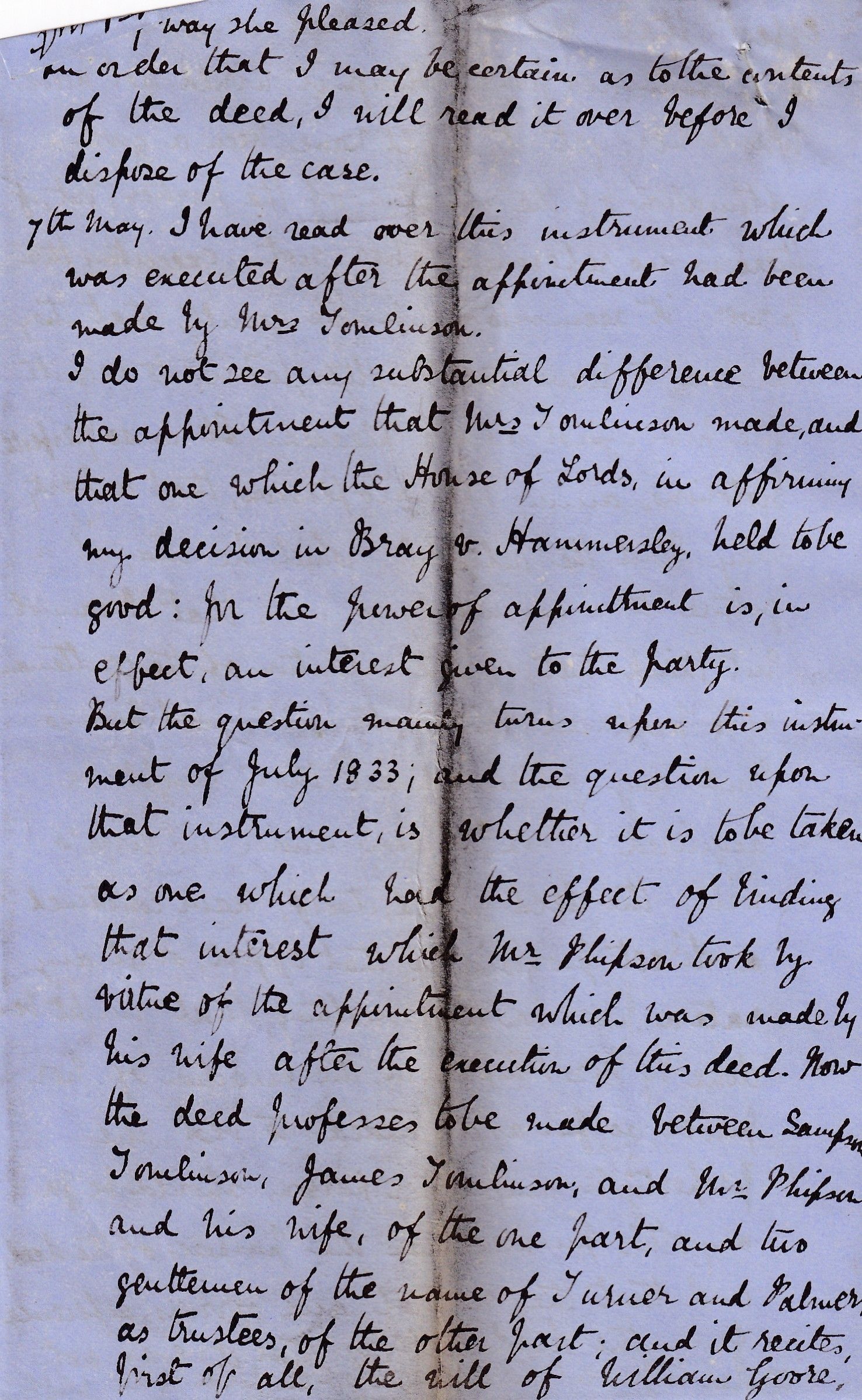
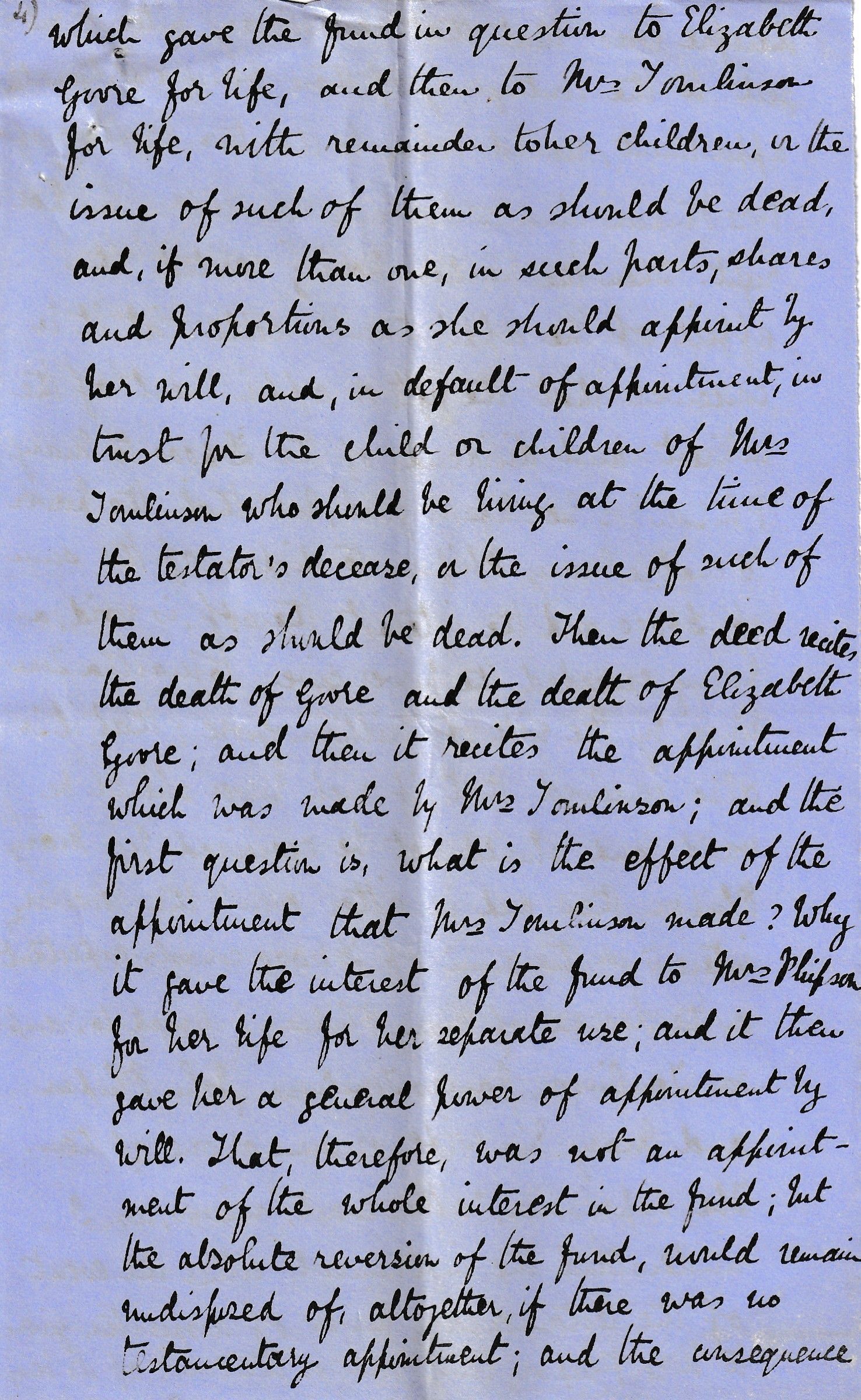
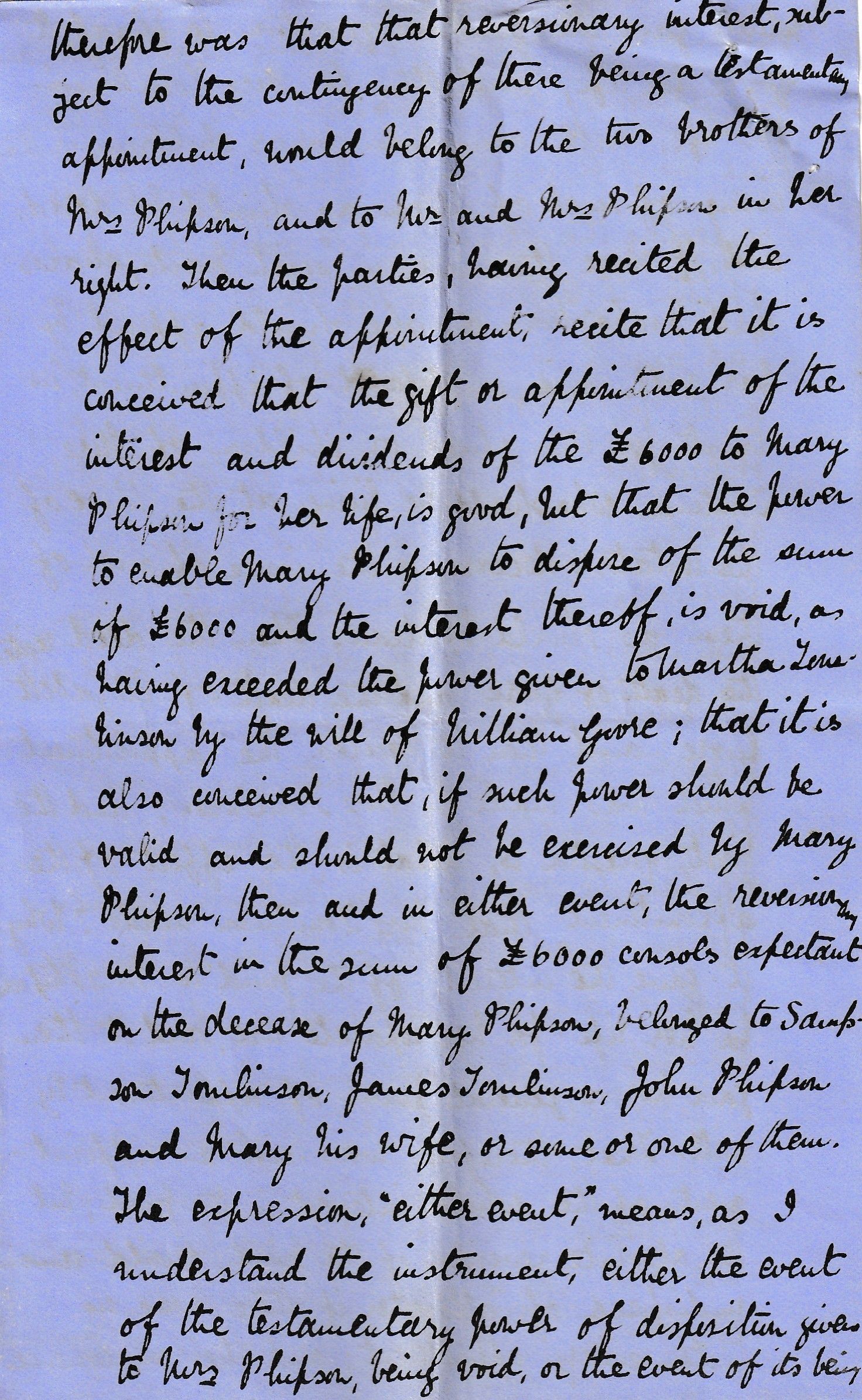
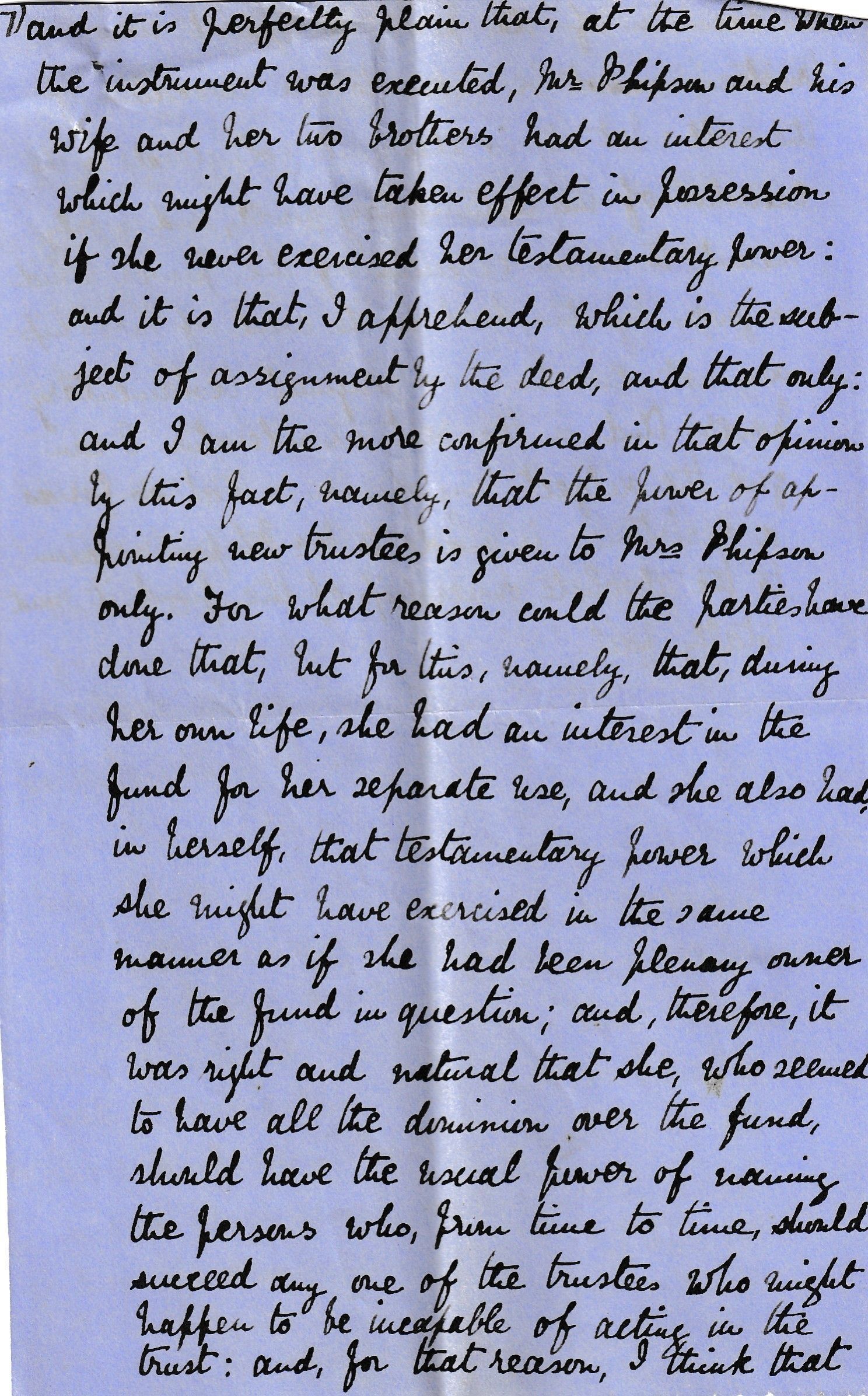
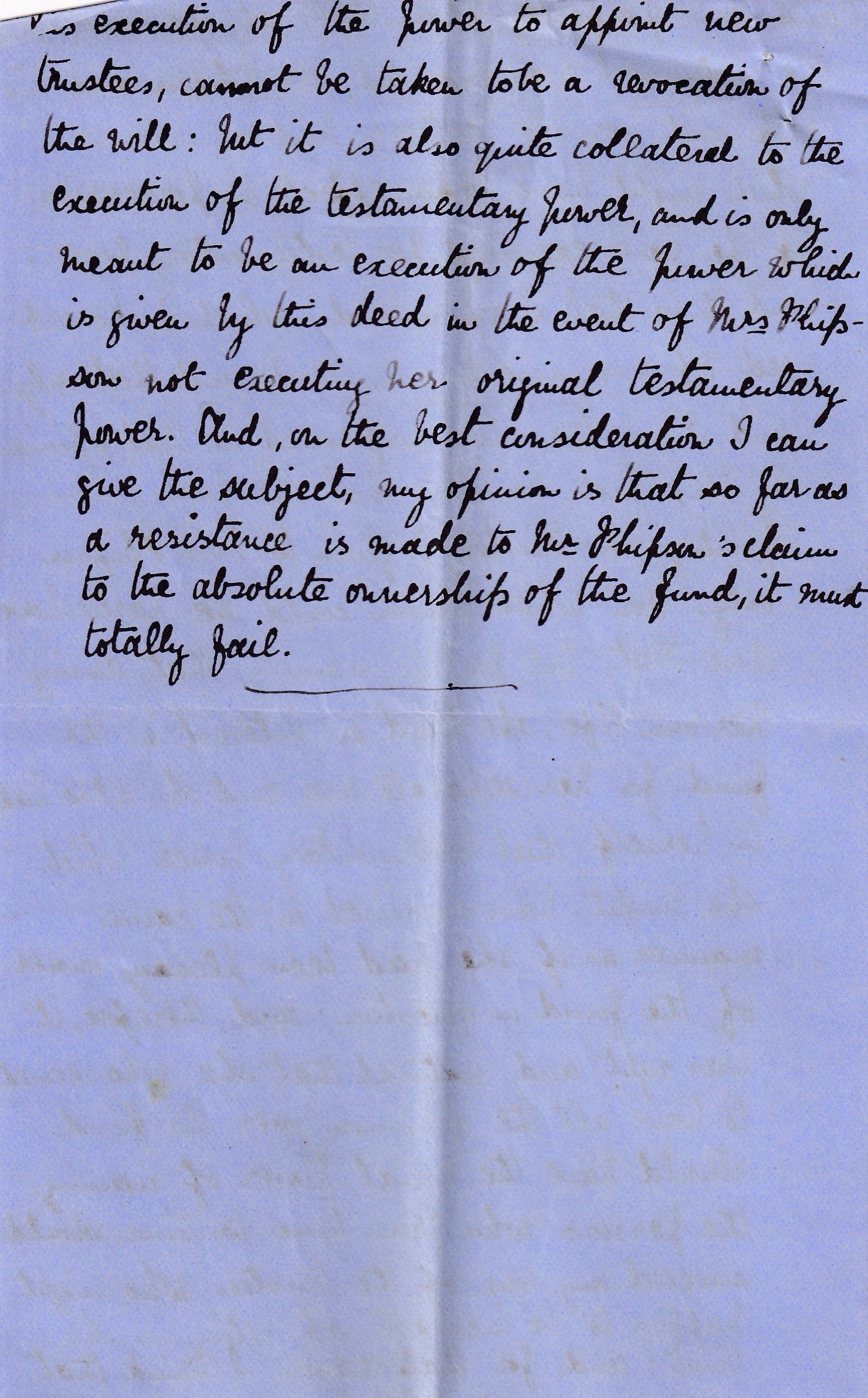
Full Modern English Translation Opening Case Summary A testator left a sum of stock in trust for all or any one or more of the children of his niece, to be chosen by her through her will. If she failed to appoint it, the trust was to be for all her children living at the time of his death. The niece, by her will, appointed £6000 (part of the stock) to her daughter for her separate use during her lifetime. After the daughter’s death, it was to go to such persons as the daughter might appoint by her own will. If she did not appoint anyone, it was to go to the niece’s two sons. The two sons and the daughter were the niece’s only children, and all were alive when the testator died. After the niece died, her two sons and daughter, along with the daughter’s husband, executed a deed. In that deed they stated: They believed that the testamentary power of appointment given to the daughter was invalid, because it was an excessive exercise of the power given to her mother. They also believed that if that power should be valid but not exercised, then the reversion of the £6000 after the daughter’s death would belong to the two brothers and to the daughter and her husband. In order to remove doubts about the matter and to carry out their mother’s intentions, they assigned the fund to two trustees. The trust arrangement provided: The daughter would receive the income for her separate use during her life. After her death, the husband would receive the income during his life. After the husband’s death, the fund would go to the children of the daughter and her husband. If those children all died under the age of 21, the fund would go to the daughter’s next of kin. The daughter was also given the power to appoint new trustees. Subsequent Events A few months later the daughter made a will exercising the power given to her by her mother and appointed the fund absolutely to her husband. Later she executed another deed appointing a new trustee of the earlier trust deed. Shortly afterward she died, leaving her husband and four children surviving. Court Holding The court held that: The testamentary power of appointment given to the daughter was valid. The first deed was not intended to operate if the power of appointment were exercised. The daughter’s will was a valid execution of the power of appointment. Reference to Legal Authority The case of Bray v. Hammersley (3 Sim. 513; 2 Cl. & Fin. 453) established that where a power is given to appoint a fund to the children of a niece, an appointment to a daughter for her separate use for life, with power to dispose of the capital after her death, is valid. Judicial Reasoning The judge explained that if Mrs. Tomlinson had simply appointed the £6000 consols to her daughter Mrs. Phipson and directed that whatever portion of the fund remained undisposed of should go to her two sons, that would clearly have been a proper exercise of her power. Giving the daughter the fund for her separate use with a power of appointment by will is essentially the same arrangement. In other words, she gave her daughter an interest in the property, although in a somewhat limited form. Discussion of the 1833 Deed When Mr. Phipson executed the deed in July 1833, it may have dealt with the interest he then possessed. However, if he intended the deed to control any future interest he might later acquire through his wife’s exercise of her testamentary power, that would be a completely different matter. The document contains no words clearly stating such an intention. If the parties had intended to bind him regarding future interests that might arise through his wife’s will, they could easily have said so explicitly. Because the instrument contains no such language, it cannot reasonably be interpreted as doing that. Observations About the Deed The deed does not contain any provision stating that Mrs. Phipson should not exercise her testamentary power. Even if such a provision had existed, it might not have been legally binding, but it would have indicated the intention of the parties. Instead, the deed appears to leave the power entirely in her hands to exercise as she pleased. It is well known in legal practice that a person may bind an interest that he may acquire in the future through a will. However, nothing in this document indicates that this was intended. Examination of the Earlier Trust The original will of William Gore had left the fund in question to Elizabeth Gore for life, then to Mrs. Tomlinson for life, and afterward to her children or their descendants. Mrs. Tomlinson later exercised her power of appointment, giving the fund to her daughter Mrs. Phipson for life with a testamentary power of appointment. Thus, the absolute ownership of the fund depended on whether Mrs. Phipson exercised that power. Interpretation of the Deed The deed states that the parties believed: The daughter’s testamentary power might be invalid. If it was valid but not exercised, the reversionary interest would belong to the brothers and to Mr. and Mrs. Phipson. Therefore, they assigned their present interests to trustees in order to implement what they believed to be the proper arrangement. But the deed only dealt with the interests they then possessed, not with any interest that might later arise through the daughter’s exercise of her testamentary power. Final Opinion of the Court At the time the deed was executed: Mrs. Phipson her husband and her two brothers each had a potential interest that would arise only if she failed to exercise her power of appointment. That possible interest was what they assigned to the trustees. But once Mrs. Phipson later exercised her power of appointment in favor of her husband, the entire fund passed to him. The earlier deed did not prevent that result. Final Conclusion The judge concluded that the deed did not bind or restrict Mr. Phipson with respect to the interest he later received through his wife’s will. Therefore, any challenge to Mr. Phipson’s claim to full ownership of the fund must fail. The husband’s title to the entire fund is valid.
English
This document reflects the culture of nineteenth-century British legal education and practice. Law during this period was heavily rooted in the traditions of equity courts, where judges interpreted wills and trusts to determine how property should pass between generations. Students and clerks frequently copied judicial decisions by hand as part of legal training. Printed law reports existed but were expensive and not always easily accessible, so handwritten summaries circulated widely among barristers, law clerks, and students. The subject matter—inheritance disputes within families—illustrates the social importance of property transmission in Victorian society. Trusts were commonly used to ensure that family wealth remained protected, particularly in cases involving married women whose property might otherwise fall under their husbands’ control. This manuscript therefore represents not only legal doctrine but also the social realities of nineteenth-century inheritance practices, where family wealth, marriage, and legal authority intersected. Physical Description • Handwritten manuscript on laid paper • Iron gall ink • Approximately 12–15 pages • Folded sheets, likely once stored with other legal papers • Written in cursive legal hand typical of nineteenth-century clerks
Historical Note
This manuscript concerns a complex legal issue involving equity law and testamentary trusts, particularly the power of appointment, a legal mechanism allowing someone to decide who ultimately receives property held in trust. The case involves a £6000 investment fund held in consols, a form of British government bond widely used during the eighteenth and nineteenth centuries. The original trust arrangement allowed a woman to distribute the fund among her children through her will. Questions arose when she appointed the fund to her daughter for life with a further power of appointment, raising the issue of whether that exceeded the authority granted by the original will. The legal reasoning in the manuscript references Bray v. Hammersley, a nineteenth-century case that helped define the limits of testamentary powers of appointment in English equity law. Such disputes were common in Victorian Britain as wealthy families increasingly used trusts to control inheritance, protect property, and manage investments across generations. The manuscript likely represents: • legal study notes • a clerk’s transcription of a judicial opinion • or a barrister’s working summary of a reported case. This handwritten manuscript records a nineteenth-century legal analysis concerning the administration of a trust fund and the exercise of testamentary powers of appointment. The text summarizes a dispute over whether a daughter validly exercised a power granted by her mother’s will to determine the ultimate beneficiary of a £6000 investment fund. The document discusses the interpretation of trust law principles and references established precedent, including the case Bray v. Hammersley. Such manuscripts were commonly produced by law students, clerks, or barristers studying or preparing legal arguments before the widespread availability of printed law reports. The manuscript provides insight into the legal culture of Victorian Britain, when handwritten case summaries were an essential tool for learning and practicing law. It also illustrates the complexity of inheritance arrangements used by families seeking to control the distribution of wealth across generations.