
Business Reference Letter from Reed & Carnrick, Manufacturing Chemists – New York
Letter
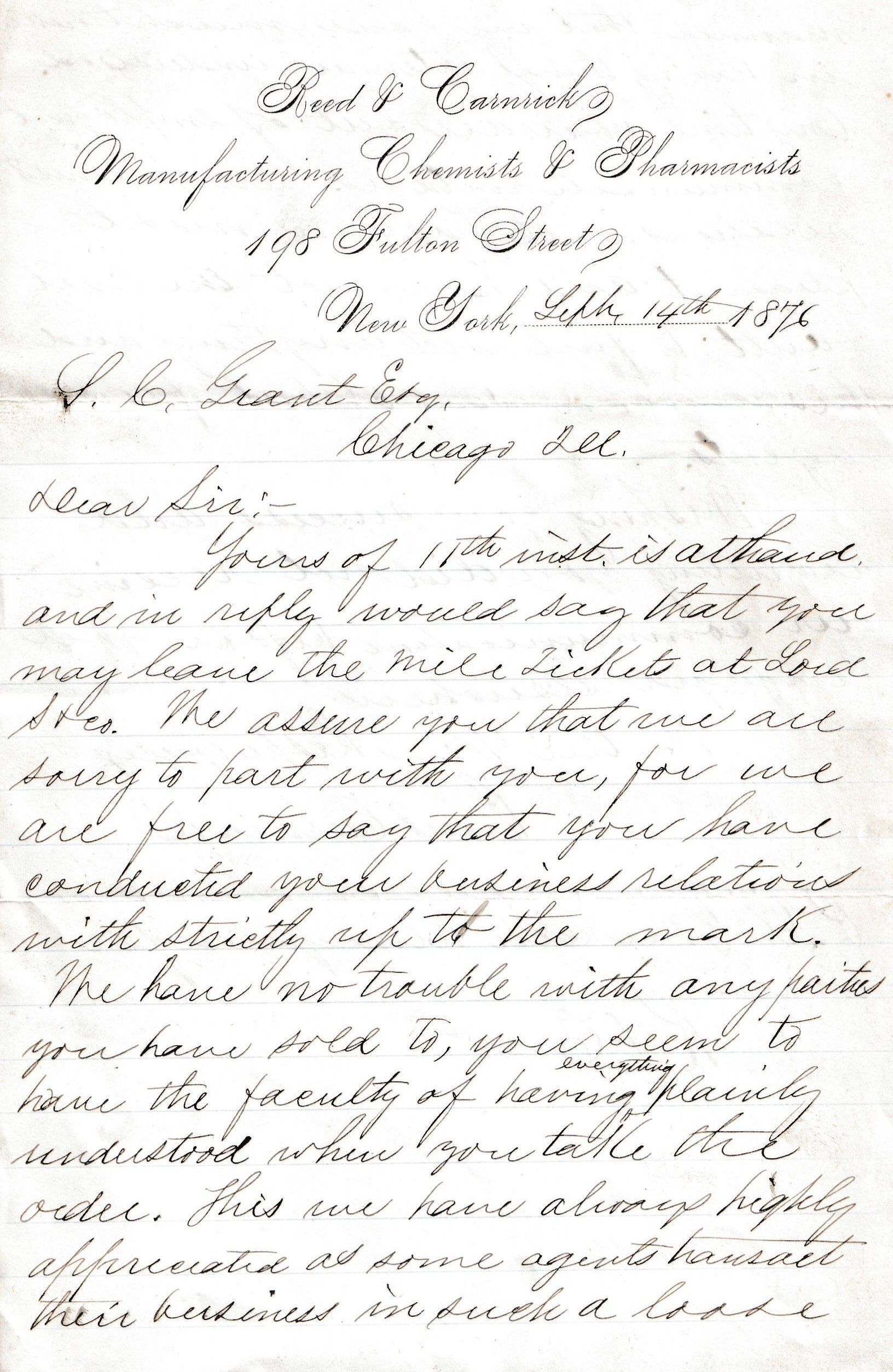
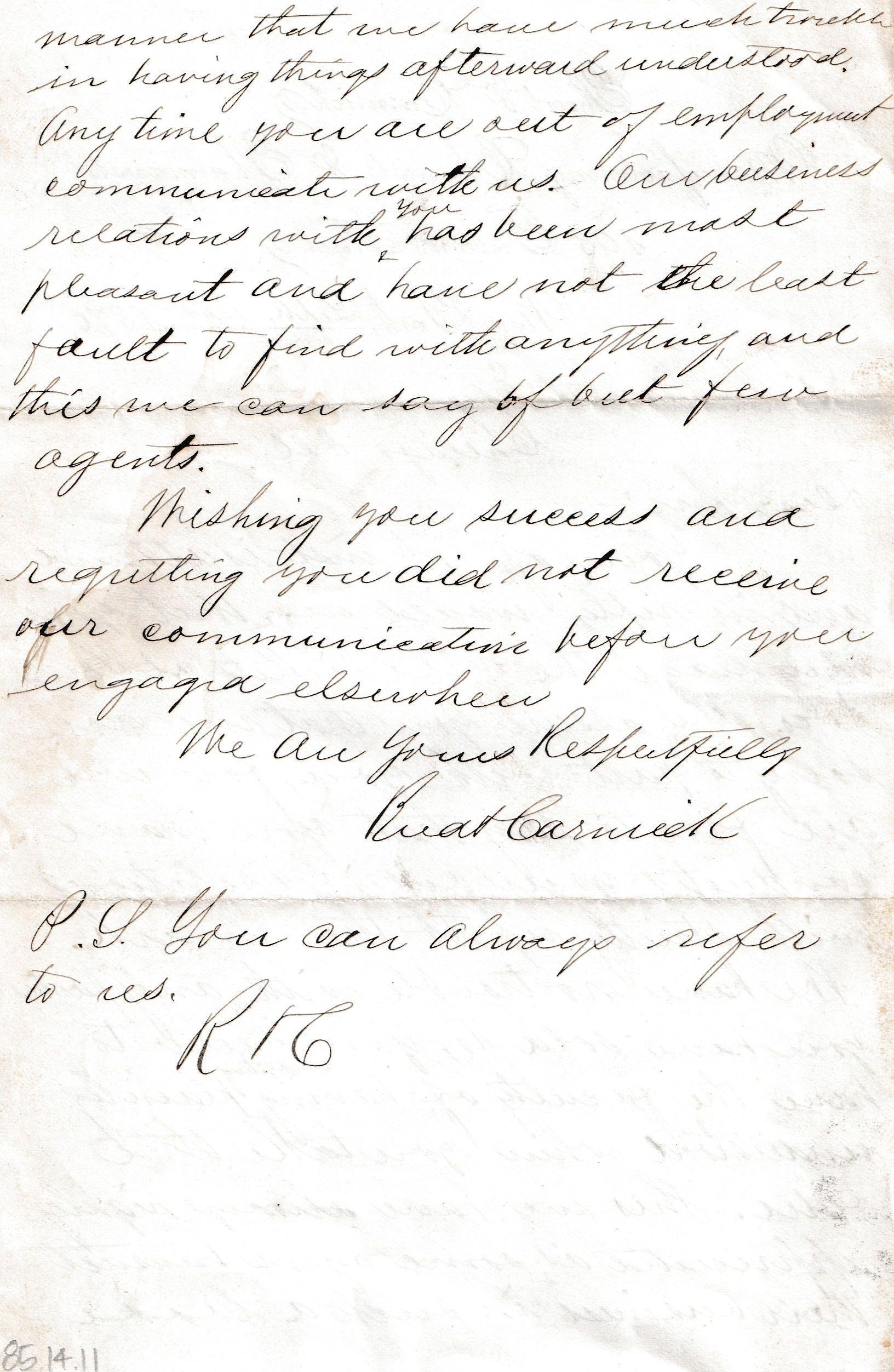
A business letter dated September 14, 1876 from the pharmaceutical firm Reed & Carnrick of New York to J. C. Grant of Chicago, praising his professionalism and reliability as a sales agent and offering continued reference for future employment.
RE-LE-1876-0040
Business reference and professional commendation
New York
Letters of Recommendation
Sep 14, 1876
19th Century
Manufacturing Chemists & Pharmacists 198 Fulton Street New York, Sept. 14th, 1876 J. C. Grant Esq. Chicago Ill. Dear Sir, Yours of 11th inst. is at hand and in reply I would say that you may leave the Milk Lickett at Lock No. 10. We assure you that we are sorry to part with you, for we are free to say that you have conducted your business relations with strictly up to the mark. We have no trouble with any parties you have sold to, you seem to have the faculty of having everything understood when you take the order. This we have always highly appreciated as some agents transact their business in such a loose manner that we have much trouble in having things afterwards understood. Any time you are out of employment communicate with us. Our business relations with you have been most pleasant and have not the least fault to find with anything and this we can say of but few agents. Wishing you success and regretting you did not receive our communication before you engaged elsewhere. We are yours respectfully Reed & Carnrick P.S. You can always refer to us. R & C
English
This document reflects the professional culture of late 19th-century commercial sales networks. Pharmaceutical companies often relied on traveling sales agents who represented their products across different cities and regions. These agents took orders from retailers, physicians, and druggists, sending them back to the manufacturer for fulfillment. Written references such as this letter served as the primary form of professional credentialing in the period. Because business was conducted largely through personal trust and reputation, a favorable letter from an established company like Reed & Carnrick could significantly influence employment opportunities. The emphasis on clear order-taking and careful communication highlights the logistical challenges of the era, when orders were transmitted by letter and errors could result in costly shipping mistakes.
Historical Note
This handwritten business letter from September 14, 1876 was written on the letterhead of Reed & Carnrick, a New York pharmaceutical manufacturing firm. Addressed to J. C. Grant in Chicago, the letter serves as a professional reference praising Grant’s reliability and skill as a sales agent. The authors commend Grant for conducting business “strictly up to the mark” and note his ability to clearly communicate orders and maintain positive relationships with customers. They express regret at his departure and offer to serve as a future reference. The document provides insight into the professional networks of the American pharmaceutical industry during the late nineteenth century, when traveling sales agents played a key role in distributing medicines and building national commercial connections. Reed & Carnrick was a prominent 19th-century American pharmaceutical manufacturer based in New York City. The firm produced a variety of patent medicines and pharmaceutical preparations during the late 1800s. Fulton Street in lower Manhattan was a major commercial district during the 19th century and home to numerous pharmaceutical houses and wholesale drug firms. The letter references a product likely called Milk Lickett, which may have been a medicinal preparation or proprietary pharmaceutical product sold by the company. The tone and language reflect the expanding commercial networks of the Gilded Age, when national distribution systems for medicines and consumer goods were developing rapidly.