
19 – 1.7.24 Letter from “Dooley” to Jesse Redyard – January 7, 1924
Letter
A heartfelt and intimate letter from a young Alabama schoolteacher expressing homesickness, social life, and emotional attachment to her distant sweetheart, offering vivid insight into daily life and relationships in the early 1920s American South.
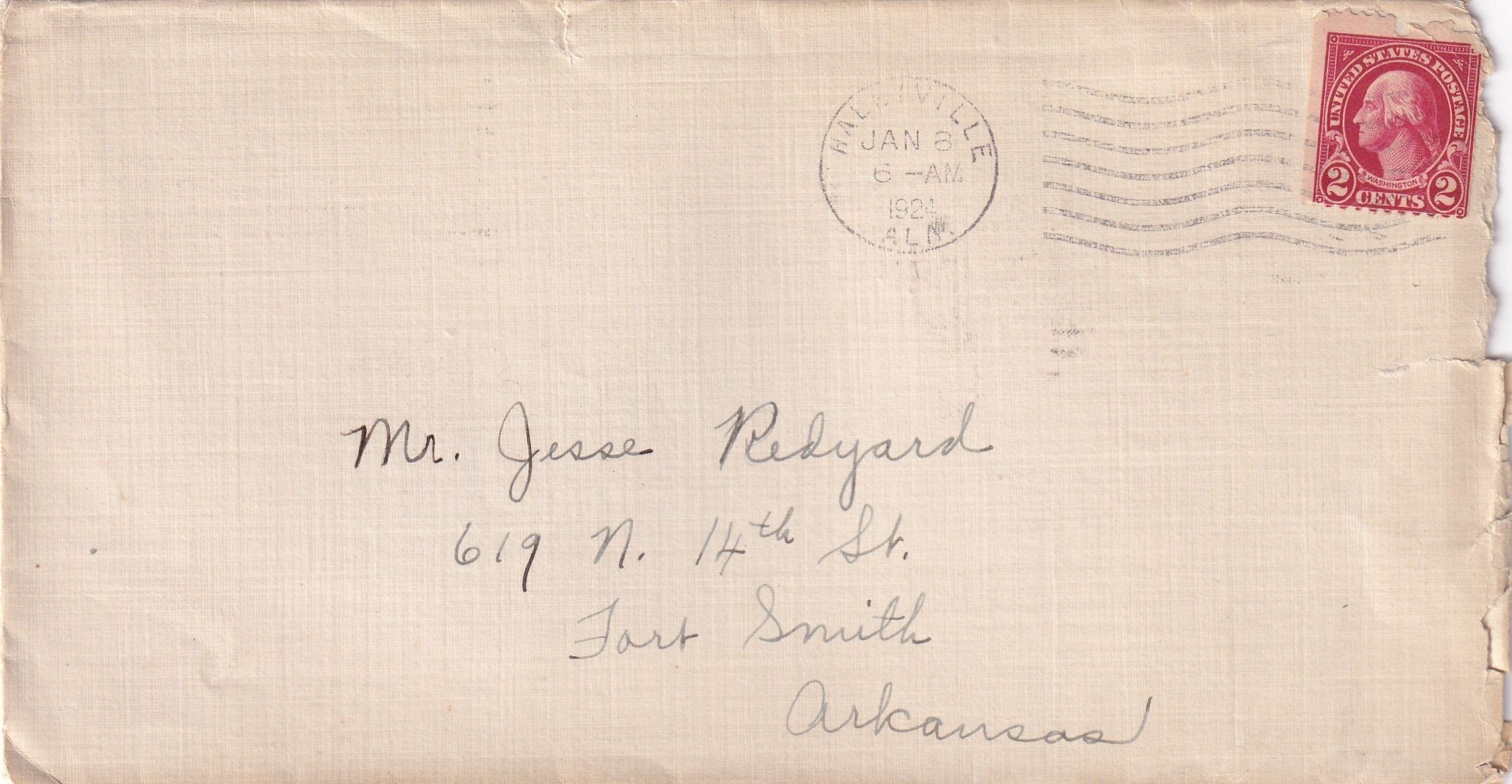 19 – 1.7.24 Letter from “Dooley” to Jesse Redyard – January 7, 1924
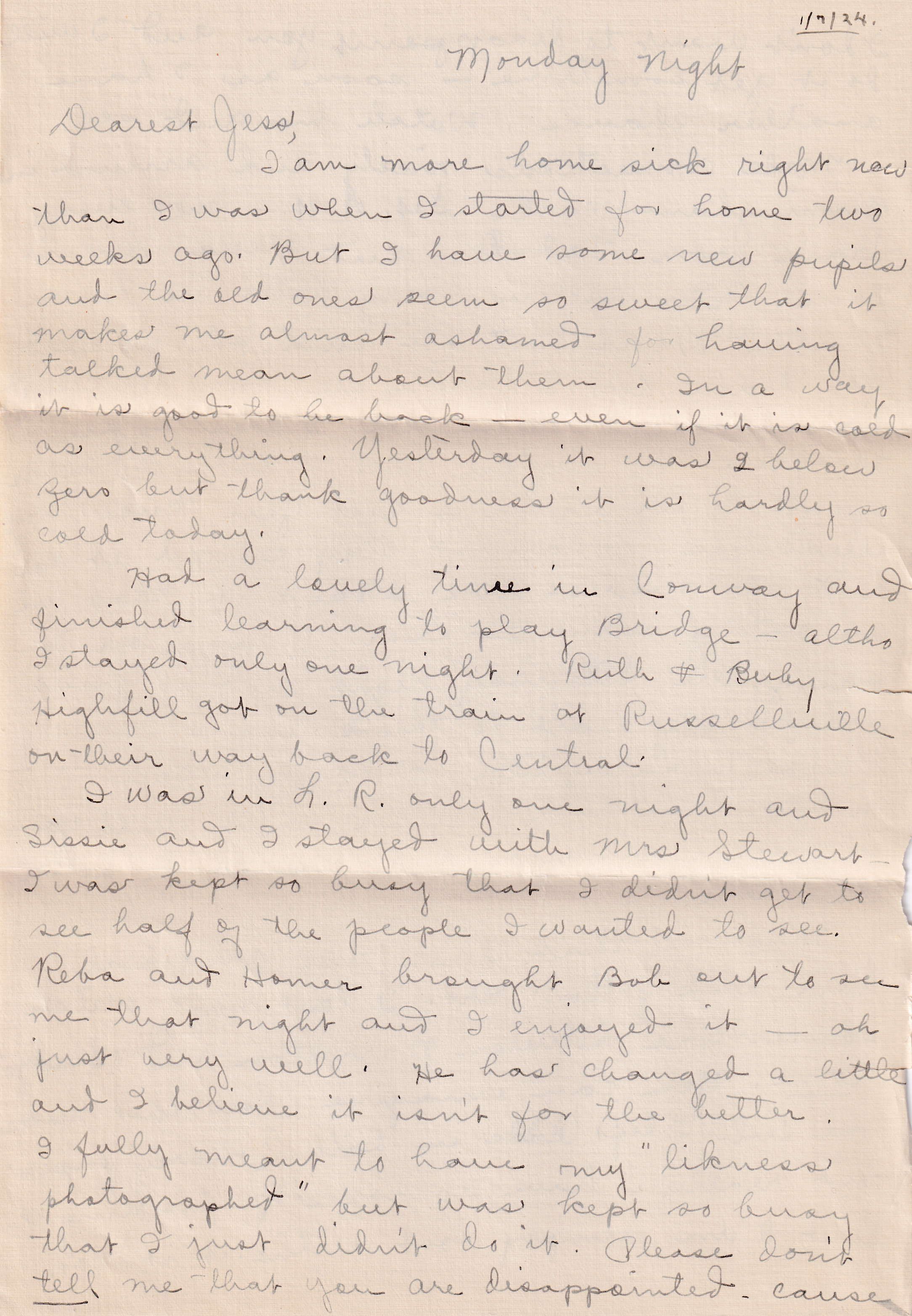 19 – 1.7.24 Letter from “Dooley” to Jesse Redyard – January 7, 1924 – Image 2
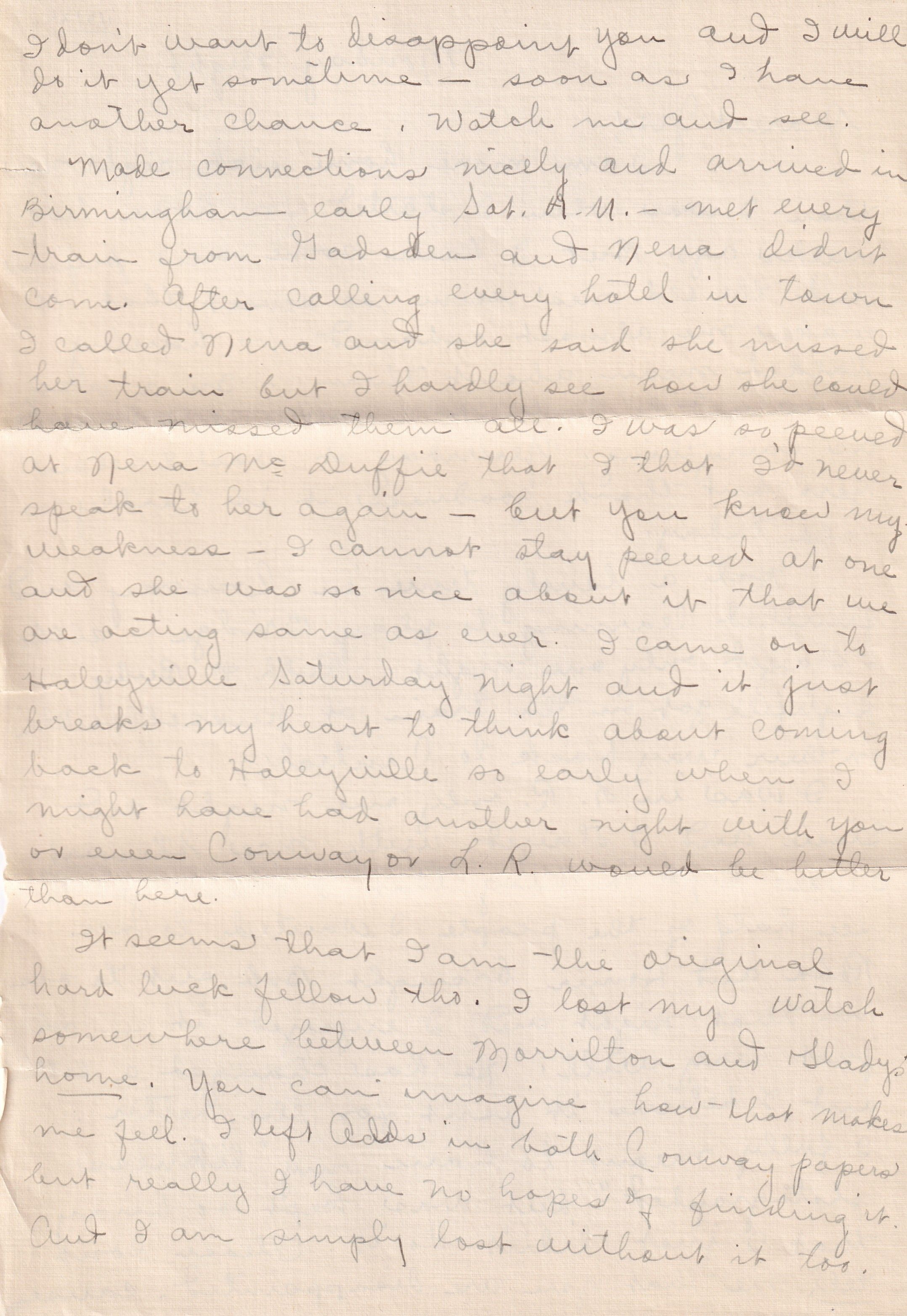 19 – 1.7.24 Letter from “Dooley” to Jesse Redyard – January 7, 1924 – Image 3
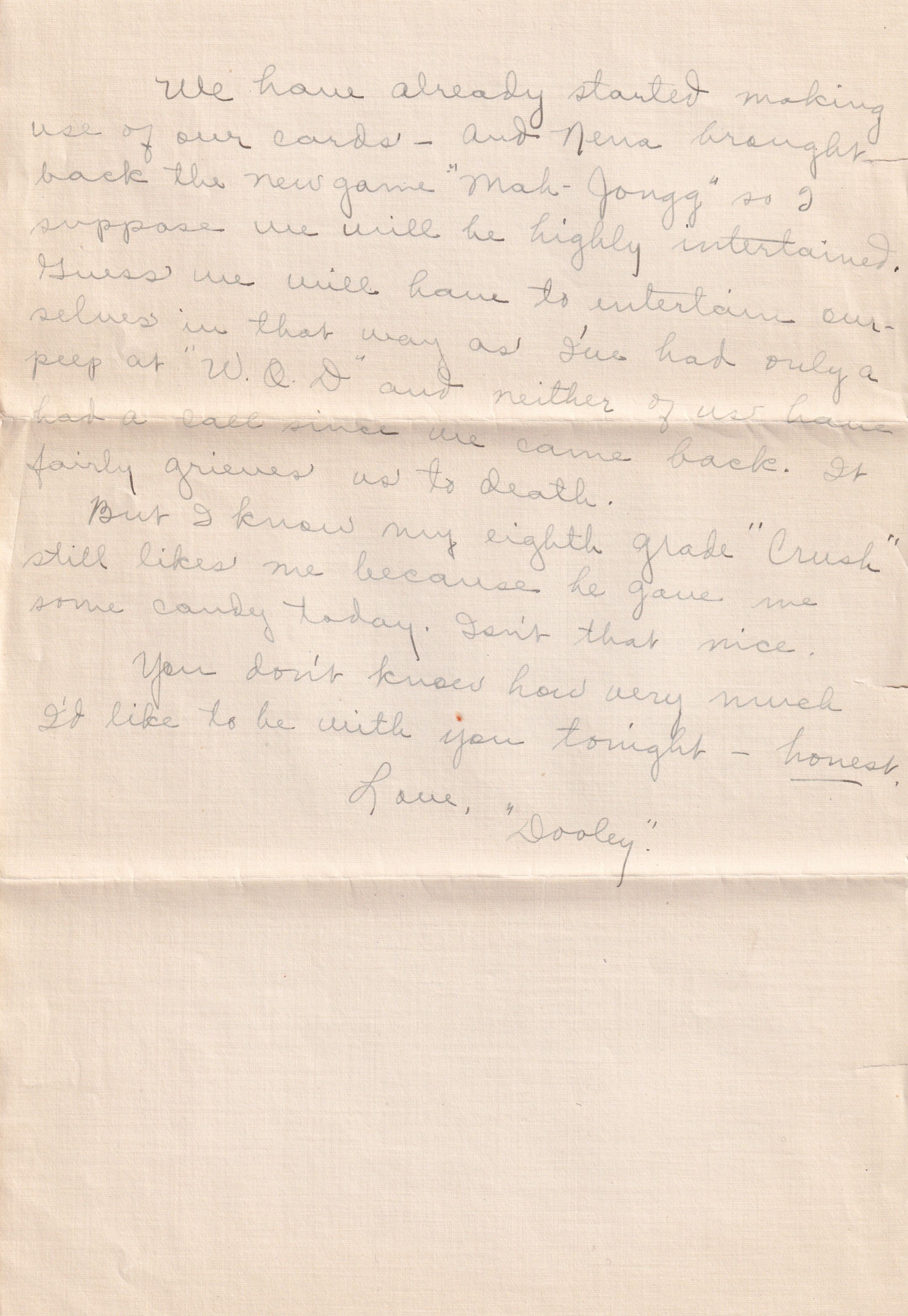 19 – 1.7.24 Letter from “Dooley” to Jesse Redyard – January 7, 1924 – Image 4
RE-CALLHE-0054
Personal correspondence; romantic relationship; homesickness; social life; travel experiences
Alabama
Arkansas
United States
North America
Love & Courtship
Jan 7, 1924
20th Century
Dearest Jess, I am more home sick right now than I was when I started for home two weeks ago. But I have some new pupils and the old ones seem so sweet that it makes me almost ashamed for having talked mean about them. In a way it is good to be back — even if it is cold as everything. Yesterday it was 2 below zero but thank goodness it is hardly so cold today. Had a lovely time in Conway and finished learning to play Bridge — although I stayed only one night. Ruth & Ruby Highfill got on the train at Russellville on their way back to Central. I was in L. R. only one night and Sissie and I stayed with Mrs. Stewart. I was kept so busy that I didn’t get to see half of the people I wanted to see. Reba and Homer brought Bob out to see me that night and I enjoyed it — oh just very well. He has changed a little and I believe it isn’t for the better. I fully meant to have my “likeness photographed” but was kept so busy that I just didn’t do it. Please don’t tell me that you are disappointed, cause I don’t want to disappoint you and I will do it yet sometime — soon as I have another chance. Watch me and see. Made connections nicely and arrived in Birmingham early Sat. A.M. — met every train from Hadsden and Nena didn’t come. After calling every hotel in town I called Nena and she said she missed her train but I hardly see how she could have missed them all. I was so peeved at Nena & Duffie that I thought I’d never speak to her again — but you know my weakness — I cannot stay peeved at one and she was so nice about it that we are acting same as ever. I came on to Haleyville Saturday night and it just breaks my heart to think about coming back to Haleyville so early when I might have had another night with you or even Conway or L. R. would be better than here. It seems that I am the original hard luck fellow tho. I lost my watch somewhere between Morrilton and Shady Grove. You can imagine how that makes me feel. I left odds in both Conway papers but really I have no hopes of finding it. And I am simply lost without it too. We have already started making use of our cards and Nena brought back the new game “Mah-Jongg” so I suppose we will be highly entertained. I guess we will have to entertain ourselves in that way as I’ve had only a peep at W.Q.D. and neither of us have had a date since we came back. It fairly grieves us to death. But I know my eighth grade “crush” still likes me because he gave me some candy today. Isn’t that nice. You don’t know how very much I’d like to be with you tonight — honest. Love, “Dooley”
English
This letter offers a vivid portrait of a young, educated Southern woman in the 1920s navigating independence, employment, and romantic attachment. Her role as a schoolteacher reflects expanding opportunities for women, while her emotional dependence on correspondence underscores the importance of letter writing in maintaining relationships across distance. Social activities—card games like Bridge and Mah-Jongg, visiting friends, and courtship rituals—illustrate middle-class leisure culture. The tone reflects a blend of modern independence and traditional romantic expectations typical of the era.
Historical Note
The reference to Mah-Jongg reflects its surge in popularity in the United States during the early 1920s. Travel by rail between towns like Conway, Russellville, and Birmingham highlights regional mobility in the post-WWI period. Teaching positions for young unmarried women were common and often required relocation, contributing to long-distance relationships like the one seen here. The casual mention of temperatures (“2 below zero”) and everyday inconveniences (lost watch, missed trains) adds authenticity to lived experiences in rural Southern communities.