
13 – 11.5.23 Letter from “Dooley” to Jesse Redyard – Train Wreck Account
Letter
A vivid personal letter recounting a serious train collision, alongside reflections on social life, courtship dynamics, and gender expectations in a small Southern town.
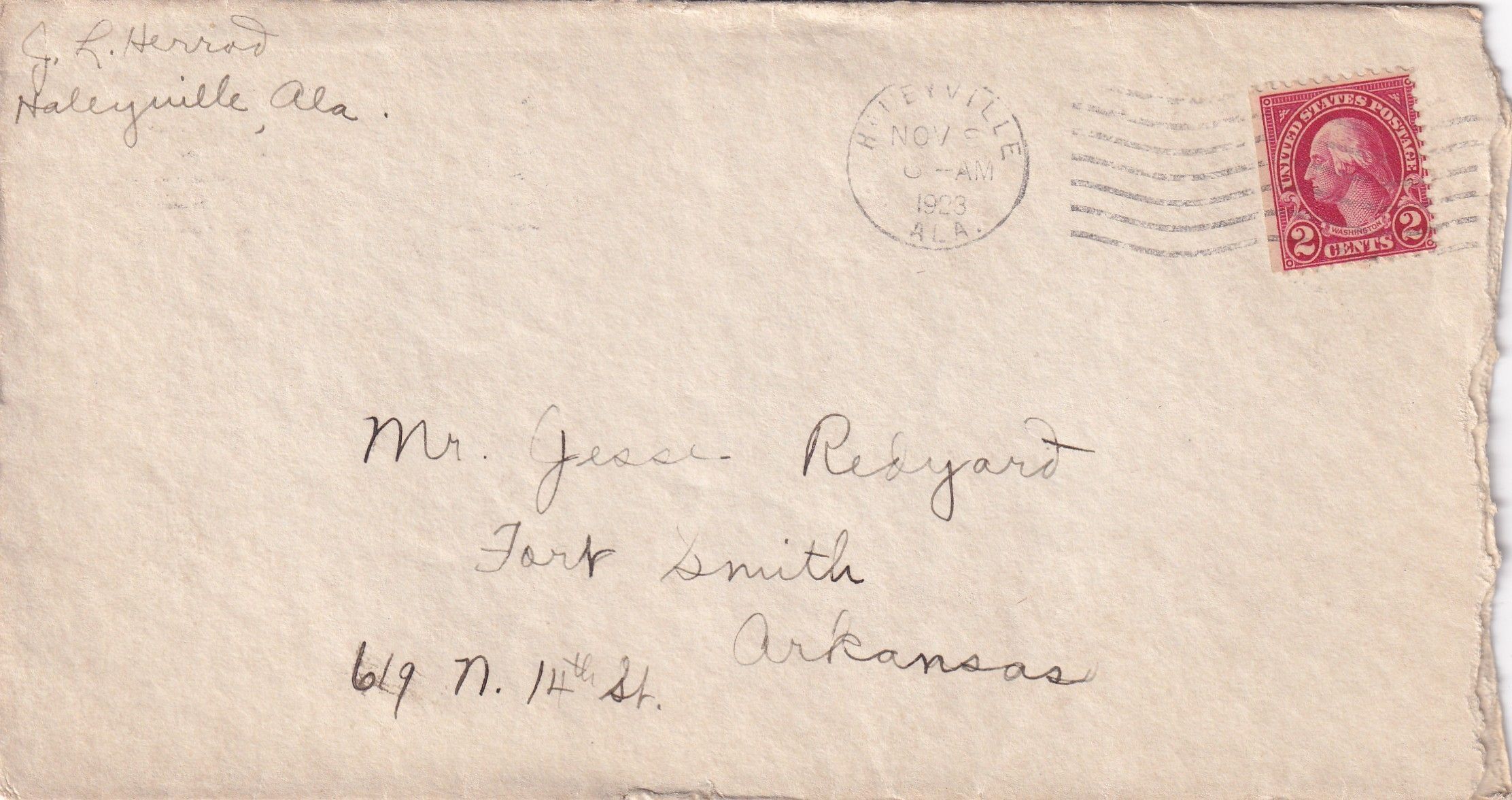
RE-LE-CALLHE-0054
Personal correspondence; travel accident (railroad wreck); courtship; social life; teaching profession
Alabama
Arkansas
United States
North America
Love & Courtship
20th Century
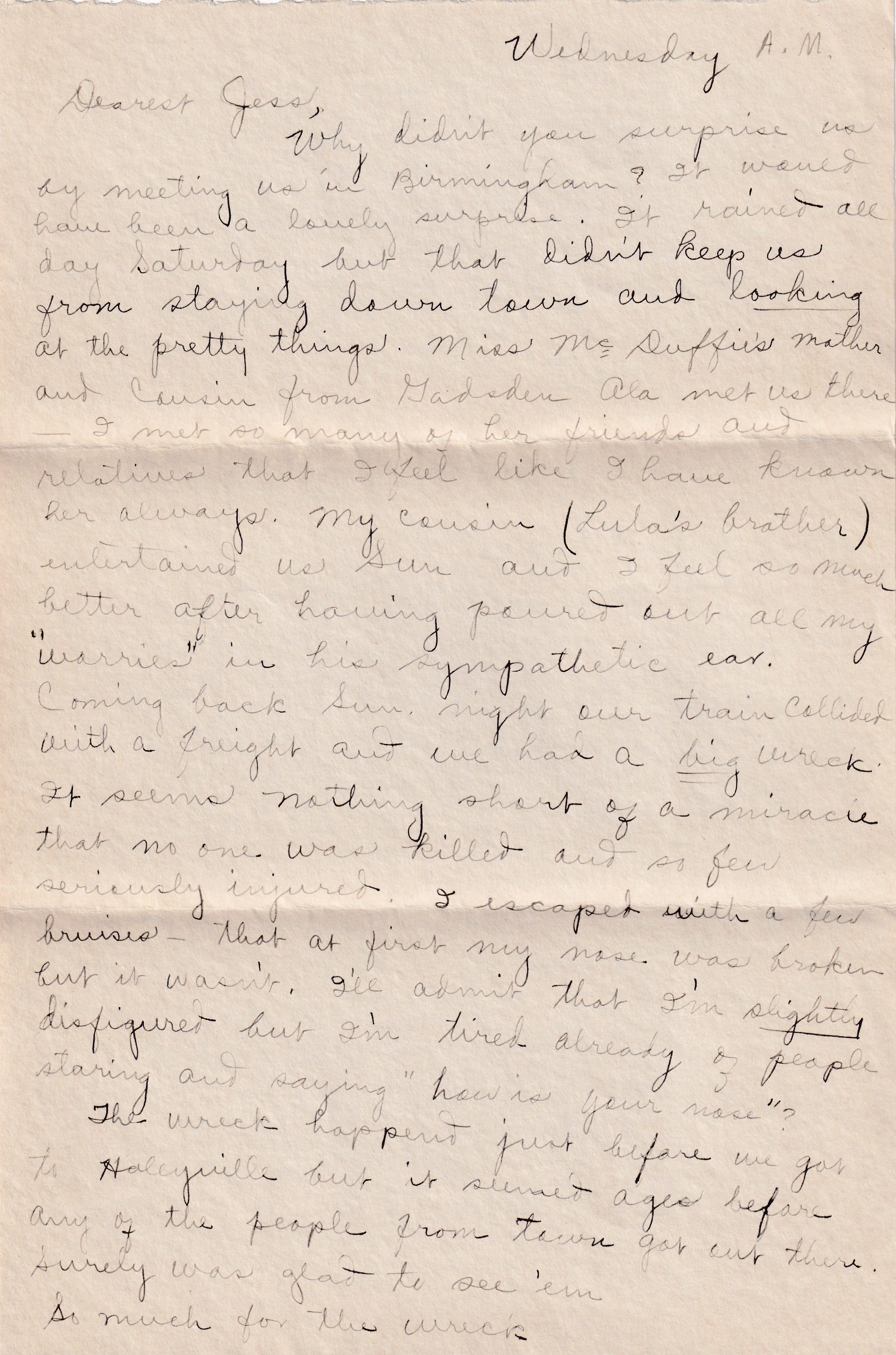
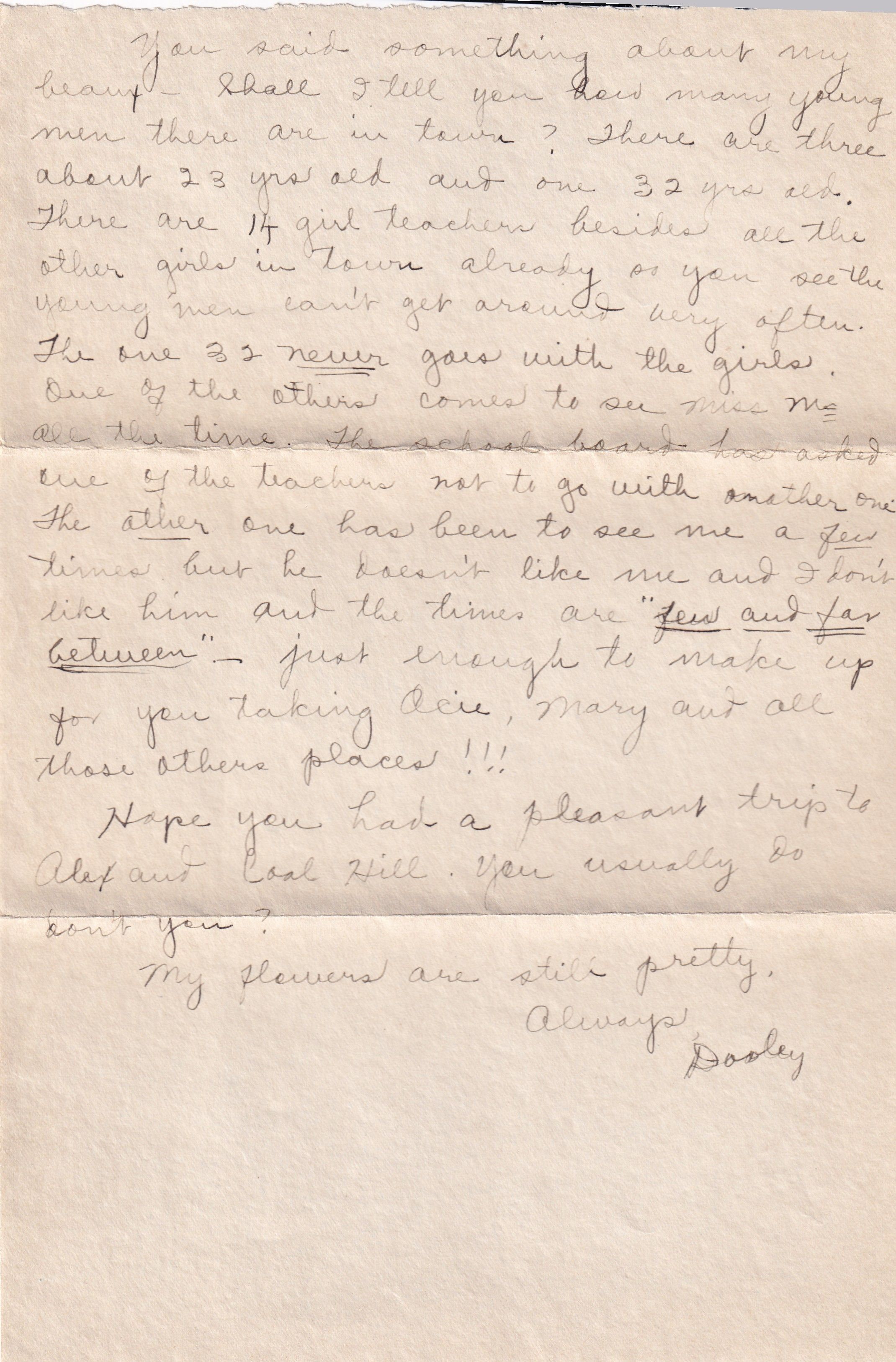
Dearest Jess, Why didn’t you surprise us by meeting us in Birmingham? It would have been a lovely surprise. It rained all day Saturday but that didn’t keep us from staying down town and looking at the pretty things. Miss McDuffie’s mother and cousin from Gadsden, Ala met us there — I met so many of her friends and relatives that I feel like I have known her always. My cousin (Lula’s brother) entertained us Sun and I feel so much better after having poured out all my “worries” in his sympathetic ear. Coming back Sun. night our train collided with a freight and we had a big wreck. It seems nothing short of a miracle that no one was killed and so few seriously injured. I escaped with a few bruises — that at first my nose was broken but it wasn’t. I’ll admit that I’m slightly disfigured but I’m tired already of people staring and saying “how is your nose?” The wreck happened just before we got to Haleyville but it seemed ages before any of the people from town got out there. Surely was glad to see ’em. So much for the wreck. You said something about my beauty. Shall I tell you how many young men there are in town? There are three about 23 yrs old and one 32 yrs old. There are 17 girl teachers besides all the other girls in town already so you see the young men can’t get around very often. The one 32 never goes with the girls. One of the others comes to see Miss Mc all the time. The school board has asked one of the teachers not to go with another one. The other one has been to see me a few times but he doesn’t like me and I don’t like him and the times are “few and far between” — just enough to make up for you taking Cie, Mary and all those other places!!! Hope you had a pleasant trip to Ozark and Coal Hill. You usually do don’t you? My flowers are still pretty. Always, Dooley
English
This letter reflects the lived experience of a young, unmarried professional woman in the 1920s South. The writer moves fluidly between independence (traveling, teaching, socializing) and the constraints of reputation and community oversight (e.g., school board regulating relationships). Her tone is candid, witty, and emotionally expressive—revealing both intimacy with the recipient and awareness of social expectations surrounding courtship, appearance, and propriety. The imbalance between many women and few eligible men highlights demographic realities in certain small towns, especially those with teaching communities.
Historical Note
Railroad Accidents in the 1920s: Train travel was still the primary long-distance transportation method, and collisions with freight trains were not uncommon due to signaling limitations and human error. Her description of a “big wreck” with minimal fatalities reflects both the danger and increasing improvements in rail safety by the 1920s. Claim Culture & Liability: As seen in other letters, accidents often involved claim agents quickly approaching survivors—this was part of a growing legal culture around corporate liability in transportation industries. Women Teachers & Social Restrictions: The mention of the school board discouraging relationships is historically significant. Female teachers were often subject to strict moral codes, including restrictions on dating, marriage, and even social outings. Gender Imbalance & Courtship: Her observation of “17 girl teachers” and only a few men illustrates a common social dynamic—teaching was feminized, while eligible men were fewer, shaping courtship competition and expectations. Urban vs. Small-Town Life: Birmingham appears as a place of excitement, shopping, and social connection, contrasting with the quieter, more regulated life in Haleyville. Physical Appearance & Social Identity: Her humorous but pointed reference to her nose injury reflects the importance of appearance in courtship culture, particularly for women. Regional Travel Networks: The casual movement between towns (Birmingham, Gadsden, Haleyville) shows how rail lines connected Southern communities, facilitating both social and professional mobility. Flirtation & Emotional Tone: The teasing jealousy (“make up for you taking Cie, Mary…”) provides strong evidence that this is an active romantic or courtship relationship rather than purely platonic correspondence.