
Memorial Poem for Louise Günther
Letter
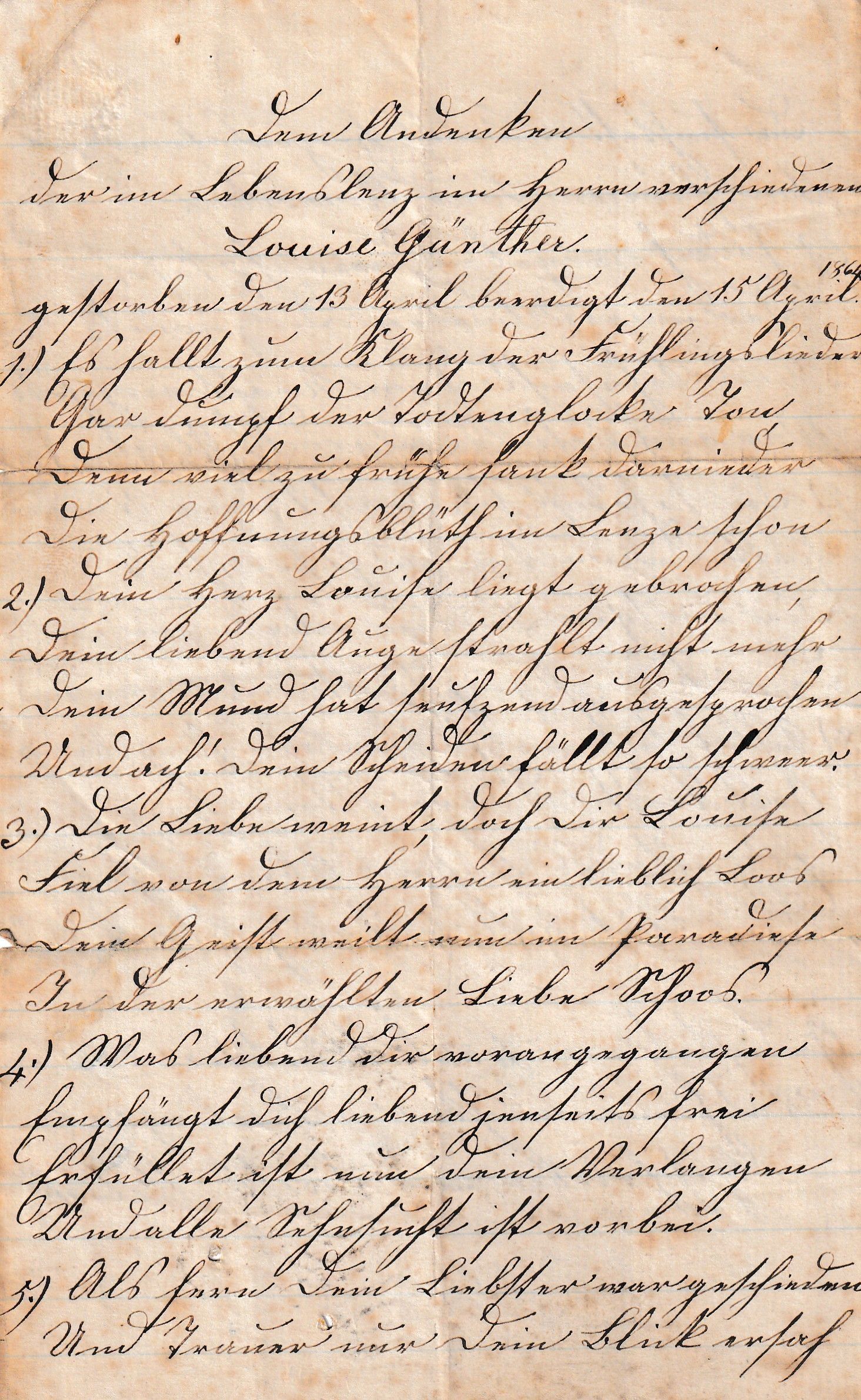
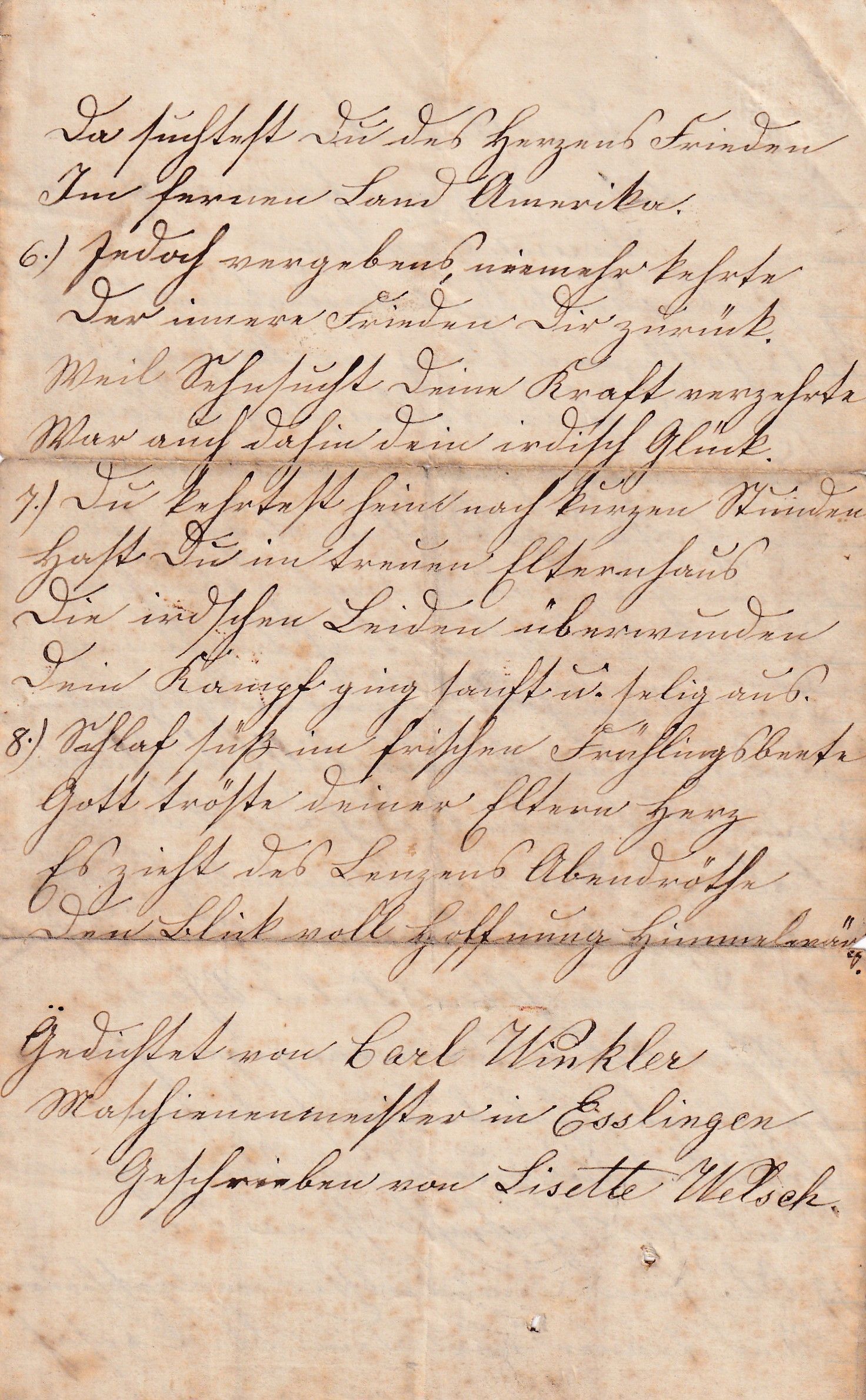
A handwritten German memorial poem composed in remembrance of Louise Günther, who died in April 1864.
RE-LE-1864-0024
Commemorative poem mourning the death of Louise Günther and reflecting on grief, remembrance, and Christian faith.
Germany
Europe
Mourning and Condolence Letters
Apr 1864
Likely associated with Esslingen am Neckar, Germany (based on the author’s location)
Full Translation (English) In Memory of Louise Günther who peacefully fell asleep in the springtime of life. Died April 13 — buried April 15, 1864. To the sound of mourning songs A tone of life falls silent before us For far too early has fallen The hope that once bloomed in our hearts. Your heart, Louise, now lies broken Your loving eyes have closed in sleep Your silent lips have spoken A farewell that weighs heavily on us. Love weeps, for it may not See you again on this earth Your spirit now dwells in paradise Within eternal love. What more can we say Our voices of lament fall silent God guides the questions of mankind And all rests in His care. So now your love may rest And dream the quiet sleep The comfort of love shall guide you To the Lord who has called you home. Yet never forgotten will remain The peaceful nature of your days Though farewell has come Such is the destiny of life on earth. You lived here with faithful spirit And held joyful hope within Sweet memories of peace remain For the King has gone before you. Thus in the fresh springtime You were taken from this world God ended your young life And your soul rises toward heaven. Poem by Carl Winkler Machine master in Esslingen Written by Lisette Weck
German
Memorial poems such as this were a common nineteenth-century European mourning tradition. Families often commissioned or copied poetic tributes to honor deceased relatives, particularly those who died young. These texts were sometimes distributed among family members, placed in memorial albums, or preserved alongside death notices. The reference to the “springtime of life” reflects a common Victorian-era metaphor for youth cut short by death. The language emphasizes Christian ideas of heavenly reunion, eternal peace, and divine will—key themes in nineteenth-century mourning culture. The attribution of both a poet (Carl Winkler) and a scribe (Lisette Weck) suggests the poem may have been copied into a memorial book or written as a keepsake for family members.
Description
This handwritten memorial poem commemorates Louise Günther, who died on April 13, 1864 and was buried two days later. The poem mourns her early death and reflects on themes of grief, faith, and eternal life. Written in German and organized into numbered stanzas, the text describes the sorrow of those left behind while expressing hope for spiritual peace in heaven. Such poetic tributes formed an important part of nineteenth-century mourning culture in Europe. They were frequently composed by friends, clergy, or local poets and copied by hand for family remembrance. The poem is attributed to Carl Winkler of Esslingen and written out by Lisette Weck, suggesting it may have served as a personal memorial document preserved within a family archive.