
Family Letter from Kabelhorst in the Russian Empire
Letter
A multi-page handwritten German letter written from Kabelhorst in the Russian Empire discussing family matters, health, finances, and daily life among relatives.
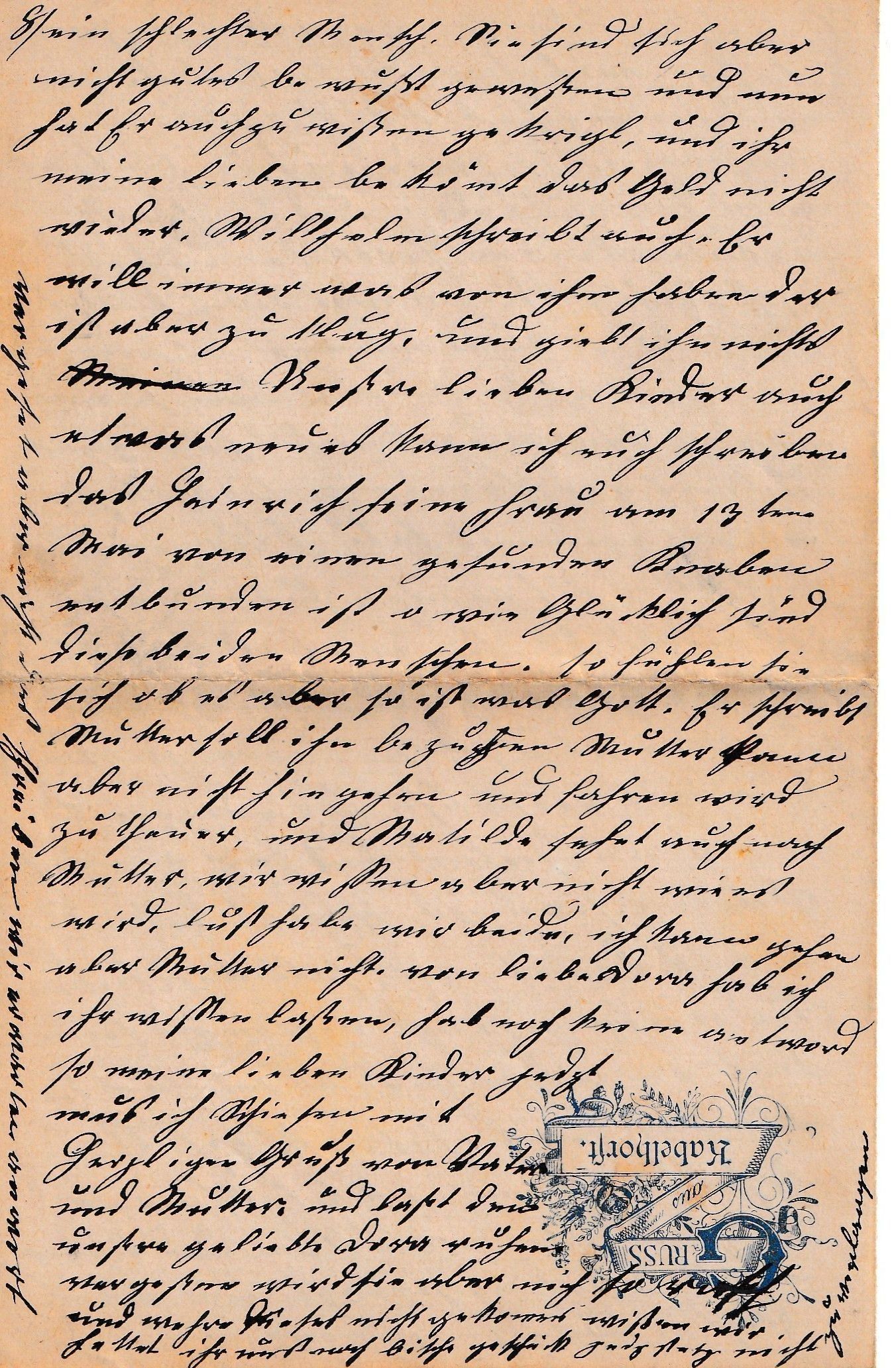 Family Letter from Kabelhorst in the Russian Empire
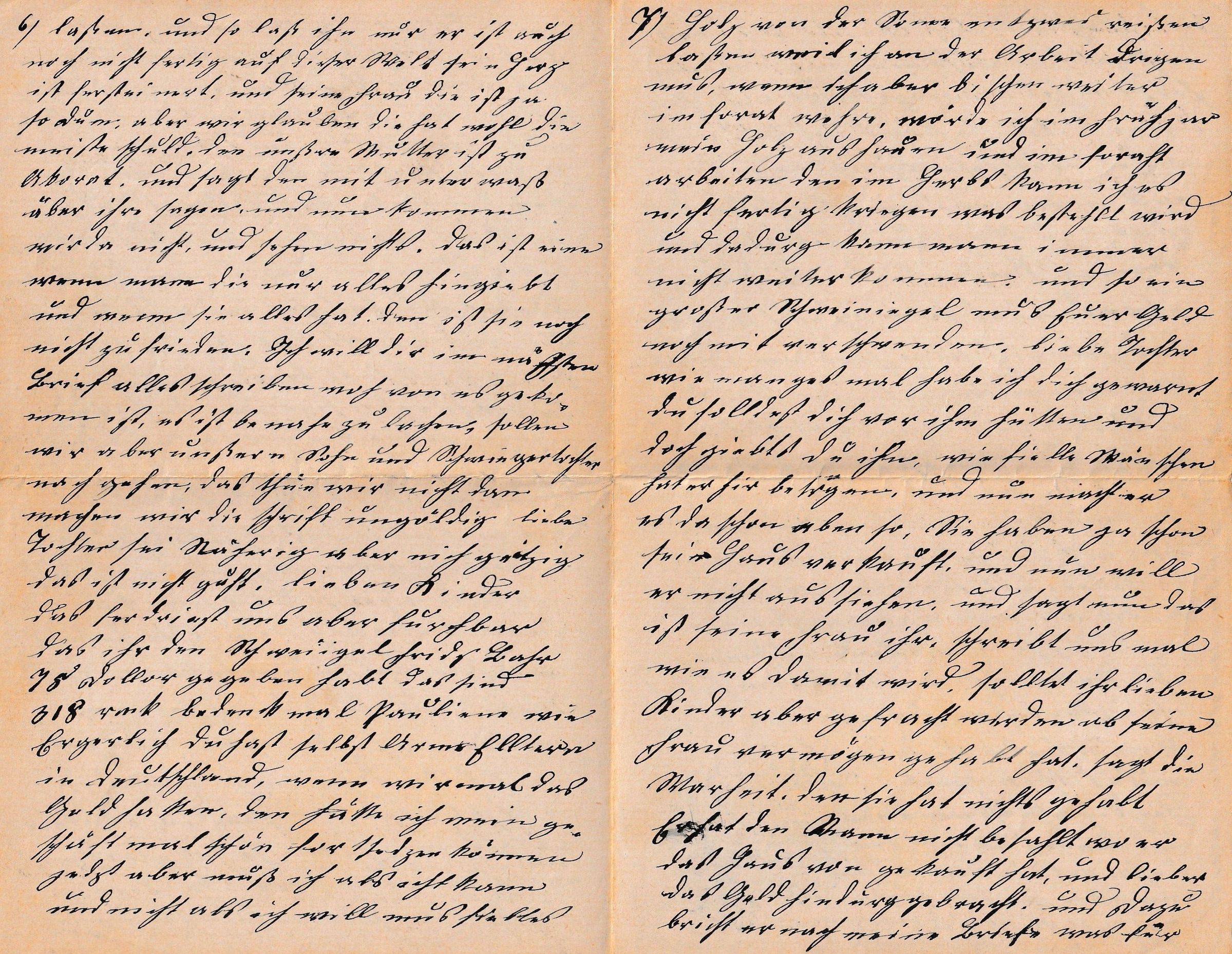 Family Letter from Kabelhorst in the Russian Empire – Image 2
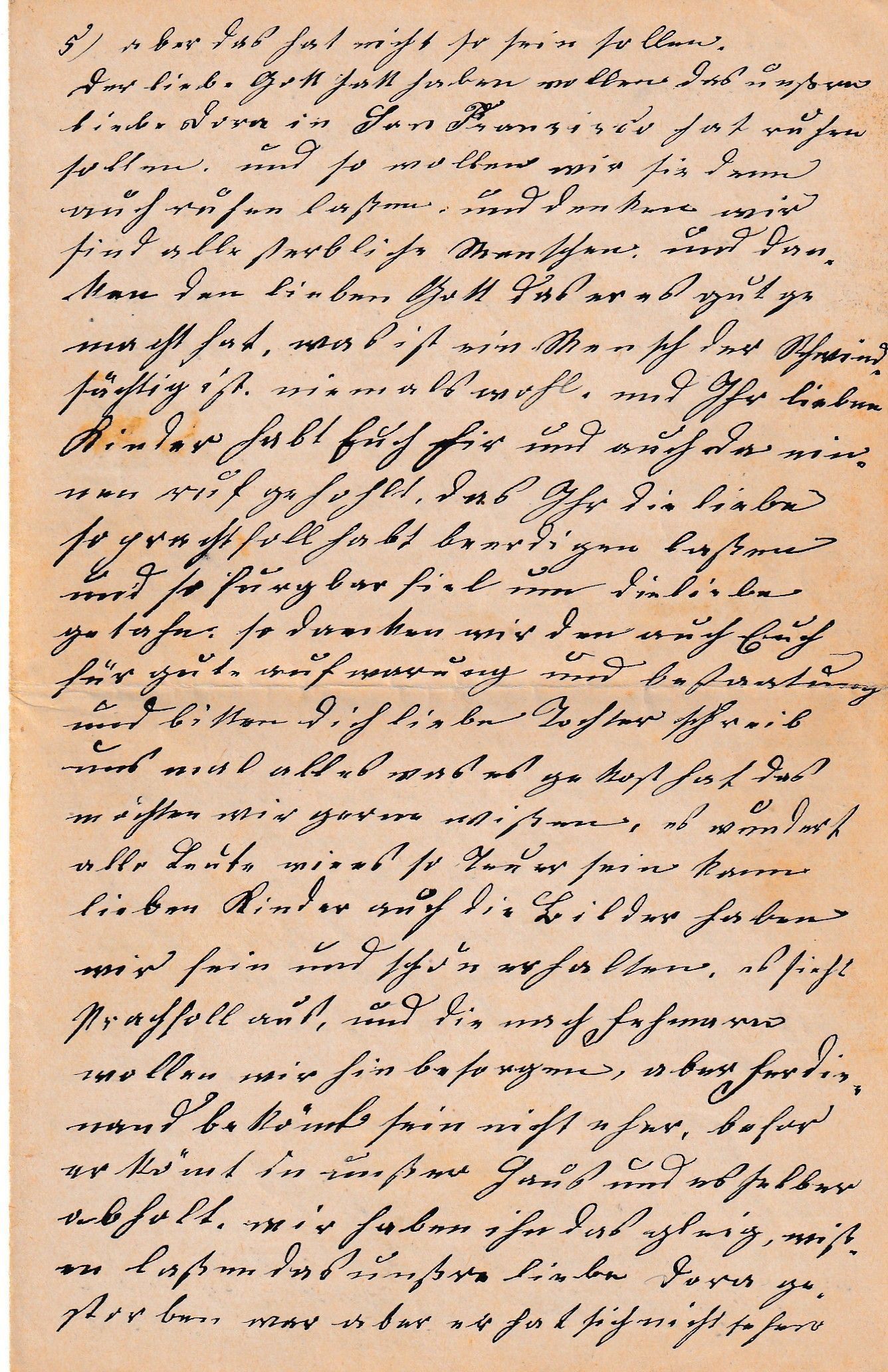 Family Letter from Kabelhorst in the Russian Empire – Image 3
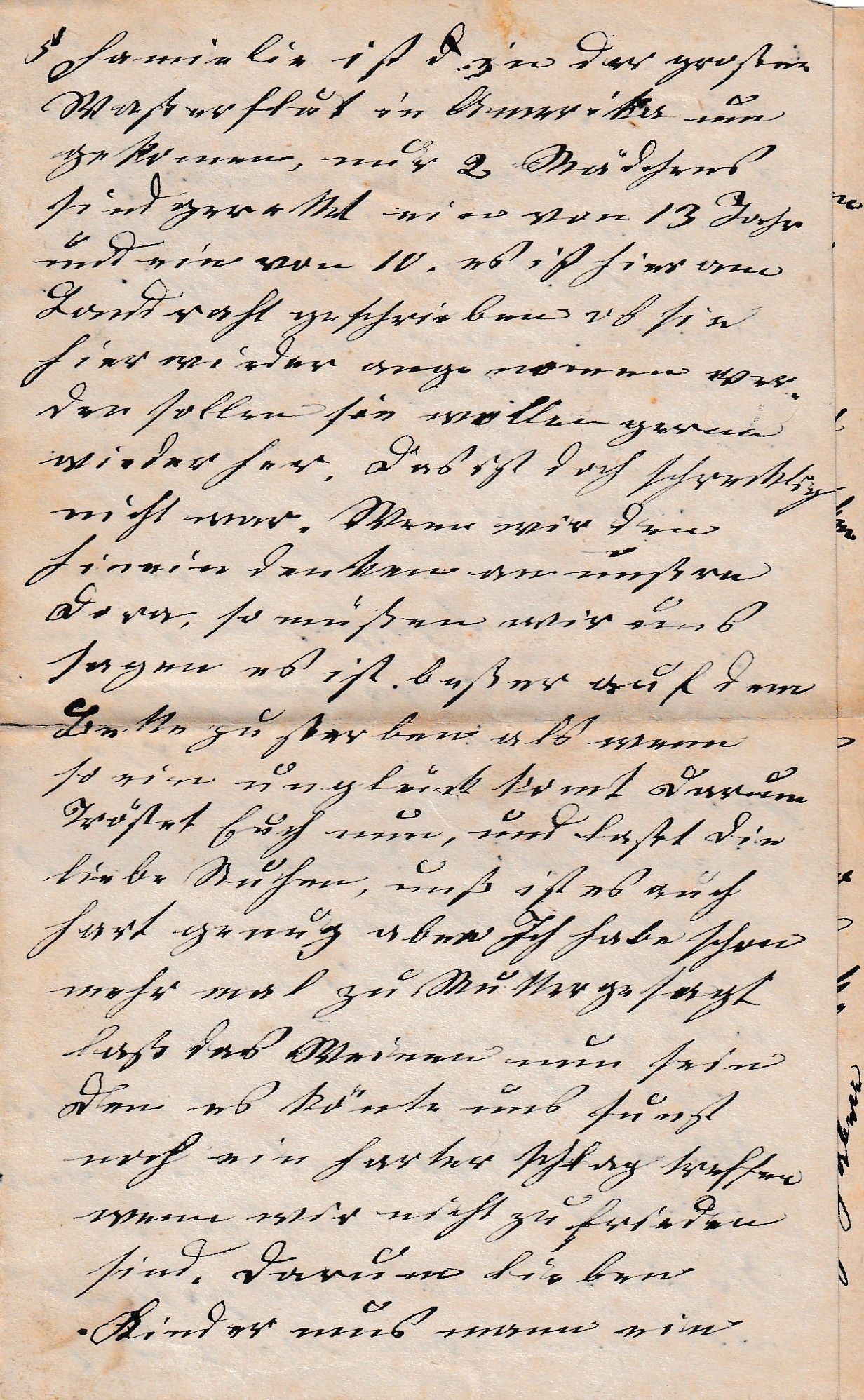 Family Letter from Kabelhorst in the Russian Empire – Image 4
 Family Letter from Kabelhorst in the Russian Empire – Image 5
 Family Letter from Kabelhorst in the Russian Empire – Image 6
RE-LE-1860-0036
Personal family correspondence describing health concerns, household matters, and communication between relatives living at a distance.
Russia
Personal Correspondence Letters
1860 – 1880
19th Century
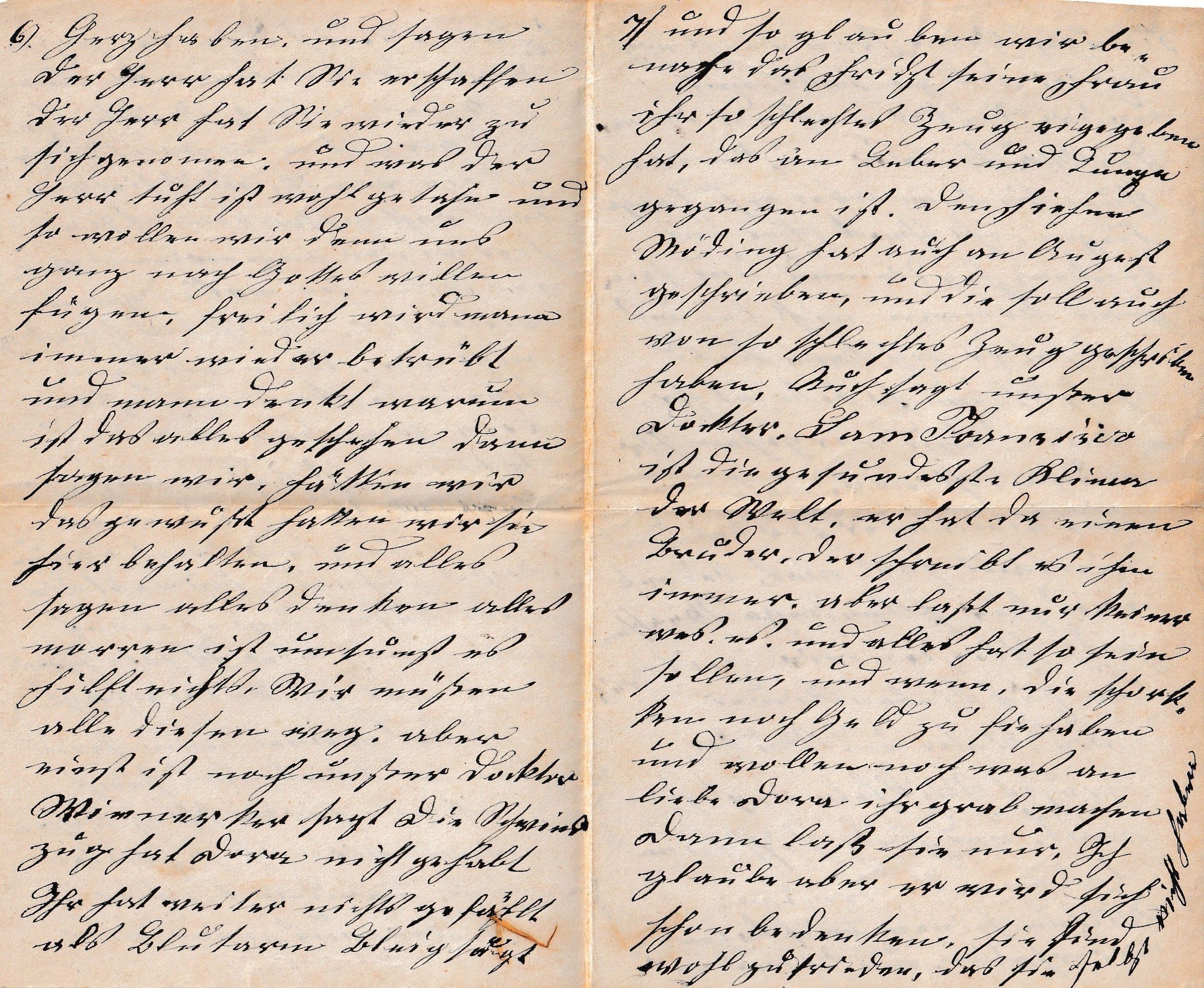
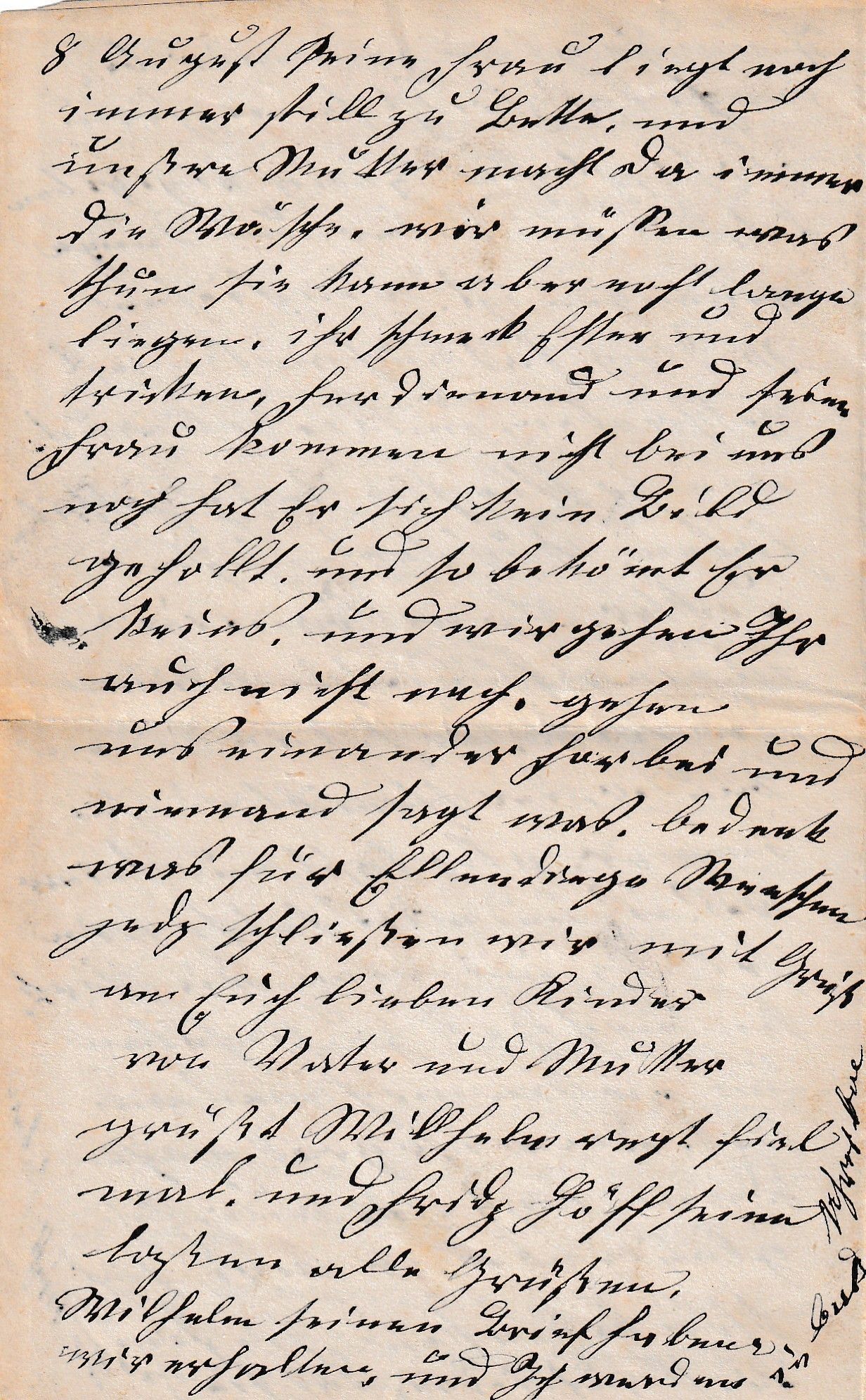
PAGE 1 Lieber Freund, Deinen lieben Brief habe ich erhalten und mich darüber sehr gefreut, daß Du meiner noch immer gedenkst und mir so freundlich geschrieben hast. Hier geht alles seinen gewöhnlichen Gang, wenn auch manches uns Sorge macht. Der Winter ist dieses Jahr ziemlich streng gewesen und hat uns viel Mühe bereitet. Doch Gott sei Dank ist bisher niemand ernstlich krank geworden, und wir hoffen daß es auch so bleiben möge. Die Kinder wachsen heran und machen uns viele Freude. Sie sprechen oft von Euch und fragen wann wir uns wiedersehen werden. PAGE 2 Auch von den Nachbarn hört man mancherlei Nachrichten. Einige sind fortgezogen, andere wieder neu hierher gekommen, so daß sich das Leben im Dorfe immer etwas verändert. Mit der Wirtschaft geht es dieses Jahr nicht besonders gut. Die Preise sind gefallen, während die Abgaben und Kosten immer mehr steigen. Darüber klagen hier fast alle, und man weiß nicht recht, wie es in Zukunft werden wird. PAGE 3 Dennoch wollen wir die Hoffnung nicht aufgeben. Mit Fleiß und Geduld muß man versuchen das Beste daraus zu machen. Mein Bruder arbeitet noch immer unermüdlich und sorgt für Haus und Hof so gut er kann. Es ist aber nicht leicht für ihn, da vieles teurer geworden ist. PAGE 4 Von den Verwandten habe ich verschiedene Nachrichten erhalten. Einige sind gesund und zufrieden, andere haben mit Krankheiten zu kämpfen gehabt. Besonders unsere liebe Tante hat lange Zeit schwach gelegen, doch geht es ihr jetzt wieder etwas besser. PAGE 5 Wenn es der Sommer erlaubt so möchten wir vielleicht eine kleine Reise unternehmen. Es wäre schön Euch einmal wieder sehen zu können. Die Kinder wünschen es sich sehr und sprechen oft davon. Vielleicht ergibt sich im Herbst eine Gelegenheit dazu. PAGE 6 Schreibe uns doch bald wieder und berichte ausführlich wie es Euch allen geht. Wir freuen uns immer über Deine Briefe und lesen sie mit großem Interesse. Empfange unsere herzlichsten Grüße und bleibe uns stets in Freundschaft verbunden. Dein treuer Freund [Unterschrift schwer lesbar]
German
Dear Friend, I received your kind letter and was very pleased that you still remember me and wrote to me so warmly. Everything here continues in its usual course, although some things give us concern. The winter has been rather severe this year and has caused us much difficulty. Thank God, however, no one has become seriously ill so far, and we hope that it will remain so. The children are growing up and give us much joy. They often speak of you and ask when we will see each other again. From the neighbors one hears various bits of news. Some have moved away while others have come here, so that life in the village is always changing somewhat. Economically this year has not been particularly good. Prices have fallen while taxes and expenses continue to rise. Almost everyone complains about this and no one really knows what the future will bring. Nevertheless we do not wish to lose hope. With diligence and patience one must try to make the best of things. My brother still works tirelessly and takes care of house and farm as best he can. It is not easy for him, however, since many things have become more expensive. I have also received various news from relatives. Some are healthy and content, while others have struggled with illness. Our dear aunt in particular was weak for a long time, though she is now somewhat better again. If the summer allows, we might perhaps undertake a small journey. It would be wonderful to see you again. The children especially wish for this and speak of it often. Perhaps an opportunity will arise in the autumn. Please write to us again soon and tell us in detail how everyone is doing. We always enjoy receiving your letters and read them with great interest. Accept our warmest greetings and remain always connected with us in friendship. Your faithful friend, [signature]
The Baltic provinces of the Russian Empire (Livonia, Courland, and Estonia) contained a large population of Baltic Germans, descendants of medieval German settlers who remained culturally German despite living under Russian rule. German remained the dominant language for education, administration, and private correspondence among this group. Letters such as this illustrate the close-knit communication networks that maintained family ties across large geographic distances during the 19th century. Family correspondence often included discussions of: health of relatives financial concerns marriages and household management travel and visits agricultural or estate affairs These letters provide valuable insight into everyday life within the Baltic German community.
Historical Note
This handwritten family letter originates from Kabelhorst in the Baltic provinces of the Russian Empire. Written in German Kurrent script on printed stationery bearing the heading “Russ. Kabelhorst,” the document reflects the correspondence practices of Baltic German families during the late nineteenth century. The writer discusses the health and circumstances of relatives, daily household matters, and ongoing communication within the family network. Letters such as this illustrate the social and cultural continuity maintained by German-speaking communities living within the Russian Empire prior to the political transformations of the twentieth century. The printed heading “Russ.” is an abbreviation for Russland (Russia) and was commonly used in stationery produced in Baltic German regions of the Russian Empire. During the late 19th century: German remained the primary written language among Baltic elites communication between family members relied almost entirely on letters postal systems within the Russian Empire allowed regular correspondence between provincial towns and cities. Letters from Baltic German communities are historically valuable because they document a cultural group that largely disappeared after the upheavals of the 20th century.