
Illustrated Family Letter from Kabelhorst to Eutin – January 14, 1889
Letter
A multi-page handwritten German family letter dated January 14, 1889 from Kabelhorst, Schleswig-Holstein, to relatives in Eutin. The letter discusses family news, work, health, financial matters, and everyday life in rural northern Germany.
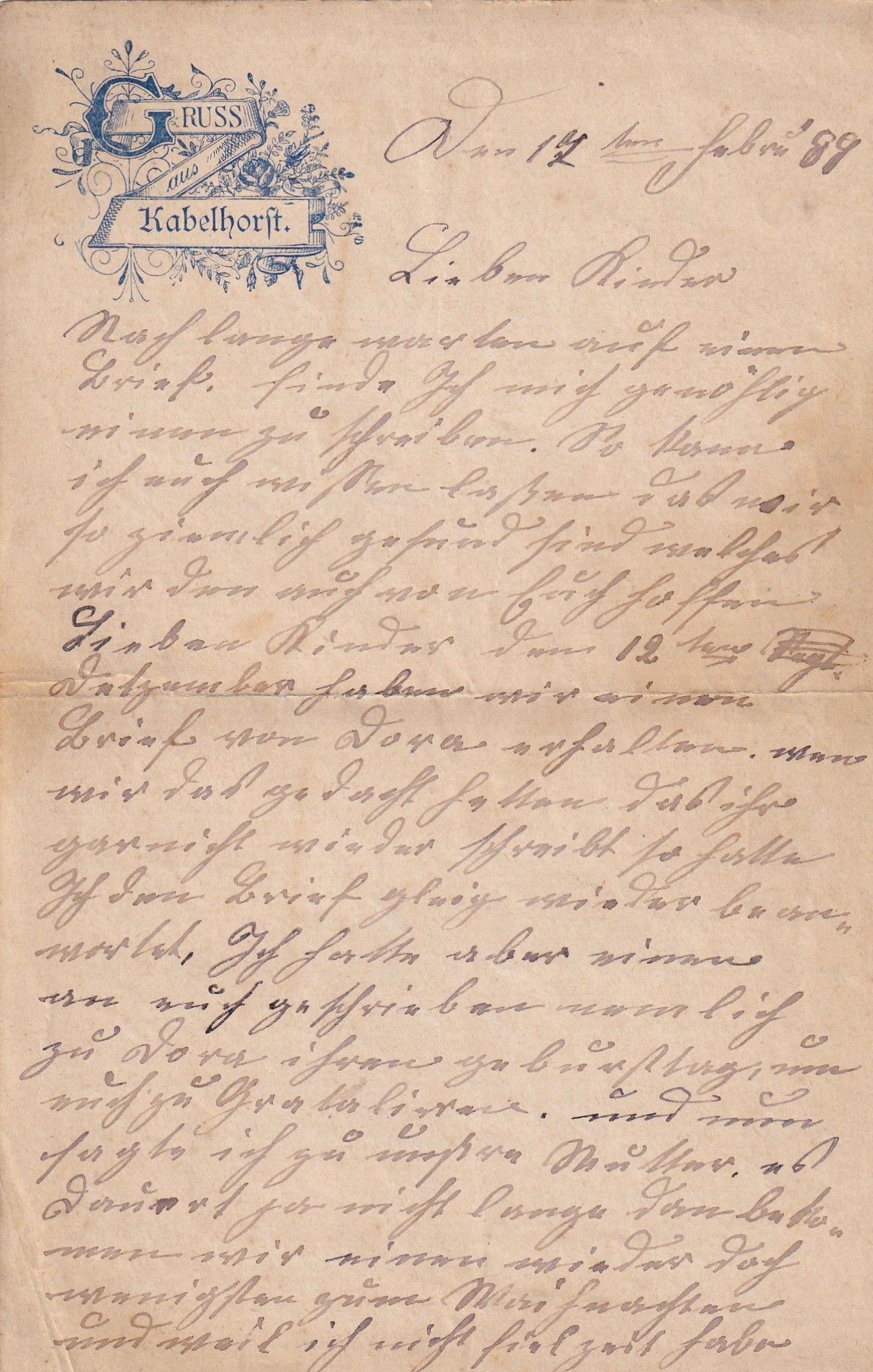
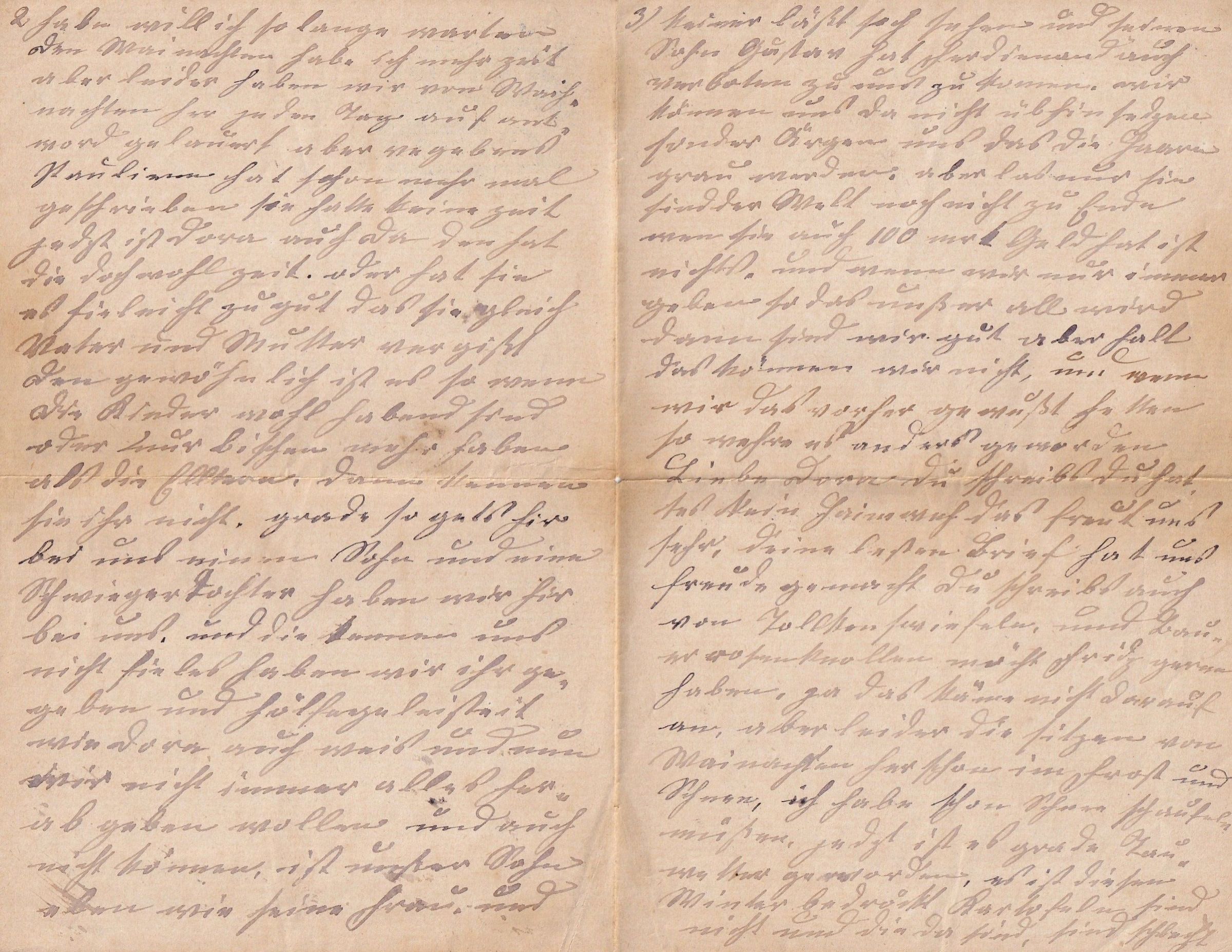
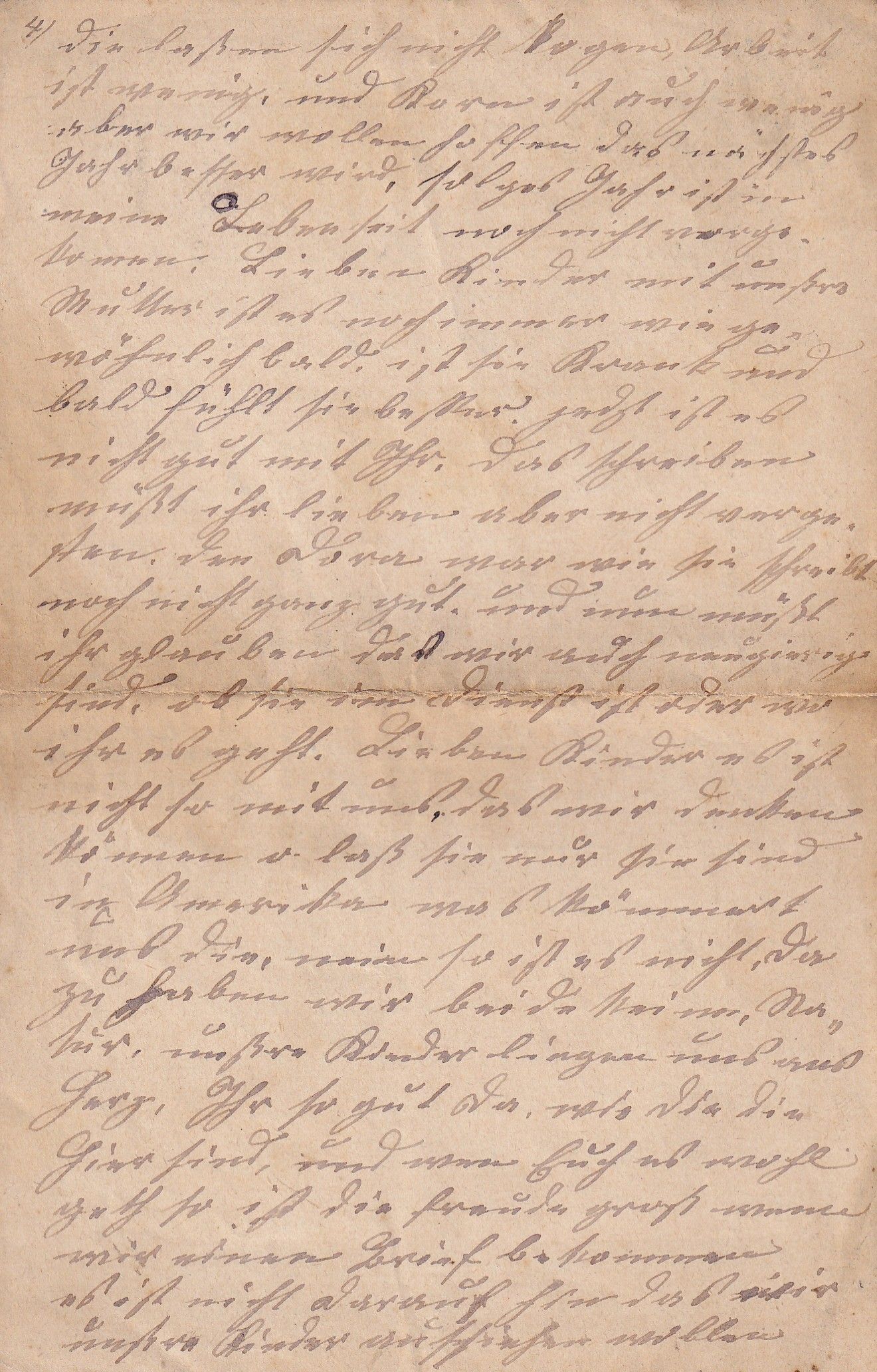
RE-LE-1889-0043
Family news, household affairs, and financial concerns
Germany
Europe
Personal Correspondence Letters
Jan 19, 1889
19th Century
January 14, 1889 Dear Brother, Your dear letter has arrived and we were very glad to hear from you. It always brings us great joy when news comes from you and we know how things are going with you. Here everything continues much the same as before. The winter has been rather severe and there is much work to be done despite the cold. Nevertheless we are thankful that our health remains good. Dorothea often speaks of you and sends her warm greetings. She hopes that you are well and that your household is prospering. The children keep us very busy and there is always something to attend to in the house and around the property. Still we manage and try to keep everything in good order. We often think of earlier days when we were all together. Those memories remain dear to us. It would be a great happiness if we might see one another again someday. There have been some changes among the neighbors and relatives. Some have moved away while others have come here, and so life continues with its usual changes. Please write again when you have the opportunity and tell us everything about how things are going for you. With warm greetings, Your loving relatives Dorothea Schau Greetings also from Wilhelm
Handwriting Style / Script Type German Kurrent cursive script Handwriting Notes Written in a confident, flowing Kurrent hand typical of educated rural writers of the late 19th century. The writing shows moderate speed and compression, suggesting personal rather than formal correspondence. Document Material Illustrated stationery with decorative lithographic header; iron gall ink on wove paper The printed header reads: “Gruss aus Kabelhorst” (Greetings from Kabelhorst) Decorative floral lithography typical of late-19th-century German correspondence paper.
This letter reflects the everyday rhythms of rural life in northern Germany during the late 19th century. Family correspondence often focused on health, weather, household responsibilities, and news about relatives and neighbors. Women frequently acted as the primary writers of family letters, maintaining communication between extended family members who lived in different towns or regions. Such letters served as emotional links between relatives separated by distance. The use of illustrated stationery with a printed greeting such as “Gruss aus Kabelhorst” was common during the late 1800s and reflects the growing popularity of decorative correspondence papers that anticipated the rise of illustrated postcards.
Kabelhorst is a small village in Schleswig-Holstein, a northern German region that became part of the German Empire after 1871. During the 1880s the region was largely agricultural, and family life revolved around farming, household management, and seasonal labor. The handwriting in this letter is Kurrent, the standard German cursive used in everyday writing throughout the 19th century before the later Sütterlin script was introduced in the early 20th century. The decorative stationery style suggests the letter was written during a period when printed greeting headers were becoming fashionable in personal correspondence.