
Illustrated German Letter from Kabelhorst to Eutin
Letter
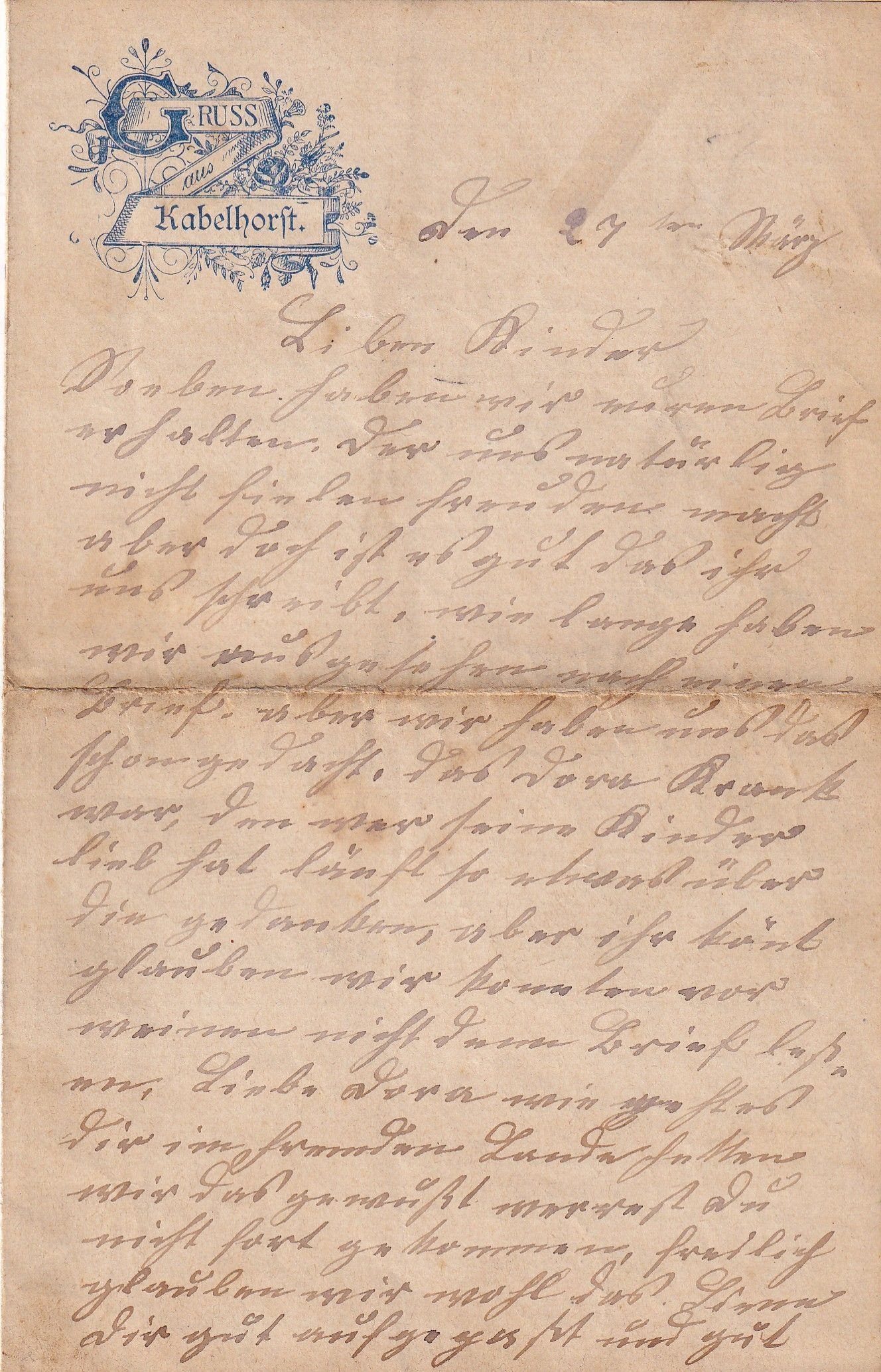
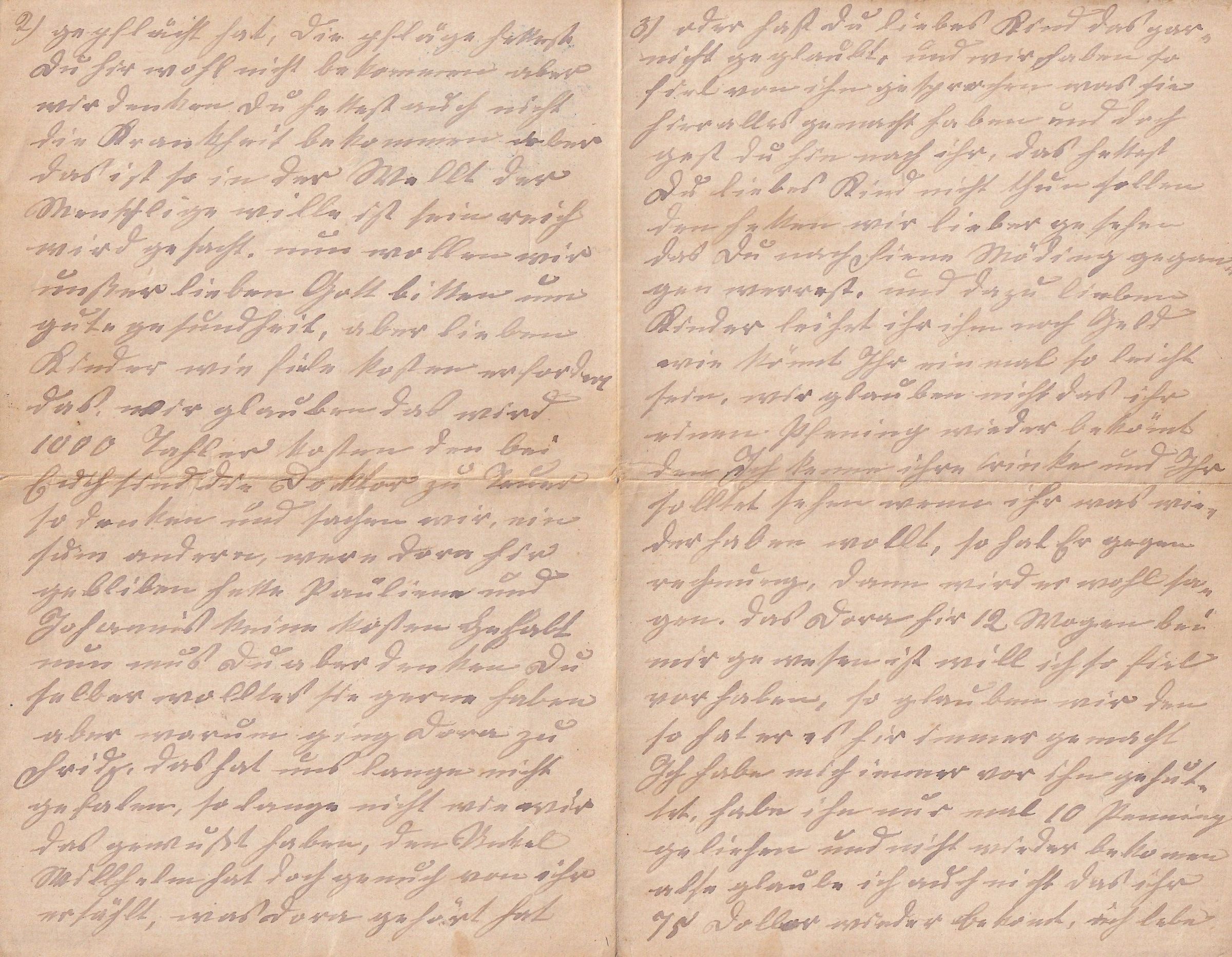
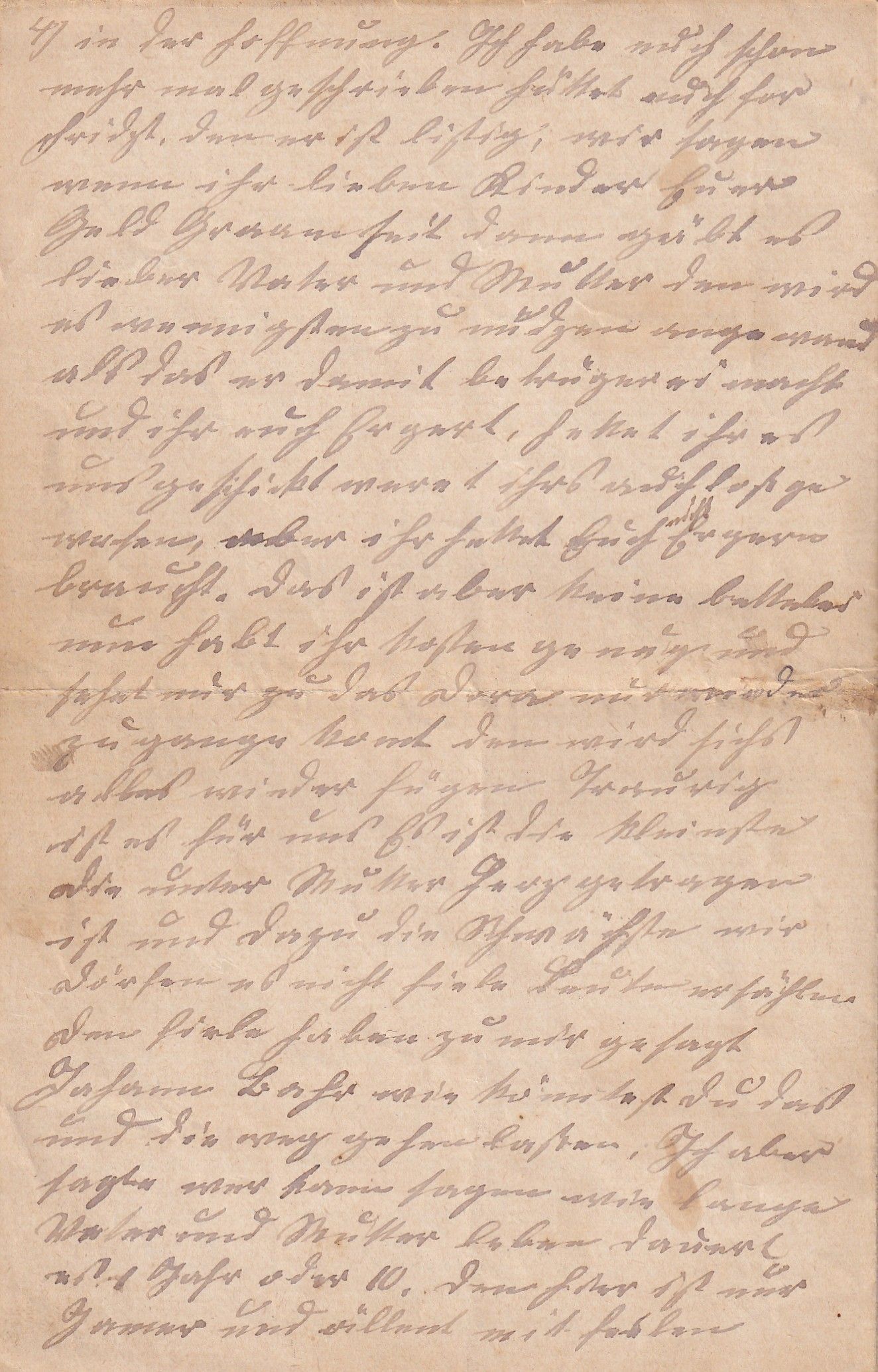
A multi-page handwritten German family letter sent from Kabelhorst, Germany to Eutin in the late 19th century, discussing family news, daily life, and financial concerns. The letter features an illustrated decorative header reading “Gruss aus Kabelhorst”.
RE-LE-1800-0042
Family correspondence and household matters
Germany
Europe
Personal Correspondence Letters
May 27 Dear Brother, Your dear letter has reached me and I was very pleased to hear from you again. We have long waited for news and were glad to learn how things are going with you. Here everything continues much as before. The household keeps us busy and there is always work to be done. Still, we manage as best we can. Wilhelm sends his greetings and often speaks of the times when we were together. Those memories are dear to us and we hope that one day we might see each other again. The children are growing quickly and keep us occupied from morning until evening. Their health is good, and that is something for which we are thankful. The harvest and other work have required much effort this year, but we hope that the coming months will bring better results. The weather has not always been favorable. We often think about our relatives and wonder how they are faring. Please write again when you have the opportunity and tell us everything about your situation. Give our greetings to everyone there. With warm regards, Your loving sister Dorothea Schau Greetings also from Wilhelm To Mr. Johann Kamle Eutin
German
Family letters like this were a primary means of maintaining relationships across towns and regions in late 19th-century Germany. They often included updates about household responsibilities, farming conditions, health, and family members. The illustrated stationery header “Gruss aus Kabelhorst” reflects the popularity of decorative correspondence paper in the late 1800s. Such stationery was commonly sold in small shops and used for informal family communication. Women frequently acted as the primary writers of family correspondence, documenting domestic life and maintaining extended kinship networks.
Historical Note
Kabelhorst is a small village in Schleswig-Holstein in northern Germany, not far from the Baltic coast. During the late 19th century the region was part of the German Empire (after 1871). The handwriting is typical German Kurrent script, which was widely used in everyday writing until the early 20th century. Many modern readers find Kurrent difficult to interpret because the letterforms differ significantly from modern Latin cursive. Illustrated greeting headers such as “Gruss aus…” (“Greetings from…”) became popular during the late 19th century as a precursor to picture postcards.