
Letter from Burg on Fehmarn to Pauline – September 28, 1834
Letter
A handwritten German family letter sent from Burg on the island of Fehmarn in northern Germany on September 28, 1834. The writer discusses family matters, illness within the household, financial concerns, and requests assistance regarding money and property.
RE-LE-1834-0046
Family news, illness, finances, and property concerns
Germany
Europe
Personal Correspondence Letters
Sep 28, 1834
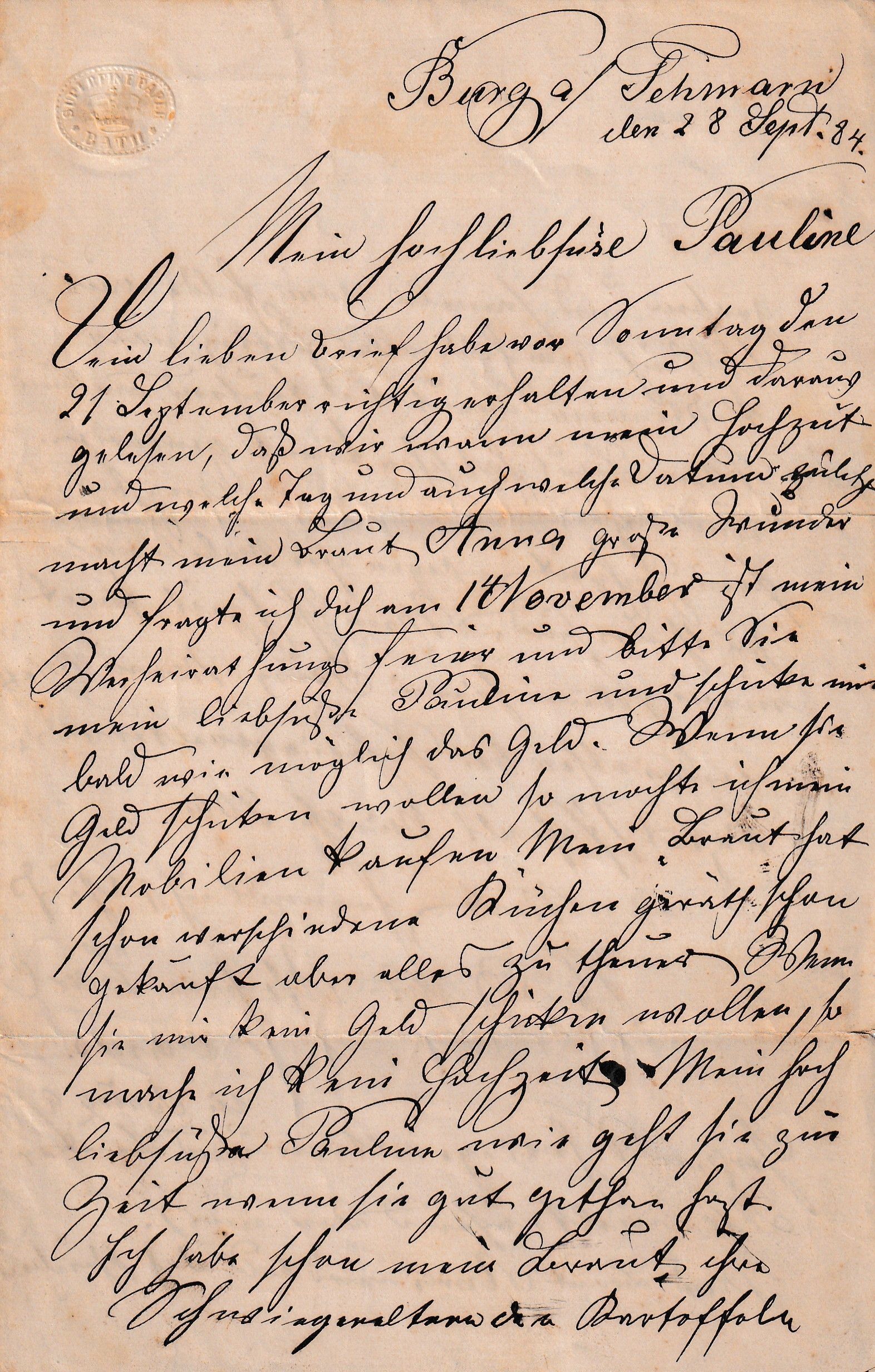
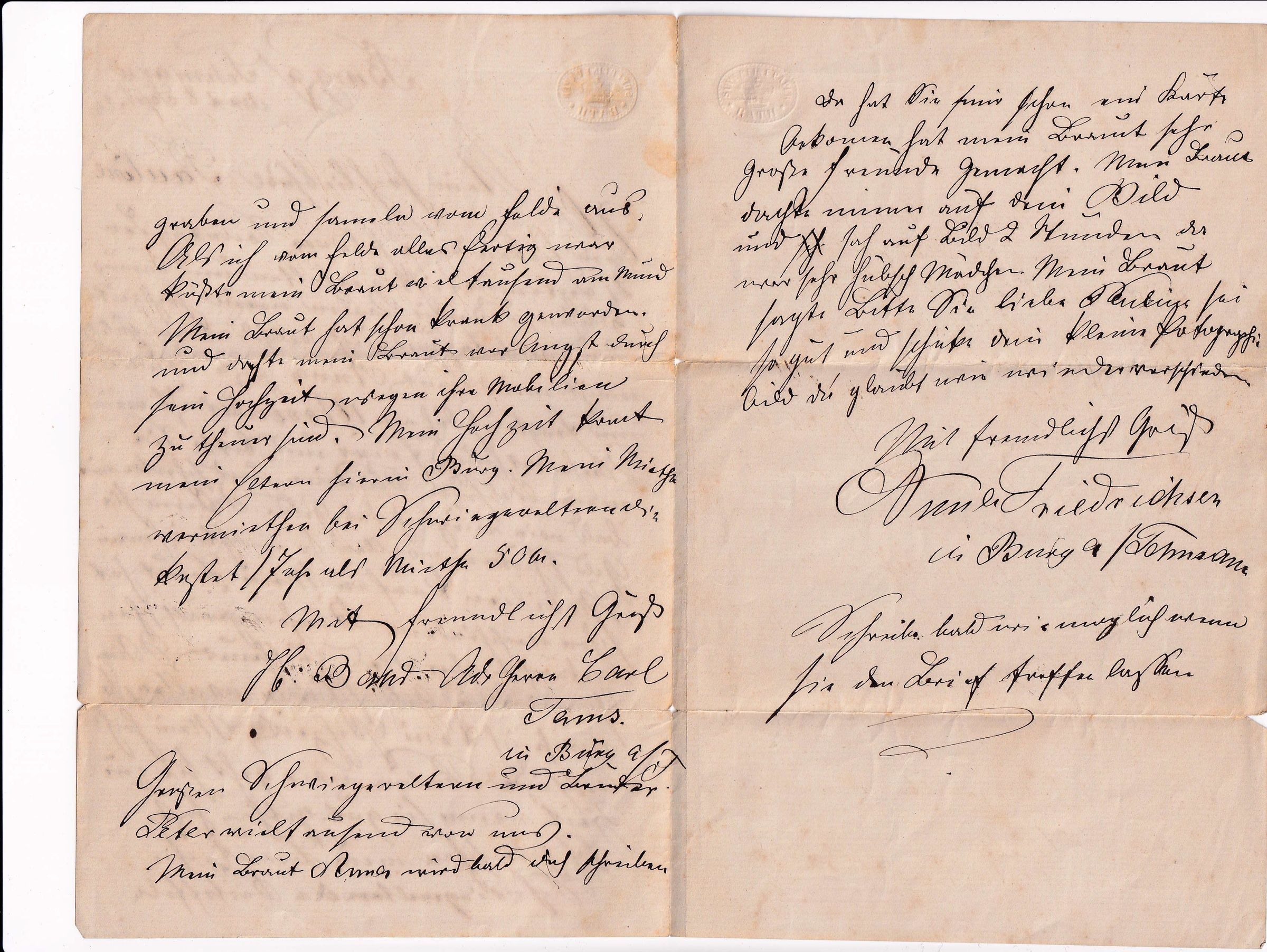
Burg on Fehmarn September 28, 1834 My dear beloved Pauline, Your dear letter of September 21 reached us safely and brought us great joy, as it is always a pleasure to hear from you. Here everything continues as usual. Anna sends her greetings and says that she hopes to see you again soon. Unfortunately we must speak about certain difficulties. The situation with the money is not easy at present, and we must consider how matters can best be arranged. Marie Dorrit has again been unwell and has been suffering for some time. Because of this we have had many expenses. It is therefore necessary that we consider the sale of certain belongings and furniture, as we must manage the household as carefully as possible. Please let us know what you think about this and whether it might be possible to assist us in this matter. Give our warm greetings to all our dear relatives. Remain healthy and write to us again soon. With friendly greetings, Anna Friedrichsen in Burg on Fehmarn
German
Handwriting Notes The handwriting is an elegant early 19th-century Kurrent script with pronounced flourishes in the headings and names. The script is slightly more formal than the later 1880s letters, reflecting earlier writing conventions. Document Material Wove writing paper with embossed seal mark (paper maker’s stamp) The circular embossed seal visible in the paper likely indicates a European paper manufacturer’s watermark, a common feature of early 19th-century correspondence paper.
This letter reflects the social structure and family relationships of early nineteenth-century northern Germany. Families maintained strong communication through letters, especially when relatives lived in different towns or villages. The letter demonstrates how extended families often shared financial responsibilities and supported one another during times of illness or hardship. References to household goods and furniture show how property within the household could serve as a financial resource during difficult periods. The tone of affection and respect reflects the strong familial bonds common in rural and small-town communities during this period.
Historical Note
Burg auf Fehmarn is the principal town on the island of Fehmarn, located in the Baltic Sea off the northern coast of Germany in Schleswig-Holstein. In 1834 the region was part of the Duchy of Schleswig, under the Danish crown, prior to the later Schleswig-Holstein conflicts of the mid-19th century. Letters from this period often contain references to household management, illness, and financial concerns, reflecting the economic realities of small-town families in agricultural and maritime regions. The use of German Kurrent script was standard for personal and official writing throughout German-speaking Europe until the early twentieth century.