
Personal Correspondence Concerning Family Matters and Health
Letter
A handwritten personal letter in French discussing family news, personal health, and recent events. The tone suggests intimate correspondence between relatives or close acquaintances.
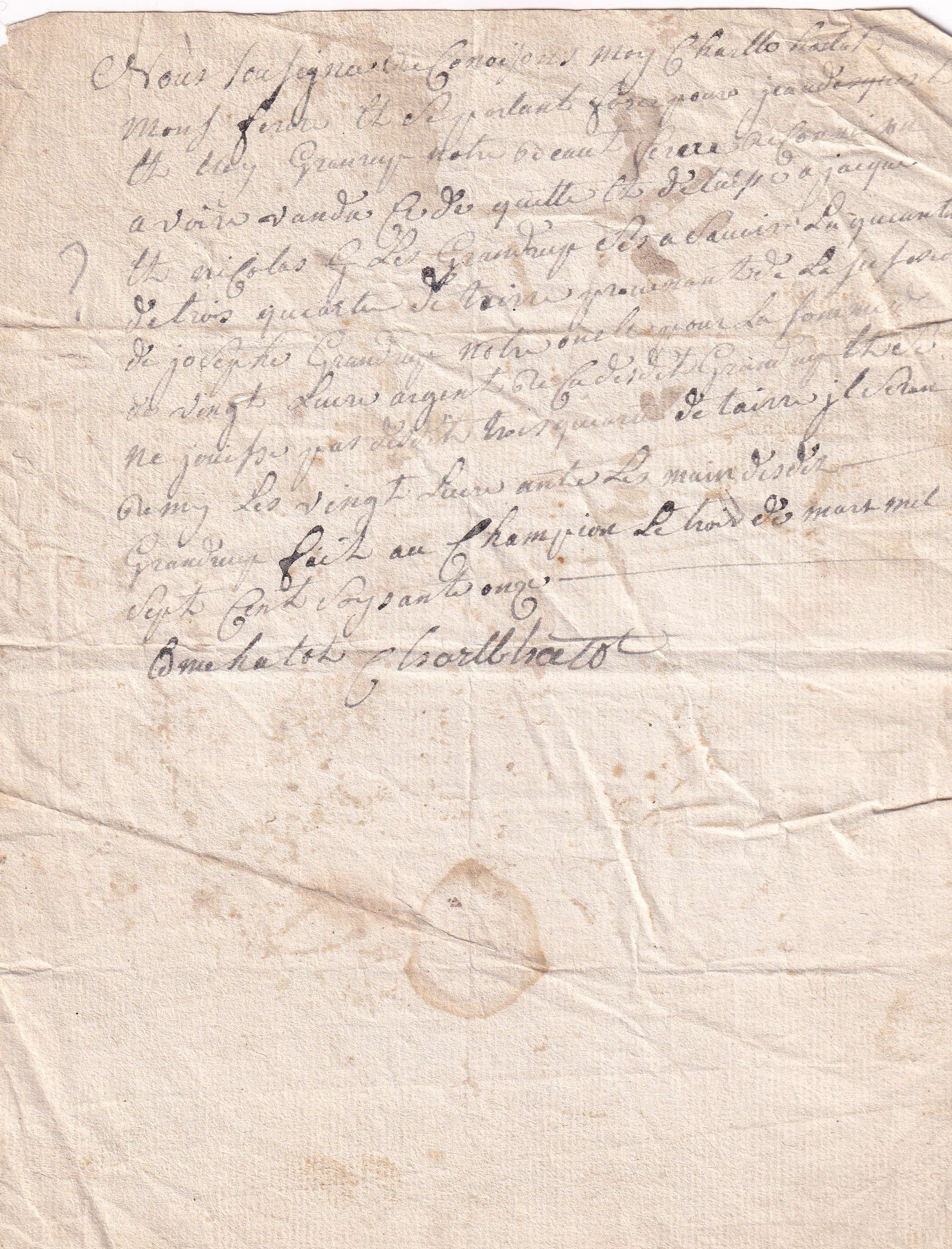
RE-LE-1780-0011
Family matters, health updates, and personal news
France
Personal Correspondence Letters
1780 – 1820
18th Century
19th Century
Transcription (Partial — Legible Sections) “Nous nous portons assez bien grâce à Dieu… Mon frère et ma sœur vous gardent… Ils m’ont chargé de vous écrire… Il y a longtemps que je n’ai reçu de vos nouvelles… Je vous prie de me mander de vos nouvelles…” English Translation (Content Summary) “We are doing fairly well, thanks be to God. My brother and my sister send their regards to you. They have asked me to write to you. It has been a long time since I have received news from you. I ask you kindly to send me word of your situation.” The letter appears to: • Share general well-being of the family • Convey greetings from relatives • Express concern over lack of correspondence • Request news in return • Close with polite customary phrasing
French
This letter reflects the intimate nature of personal correspondence before modern communication. Family networks relied on letters to maintain social bonds across distance. The expressions of religious gratitude (“thanks be to God”) and formal politeness reflect common social conventions of provincial French society. The emphasis on health, news, and familial greetings reveals the emotional importance of maintaining connections in an era when travel was slow and uncertain.
Description
This modest handwritten letter offers a glimpse into the rhythms of everyday family life in pre-modern France. Written in informal cursive, the author communicates updates on family health and conveys greetings from relatives while expressing concern over a prolonged silence in correspondence. Such letters formed the backbone of social communication in rural Europe, where distance and slow travel often separated families for long periods. Religious expressions of gratitude and carefully worded politeness illustrate the cultural norms of the time, while the physical wear of the paper reflects its long journey through generations. Though lacking the grandeur of official documents, this letter provides intimate insight into the personal connections and emotional lives that shaped ordinary historical experience.