
22 – 2.8.24 – Correspondence from “Jewell” (“Hope” / “Doodle”) to Mr. Jesse Redyard (Fort Smith, Arkansas)
Letter
A detailed personal letter from a young woman—likely named Jewell—writing from Haleyville, Alabama to Jesse Redyard, discussing church activities, social tensions, jealousy, and expectations within their developing romantic relationship.
 22 – 2.8.24 – Correspondence from “Jewell” (“Hope” / “Doodle”) to Mr. Jesse Redyard (Fort Smith, Arkansas)
 22 – 2.8.24 – Correspondence from “Jewell” (“Hope” / “Doodle”) to Mr. Jesse Redyard (Fort Smith, Arkansas) – Image 2
 22 – 2.8.24 – Correspondence from “Jewell” (“Hope” / “Doodle”) to Mr. Jesse Redyard (Fort Smith, Arkansas) – Image 3
 22 – 2.8.24 – Correspondence from “Jewell” (“Hope” / “Doodle”) to Mr. Jesse Redyard (Fort Smith, Arkansas) – Image 4
RE-LE-COLLHE-0054
Courtship correspondence; religious life; emotional dynamics; social etiquette
Alabama
Arkansas
United States
North America
Love & Courtship
Feb 8, 1924
20th Century
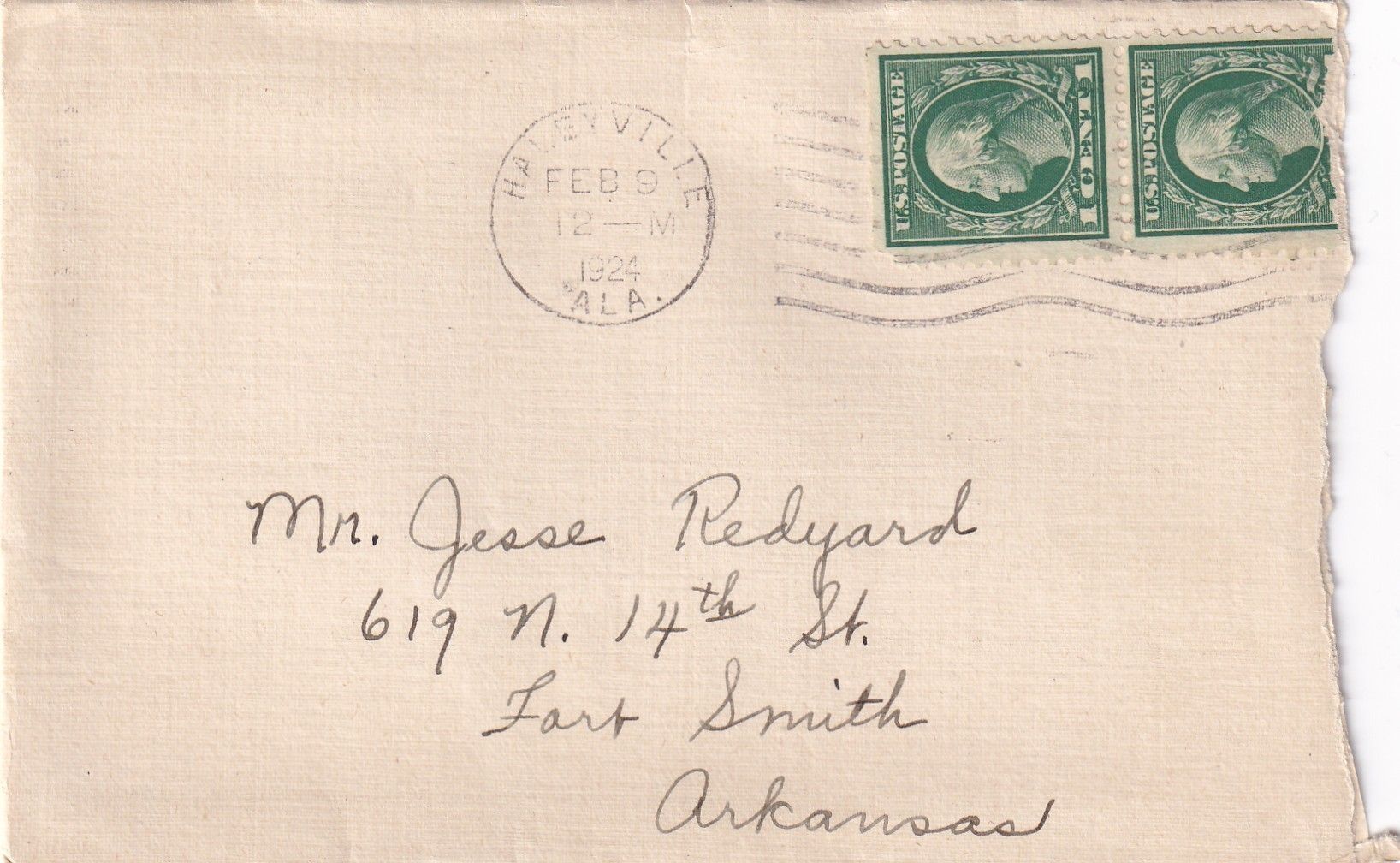
Haleyville, Alabama February 8, 1924 12 M (noon)
Not fully written on this envelope (front cropped), but consistent with earlier: Haleyville, Alabama
Mr. Jesse Redyard 619 N. 14th St. Fort Smith, Arkansas
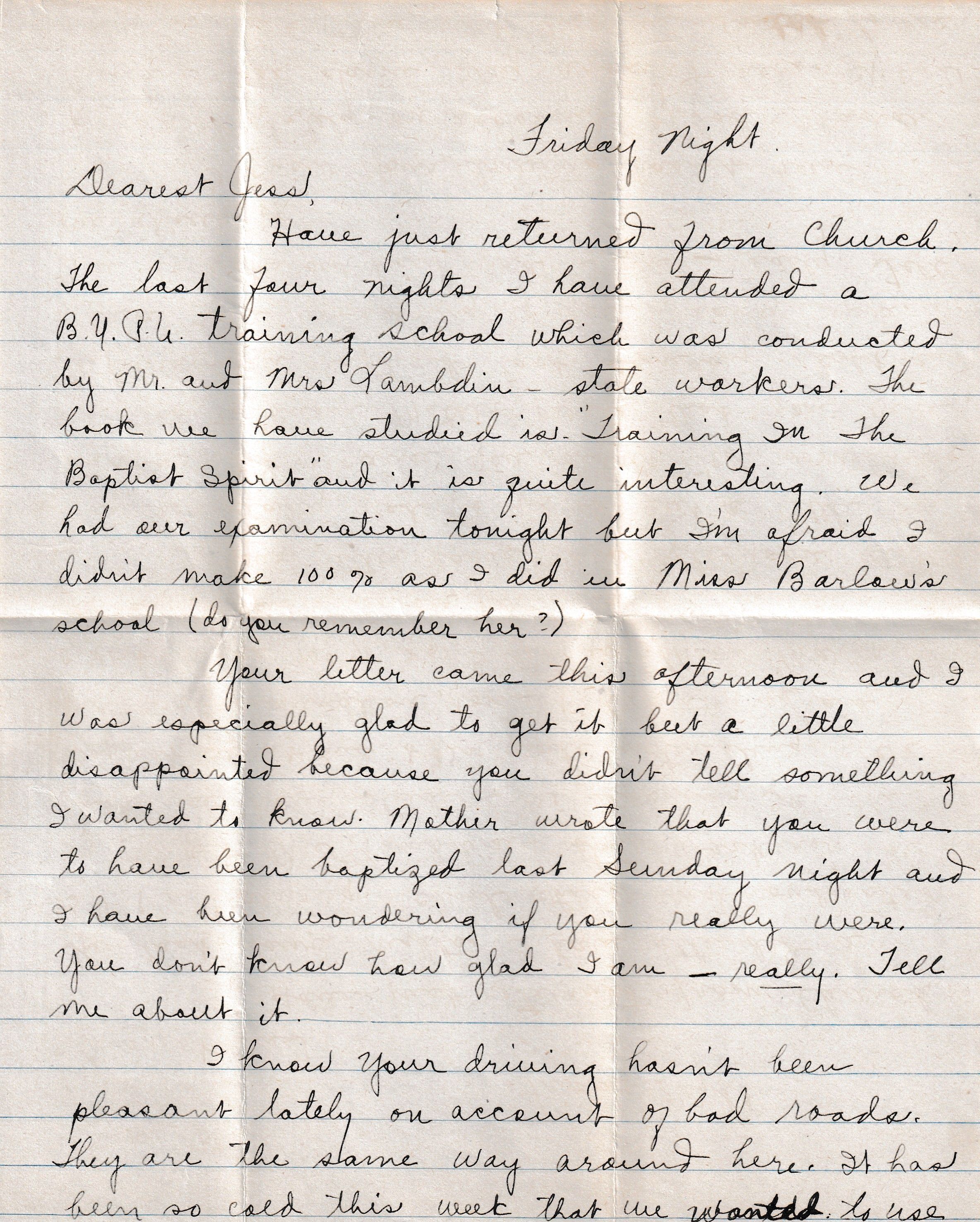
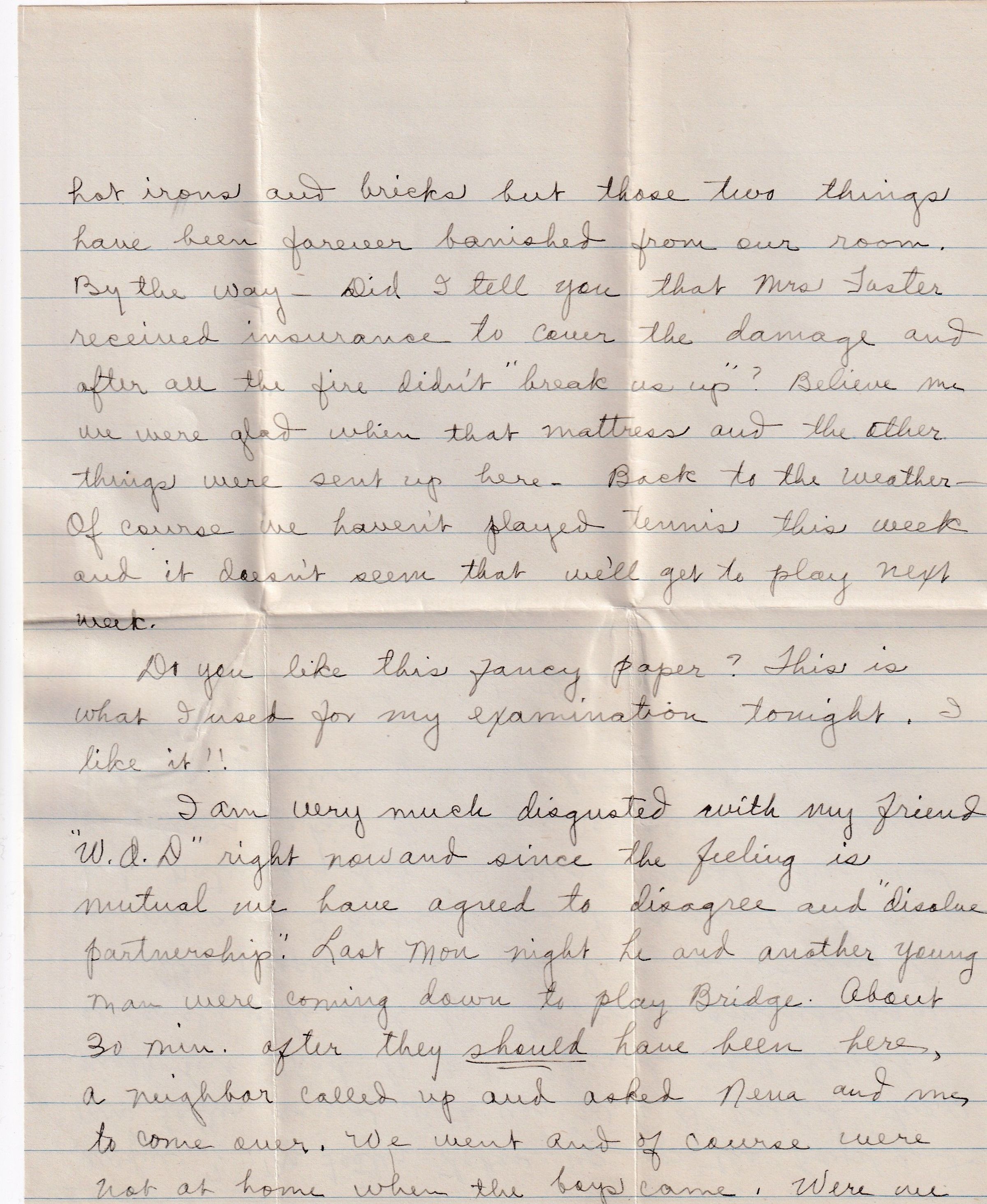
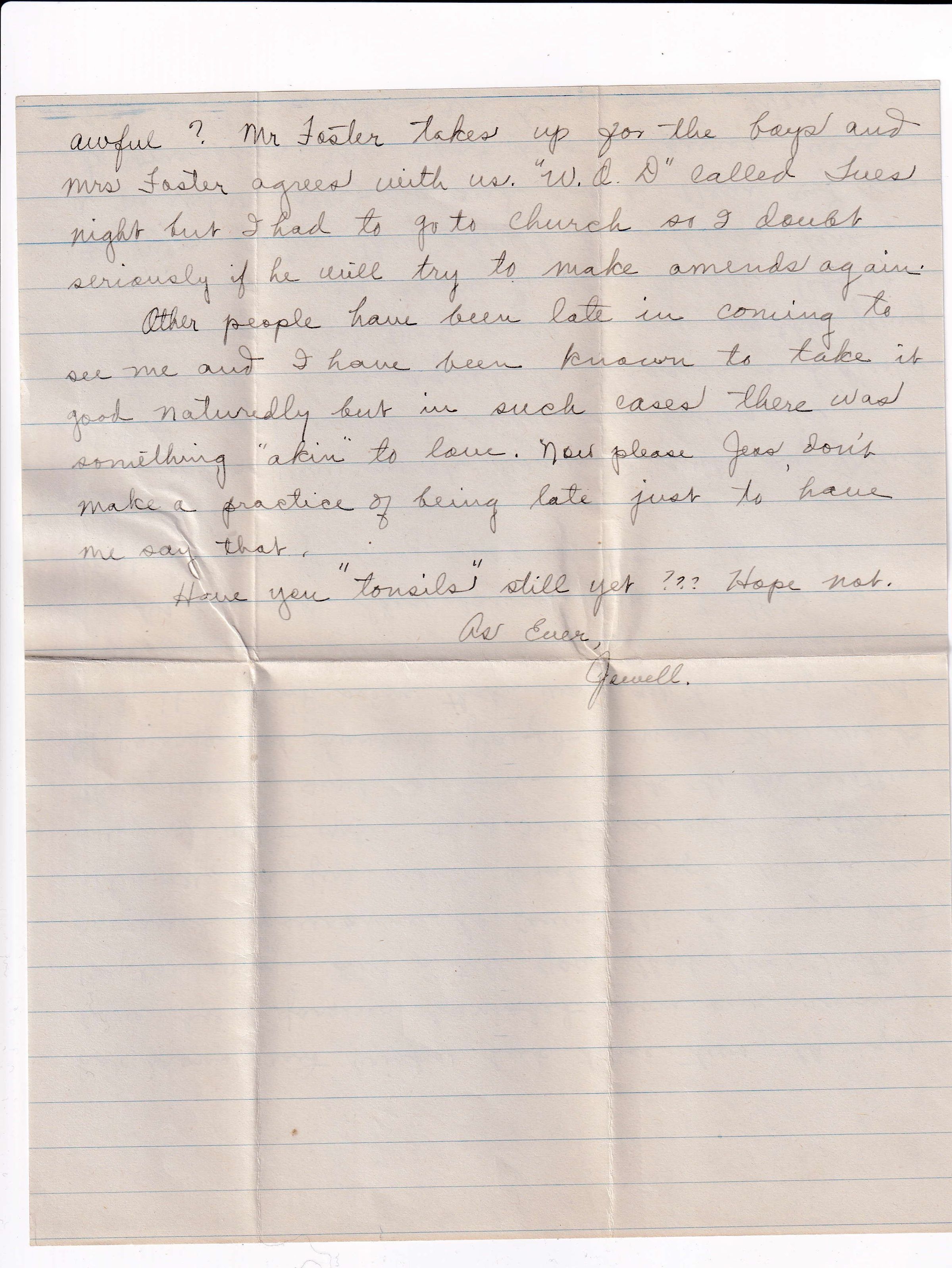
Friday Night. Dearest Jess, Have just returned from Church. The last four nights I have attended a B.Y.P.U. training school which was conducted by Mr. and Mrs. Lambdin – state workers. The book we have studied is “Training in the Baptist Spirit” and it is quite interesting. We had our examination tonight but I’m afraid I didn’t make 100% as I did in Miss Barlow’s school (do you remember her?) Your letter came this afternoon and I was especially glad to get it but a little disappointed because you didn’t tell something I wanted to know. Mother wrote that you were to have been baptized last Sunday night and I have been wondering if you really were. You don’t know how glad I am – really. Tell me about it. I know your driving hasn’t been pleasant lately on account of bad roads. They are the same way around here. It has been so cold this week that we wanted to use hot irons and bricks but those two things have been forever banished from our room. [Page 2] By the way – Did I tell you that Mrs. Foster received insurance to cover the damage and after all the fire didn’t “break us up”? Believe me we were glad when that mattress and the other things were sent up here. Back to the weather – Of course we haven’t played tennis this week and it doesn’t seem that we will get to play next week. Do you like this fancy paper? This is what I used for my examination tonight. I like it!! I am very much disgusted with my friend “W.O.D.” right now and since the feeling is mutual we have agreed to disagree and dissolve “partnership”. Last Mon. night he and another young man were coming down to play Bridge. About 30 min. after they should have been here, a neighbor called up and asked Nena and me to come over. We went and of course were not at home when the boys came. Were we awful? [Page 3] Mr. Foster takes up for the boys and Mrs. Foster agrees with us. “W.O.D.” called Tues night but I had to go to church so I doubt seriously if he will try to make amends again. Other people have been late in coming to see me and I have been known to take it good naturedly but in such cases there was something “akin to love.” Now please Jess don’t make a practice of being late just to have me say that. Have your tonsils still yet?? Hope not. As Ever, Jewell
English
This letter is especially valuable for understanding emotional norms and courtship etiquette in the 1920s: Religious Structure Participation in B.Y.P.U. (Baptist Young People’s Union) indicates structured youth religious education Training programs, exams, and reading material reflect organized moral and intellectual development Courtship Expectations The writer expresses: Emotional investment (“you don’t know how glad I am”) Subtle expectations of behavior (punctuality, attentiveness) Mild jealousy framed as humor but clearly meaningful The phrase: “something ‘akin to love’” is particularly revealing—this signals a recognized emotional hierarchy in relationships Social Norms Visiting etiquette (timeliness, calling, chaperoned interactions) was socially significant Group activities (Bridge, church events, tennis) structured interaction between young men and women
Historical Note
B.Y.P.U. Movement: A major Baptist youth organization promoting discipline, education, and moral conduct—very influential in Southern Protestant communities Health Reference (Tonsils): Tonsil removal was extremely common in this period; asking about them reflects everyday health concerns Material Culture: “Fancy paper” suggests pride in stationery—important in personal correspondence Heated bricks/irons indicate lack of central heating—typical of the era Fire & Insurance Mention: Indicates early 20th-century domestic risk and the growing role of insurance in middle-class life