
05 – 9.6.23 Early Letter from Haleyville – Arrival and First Impressions
Letter
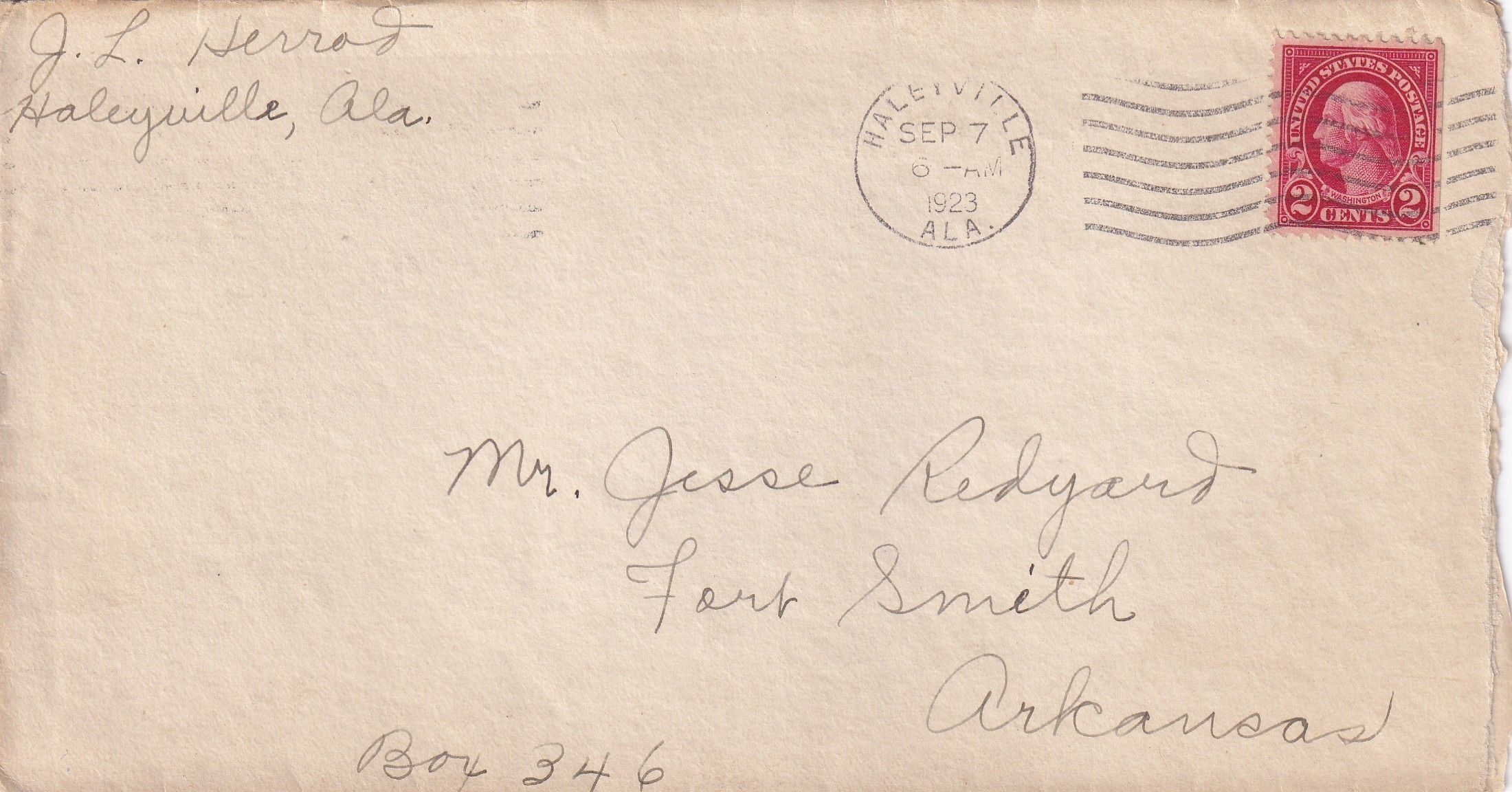
An early letter written shortly after the writer’s arrival in Haleyville, Alabama, describing her new surroundings, teaching position, boarding life, and first impressions of the town and community.
RE-LE-COLLHE-0054
Personal correspondence; relocation; teaching life; community and social life
Alabama
Arkansas
United States
North America
Love & Courtship
Sep 6, 1923
20th Century
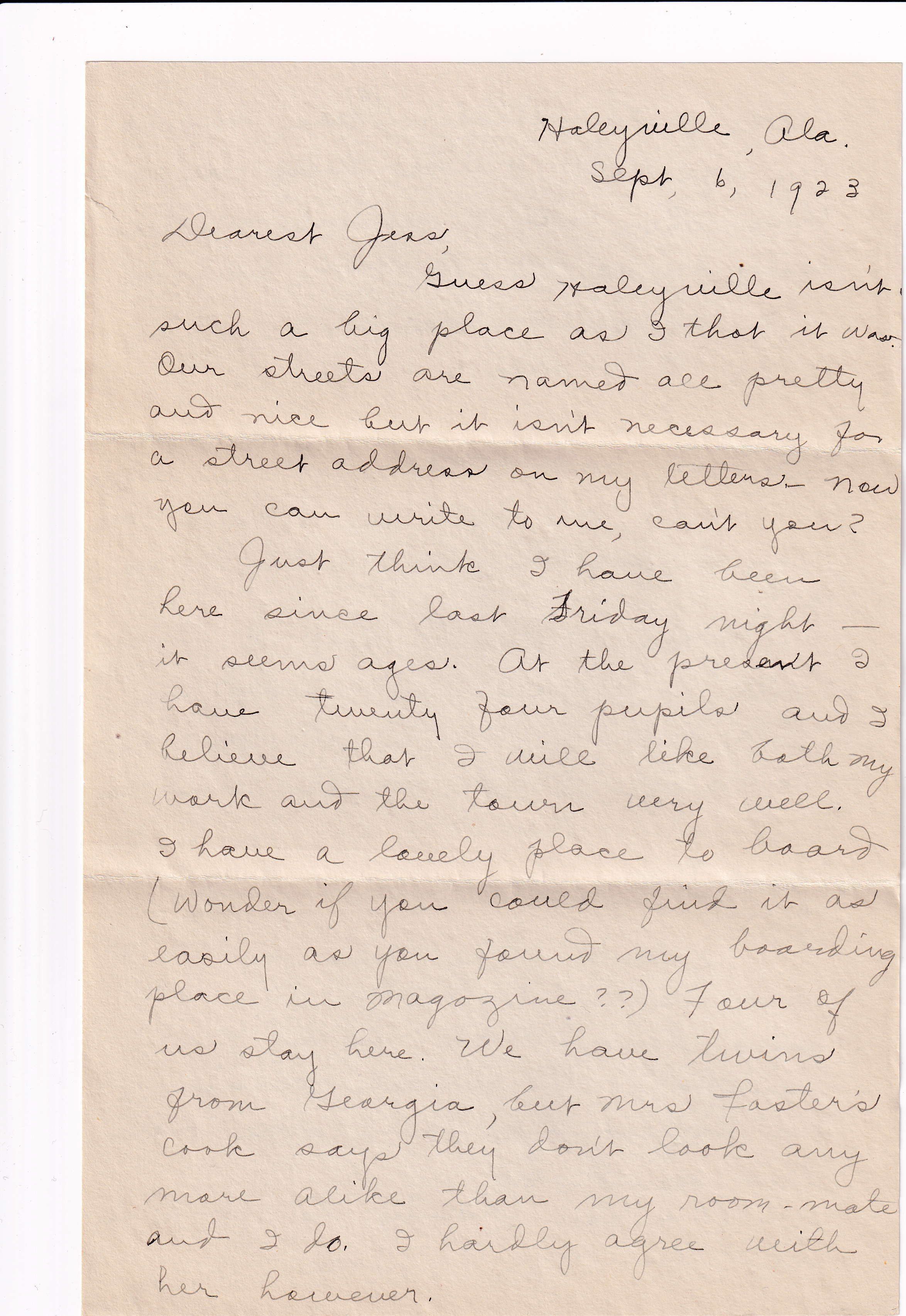
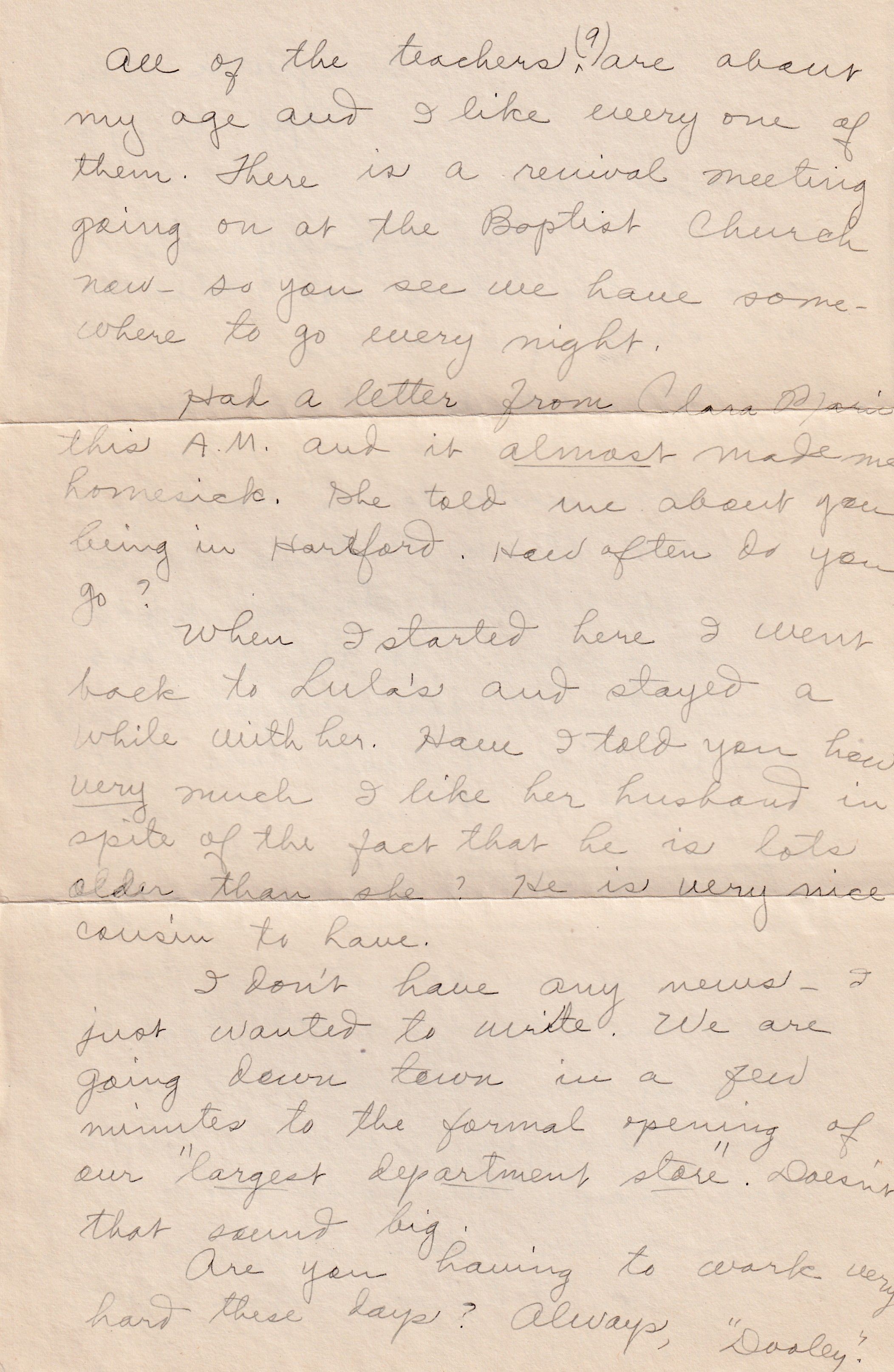
Haleyville, Ala. Sept. 6, 1923 Dearest Jess, Guess Haleyville isn’t such a big place as I thought it was. Our streets are named all pretty and nice but it isn’t necessary for a street address on my letters. Now you can write to me, can’t you? Just think I have been here since last Friday night — it seems ages. At the present I have twenty four pupils and I believe that I will like both my work and the town very well. I have a lovely place to board. (Wonder if you could find it as easily as you found my boarding place in Magazine??) Four of us stay here. We have twins from Georgia, but Miss Foster’s cook says they don’t look any more alike than my room-mate and I do. I hardly agree with her however. All of the teachers are about my age and I like every one of them. There is a revival meeting going on at the Baptist Church now so you see we have somewhere to go every night. Had a letter from Clara Davis this A.M. and it almost made me homesick. She told me about you being in Hartford. How often do you go? When I started here I came back to Lula’s and stayed a while with her. Have I told you how very much I like her husband in spite of the fact that he is lots older than she? He is very nice cousin to have. I don’t have any news. I just wanted to write. We are going down town in a few minutes to the formal opening of our “largest department store.” Doesn’t that sound big. Are you having to work very hard these days? Always, “Dooley”
English
This letter reflects a transitional moment in the life of a young, educated Southern woman—independent yet socially anchored. Her identity is shaped by work, friendship networks, religious participation, and a developing romantic relationship. The tone blends optimism, mild homesickness, and curiosity about her new environment.
Historical Note
This letter is foundational to the collection, capturing the writer’s arrival and adjustment to a new teaching position in Haleyville, Alabama in 1923. Rural Town Life: Haleyville is described as small enough that street addresses are unnecessary, reflecting early 20th-century rural postal practices where residents were widely known to local postmasters. Women in Teaching Roles: The writer joins a cohort of young female teachers, a common demographic in the 1920s. Teaching offered independence but was often tied to temporary postings away from home. Boarding Culture: Her mention of boarding with other women highlights a key aspect of the era—unmarried working women frequently lived in shared boarding houses, forming tight-knit social circles. Religious & Social Life: The revival meeting at the Baptist Church reflects the central role of religion in Southern community life, especially as a primary source of evening social activity. Mobility & Regional Connections: References to Hartford, Arkansas; Magazine; and Haleyville, Alabama illustrate the interconnected nature of Southern towns and the movement of teachers between them. Emerging Consumer Culture: The excitement over the opening of a “largest department store” points to the gradual spread of modern retail culture into smaller towns during the 1920s. Courtship Context: Even in this early letter, the writer maintains a warm, familiar tone with Jesse, suggesting an established relationship already in progress at the start of the collection.