
26 – 4.8.24 Letter from “Dooley” to Jesse Redyard – Homesickness & Teaching Appointment
Letter
A deeply personal letter expressing homesickness, romantic frustration, and uncertainty about the future, including the writer’s acceptance of a teaching position at Mountain Home College.
RE-LE-CALLHE-0054
Personal correspondence; homesickness; courtship; teaching career; social life
Alabama
Arkansas
United States
North America
Love & Courtship
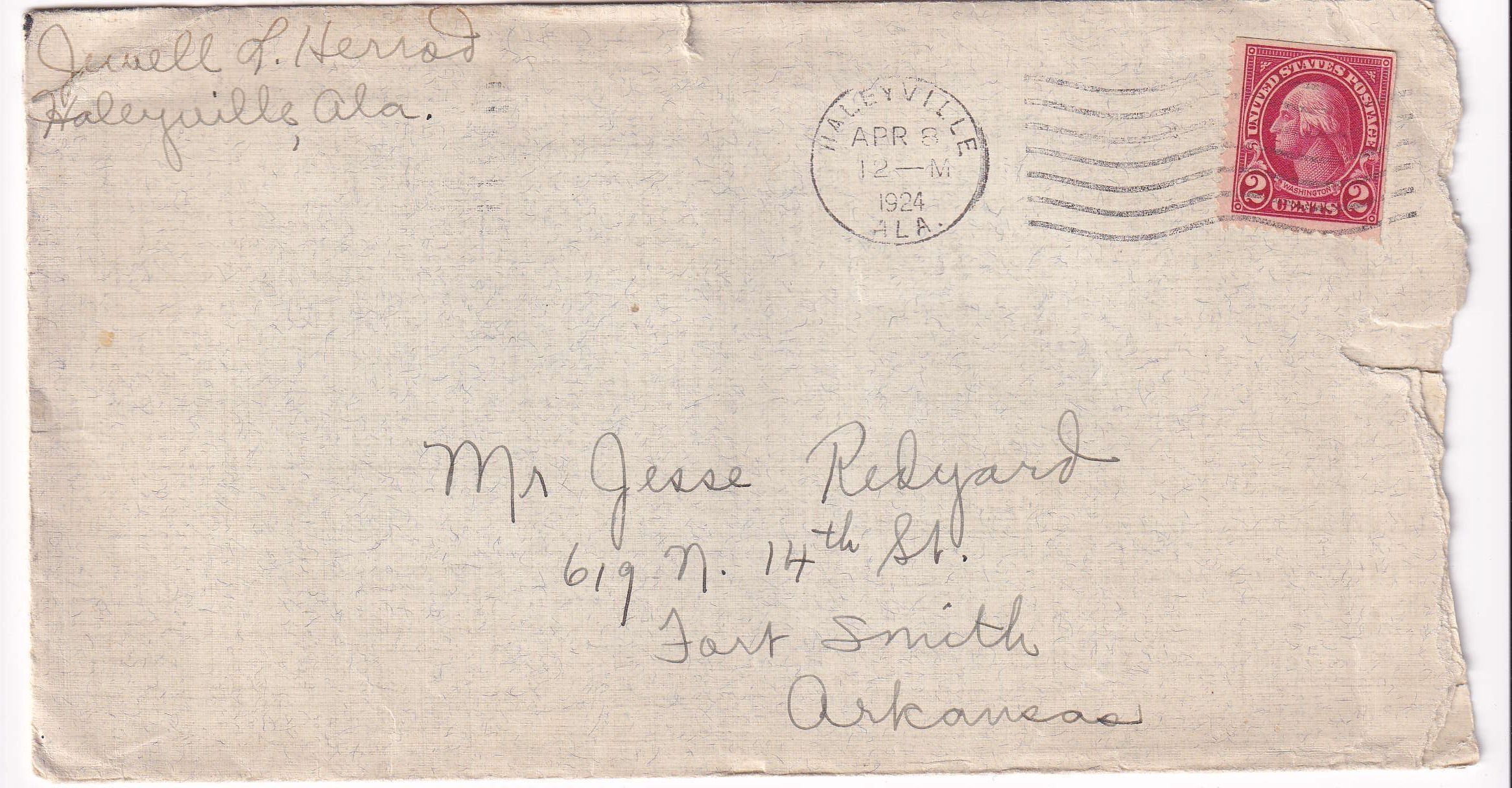
Apr 3, 1924
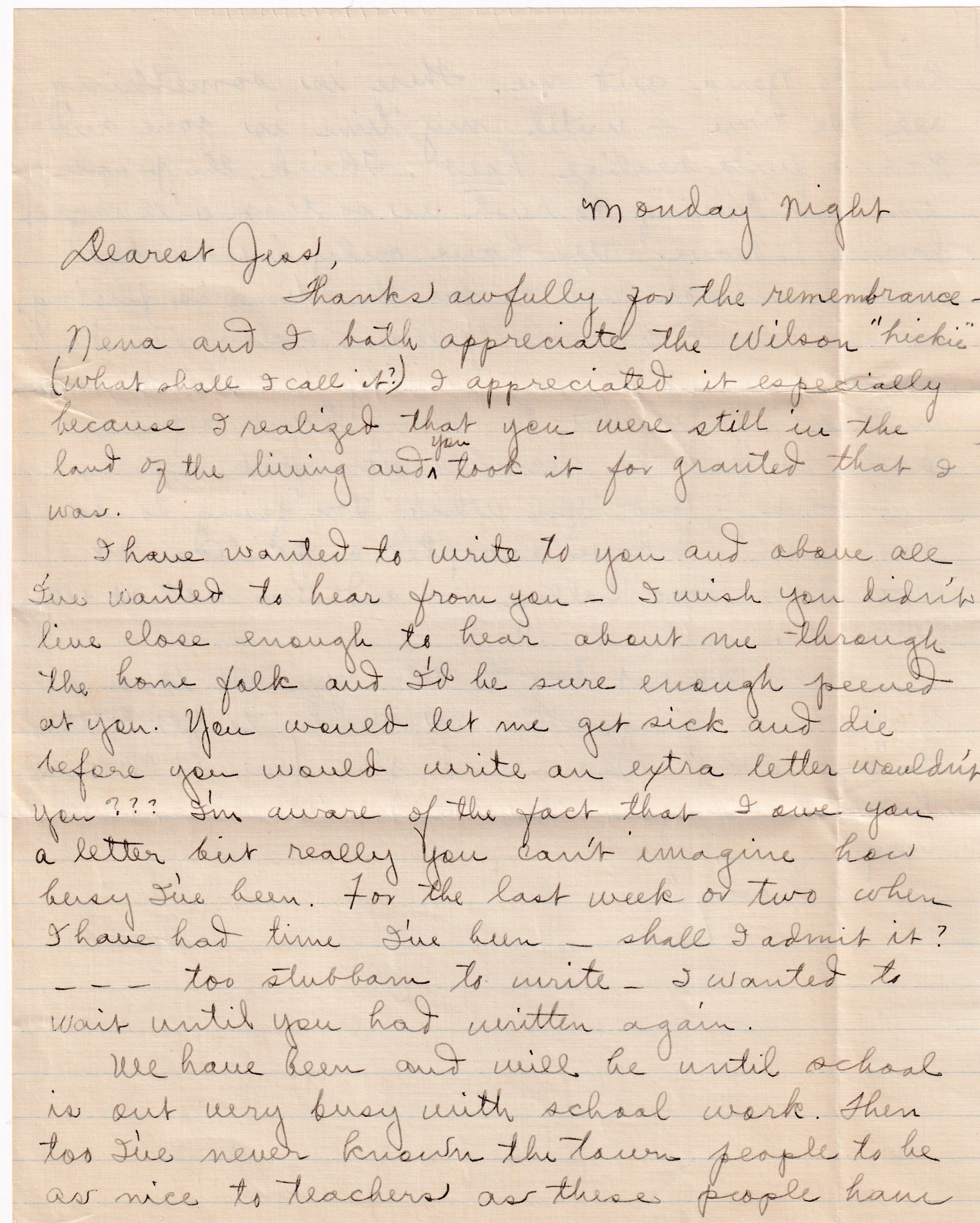
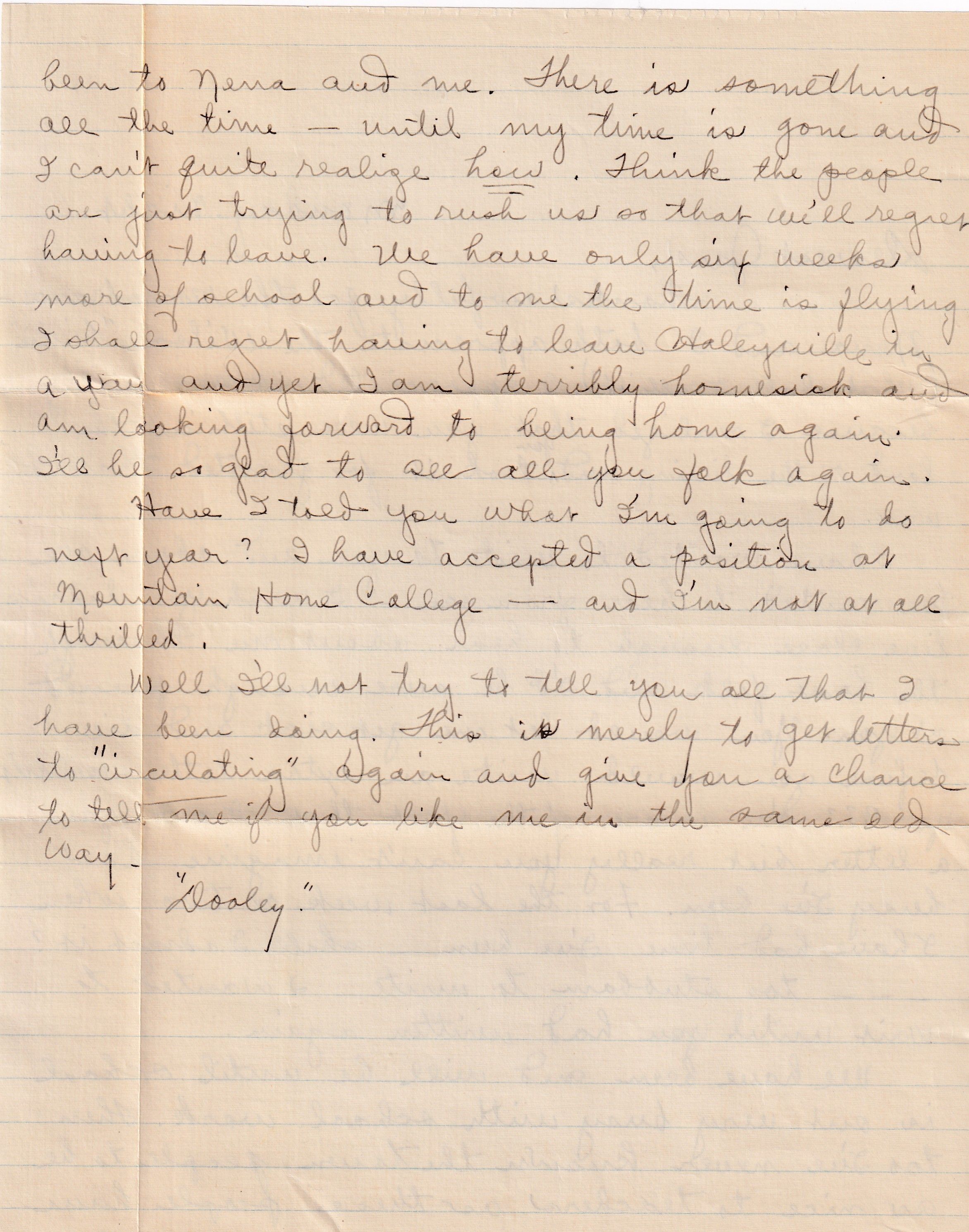
Monday Night Dearest Jess, Thanks awfully for the remembrance. Nena and I both appreciate the Wilson “hickie” (what shall I call it?) I appreciated it especially because I realized that you were still in the land of the living and I took it for granted that I was. I have wanted to write to you and above all I’ve wanted to hear from you — I wish you didn’t live close enough to hear about me through the home folks and I’ll be sure enough peeved at you. You would let me get sick and die before you would write an extra letter wouldn’t you??? I’m aware of the fact that I owe you a letter but really you can’t imagine how busy I’ve been. For the last week or two when I have had time I’ve been — shall I admit it? — too stubborn to write — I wanted to wait until you had written again. We have been and will be until school is out very busy with school work. Then too I’ve never known the town people to be as nice to teachers as these people have been to Nena and me. There is something all the time — until my time is gone and I can’t quite realize how. I think the people are just trying to rush us so that we’ll regret having to leave. We have only six weeks more of school and to me the time is flying. I shall regret having to leave Haleyville in a way and yet I am terribly homesick and am looking forward to being home again. I’ll be so glad to see all you folks again. Have I told you what I’m going to do next year? I have accepted a position at Mountain Home College — and I’m not at all thrilled. Well I’ll not try to tell you all that I have been doing. This is merely to get letters to “circulating” again and give you a chance to tell me if you like me in the same old way. “Dooley”
English
This letter provides a nuanced look at the emotional life of a young, unmarried working woman in the 1920s. The writer balances independence (employment, relocation, social engagement) with strong ties to home and family. Her tone reveals both romantic expectation and frustration, suggesting a relationship that is emotionally significant but not formally defined. Her mention of stubbornness and desire for reciprocation reflects evolving gender norms—women asserting emotional needs while still operating within traditional courtship structures. The communal warmth of Haleyville contrasts with her longing for home, illustrating the transitional identity of mobile young professionals.
Historical Note
Women in Education: Teaching was one of the few socially acceptable professions for unmarried women. Seasonal contracts (school terms) often required relocation, contributing to the kind of homesickness expressed here. Mountain Home College: Likely refers to an institution in or near Mountain Home, Arkansas. Small regional colleges and academies were common stepping stones for educators, though often underfunded and isolating—possibly explaining her lack of enthusiasm. Postal Culture & Communication: Her frustration about not receiving letters highlights how central written correspondence was to maintaining relationships. Delays or silence could carry significant emotional weight. Social Surveillance: Her comment about hearing news “through the home folks” reflects tightly connected community networks where personal matters circulated informally. Courtship Expectations: The playful but pointed accusation (“you would let me get sick and die…”) reflects the expectation that a suitor should maintain consistent communication. Emotional reciprocity was a key marker of interest. Teacher Social Status: Her observation that townspeople are unusually kind to teachers suggests variation in how educators were treated—sometimes respected, sometimes socially restricted. Mobility & Identity: The letter captures a transitional phase—young women leaving home for work but not yet fully independent in identity or social standing. Language & Humor: The reference to a “Wilson hickie” is intriguing—possibly a souvenir, token, or novelty item (perhaps political or regional), showing informal humor and shared references between writer and recipient.