
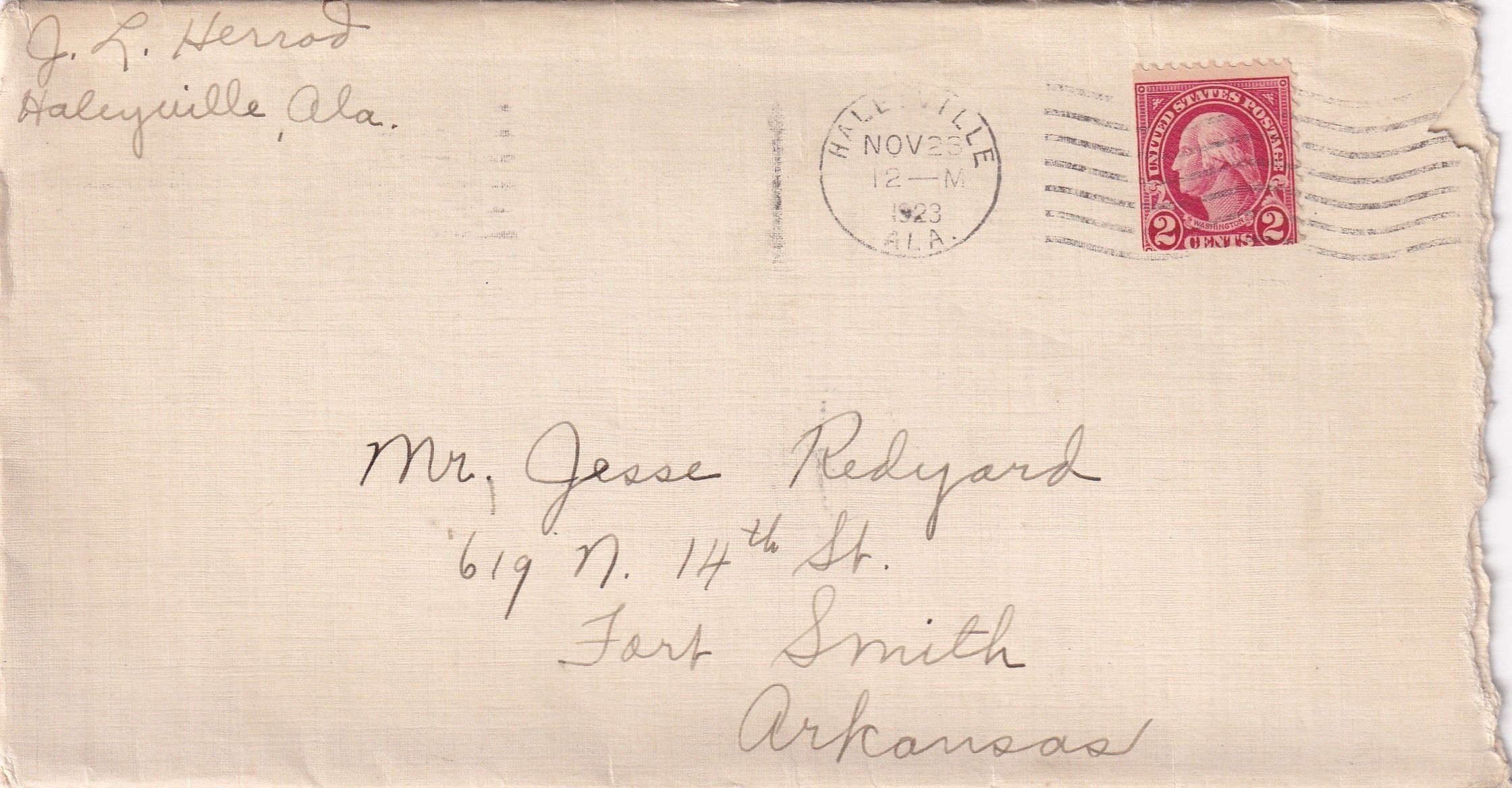
15 – 11.23.23 Letter from “Dooley” to Jesse Redyard
Letter
A reflective and socially rich letter from a young Alabama schoolteacher discussing her newly bobbed hair, family tensions, community events, and regional travel, offering insight into gender norms and everyday life in the early 1920s American South.
RE-LE-CALLHE-0054
Personal correspondence; courtship; changing fashion norms; family relationships; social and community life
Alabama
Arkansas
United States
North America
Love & Courtship
20th Century
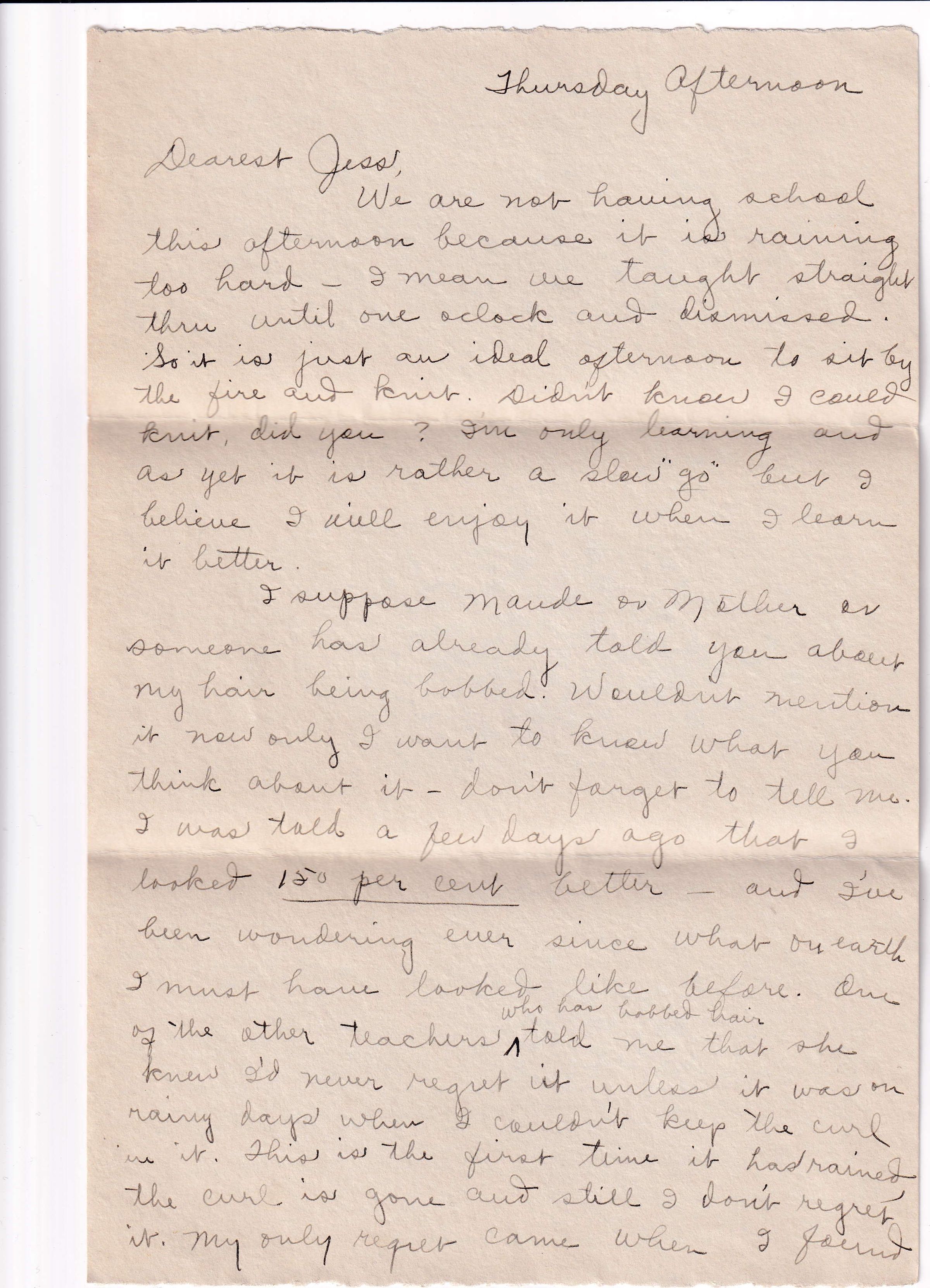
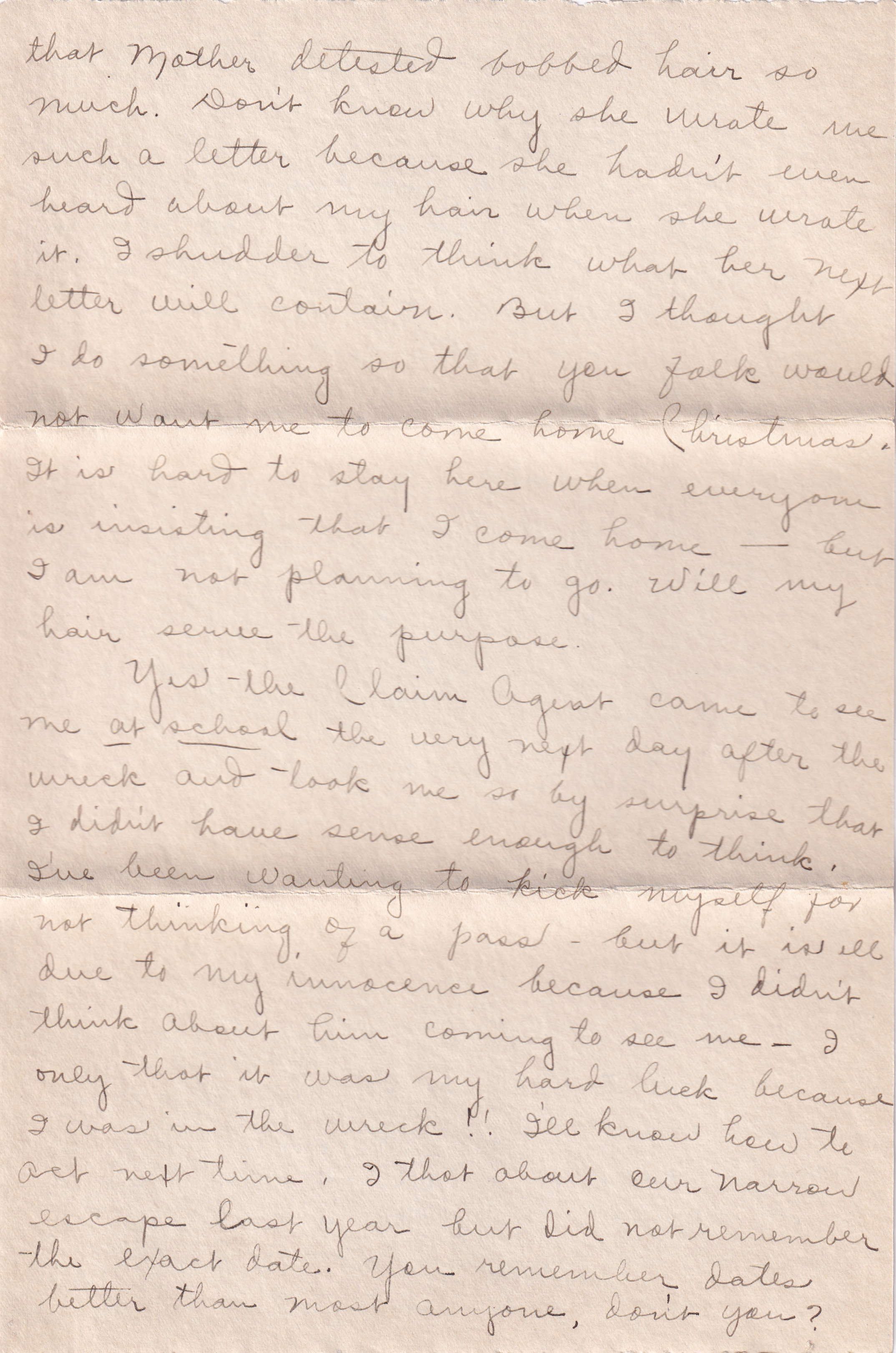
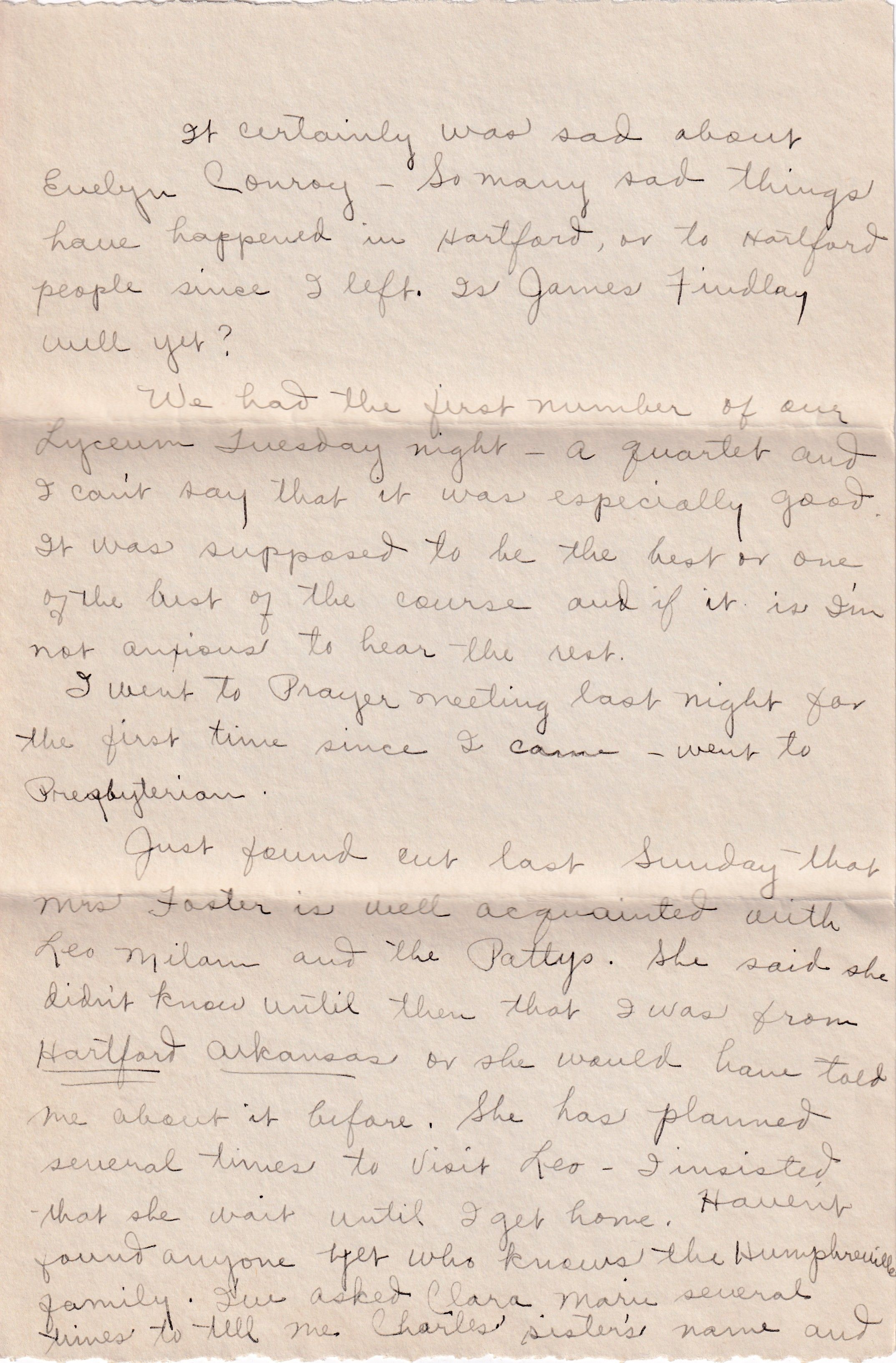
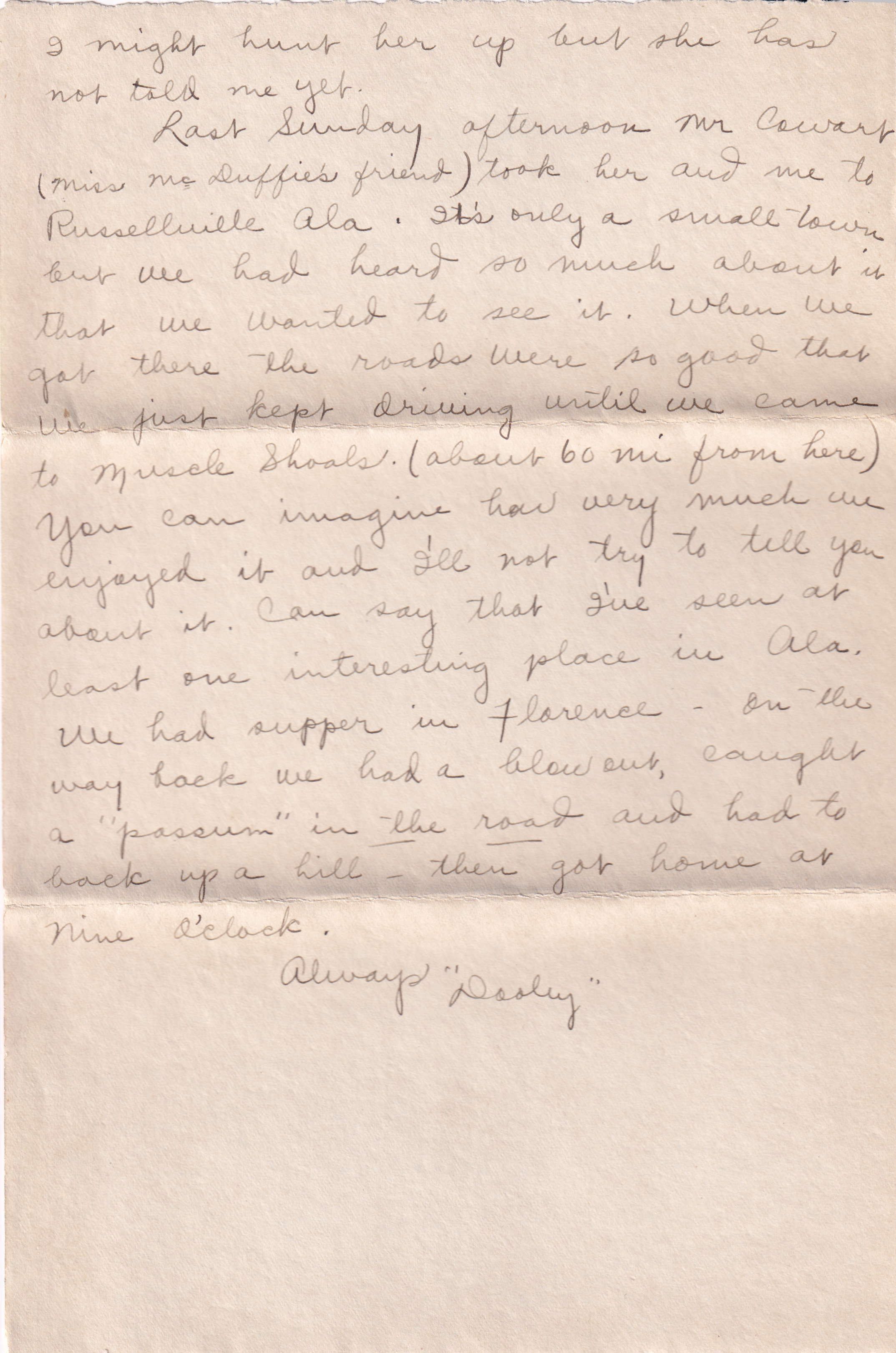
Dearest Jess, We are not having school this afternoon because it is raining too hard — I mean we taught straight thru until one o’clock and dismissed. So it is just an ideal afternoon to sit by the fire and knit. Didn’t know I could knit, did you? I’m only learning and as yet it is rather a slow “go” but I believe I will enjoy it when I learn it better. I suppose Maude or Mother or someone has already told you about my hair being bobbed! Wouldn’t mention it now only I want to know what you think about it — don’t forget to tell me. I was told a few days ago that I looked 150 per cent better — and I’ve been wondering ever since what on earth I must have looked like before. One of the other teachers (who has bobbed hair) told me that she knew I’d never regret it unless it was on rainy days when I couldn’t keep the curl in it. This is the first time it has rained — the curl is gone and still I don’t regret it. My only regret came when I found that Mother detested bobbed hair so much. Don’t know why she wrote me such a letter because she hadn’t even heard about my hair when she wrote it. I shudder to think what her next letter will contain. But I thought I’d do something so that you folks would not want me to come home Christmas. It is hard to stay here when everyone is insisting that I come home — but I am not planning to go. Will my hair serve the purpose. Yes — the Claim Agent came to see me at school the very next day after the wreck and looked me up by surprise that I didn’t have sense enough to think. I’ve been wanting to kick myself for not thinking of a pass — but it is all due to my innocence because I didn’t think about him coming to see me — I only thought it was my hard luck because I was in the wreck! I’ll know how to act next time. I thought about our narrow escape last year but did not remember the exact date. You remember dates better than most anyone, don’t you? It certainly was sad about Evelyn Conroy — so many sad things have happened in Hartford or to Hartford people since I left. Is James Findlay well yet? We had the first number of our Lyceum Tuesday night — a quartet and I can’t say that it was especially good. It was supposed to be the best or one of the best of the course and if it is I’m not anxious to hear the rest. I went to prayer meeting last night for the first time since I came — went to Presbyterian. Just found out last Sunday that Miss Foster is well acquainted with Leo Milam and the Pattys. She said she didn’t know until then that I was from Hartford, Arkansas or she would have told me about it before. She has planned several times to visit Leo — I insisted that she wait until I get home. Haven’t found anyone yet who knows the Humphreys family. I’ve asked Clara Marie several times to tell me Charles’ sister’s name and I might hunt her up but she has not told me yet. Last Sunday afternoon Mr. Cowart (Miss McDuffie’s friend) took her and me to Russellville, Ala. It’s only a small town but we had heard so much about it that we wanted to see it. When we got there the roads were so good that we just kept driving until we came to Muscle Shoals (about 60 mi from here). You can imagine how very much we enjoyed it and I’ll not try to tell you about it. Can say that I’ve seen at least one interesting place in Ala. We had supper in Florence — on the way back we had a blowout, caught a “possum” in the road and had to back up a hill — then got home at nine o’clock. Always, “Dooley”
English
This letter captures a transitional moment in American womanhood during the 1920s. The writer embodies a “New Woman” identity—independent, working as a teacher, socially active, and embracing modern fashion (bobbed hair)—while still navigating traditional expectations from family and community. Her internal conflict about returning home versus maintaining independence reflects broader generational tensions of the era. Social life revolves around church, local outings, and community events, illustrating the close-knit nature of small-town Southern life.
Historical Note
Bobbed Hair as Social Signal: The writer’s haircut is one of the most historically significant elements. Bobbed hair became a defining symbol of the 1920s “flapper” era, often associated with independence, modernity, and rebellion against Victorian norms. Her mother’s strong disapproval reflects the generational divide common at the time. Women and Teaching Careers: Teaching was one of the few respectable professions available to unmarried women. Many, like the writer, lived away from home, contributing to increased autonomy and shifting social roles. Lyceum Circuits: The mention of a “Lyceum” refers to a popular system of traveling educational and entertainment programs (lectures, music, performances) common in small-town America in the late 19th and early 20th centuries. Automobile Culture: The casual road trip to Russellville, Florence, and Muscle Shoals reflects the growing accessibility of automobiles in the 1920s, which began to reshape social life and mobility, even in rural areas. Muscle Shoals Significance: Muscle Shoals, Alabama, was becoming nationally significant in the 1920s due to government projects and hydroelectric development along the Tennessee River. Rail Accidents & Claims: The mention of a “wreck” and a claim agent suggests involvement in a train accident—rail travel was still the dominant long-distance transportation, and accidents were not uncommon. Claim agents were often sent to settle liability issues quickly. Religious Diversity: The writer attends both Presbyterian and references Methodist/Baptist circles in other letters, reflecting the strong but varied Protestant culture of the American South. Social Networks & Migration: Frequent references to Arkansas connections (Hartford, Leo Milam, Pattys, Humphreys family) show how migration for work did not sever social ties—letters maintained tightly woven regional networks.