
16 – 11.29.1923 Thanksgiving Letter with Flowers & Courtship Developments
Letter
A warm and increasingly intimate letter written in November 1923, expressing gratitude for flowers received, discussing social life and work, and revealing growing romantic attachment through invitations and travel planning.
 16 – 11.29.1923 Thanksgiving Letter with Flowers & Courtship Developments
 16 – 11.29.1923 Thanksgiving Letter with Flowers & Courtship Developments – Image 2
 16 – 11.29.1923 Thanksgiving Letter with Flowers & Courtship Developments – Image 3
 16 – 11.29.1923 Thanksgiving Letter with Flowers & Courtship Developments – Image 4
RE-LE-COLLHE-0054
Romantic correspondence; courtship; daily life; social expectations; personal appearance (bobbed hair)
Alabama
United States
Love & Courtship
Nov 29, 1923
20th Century
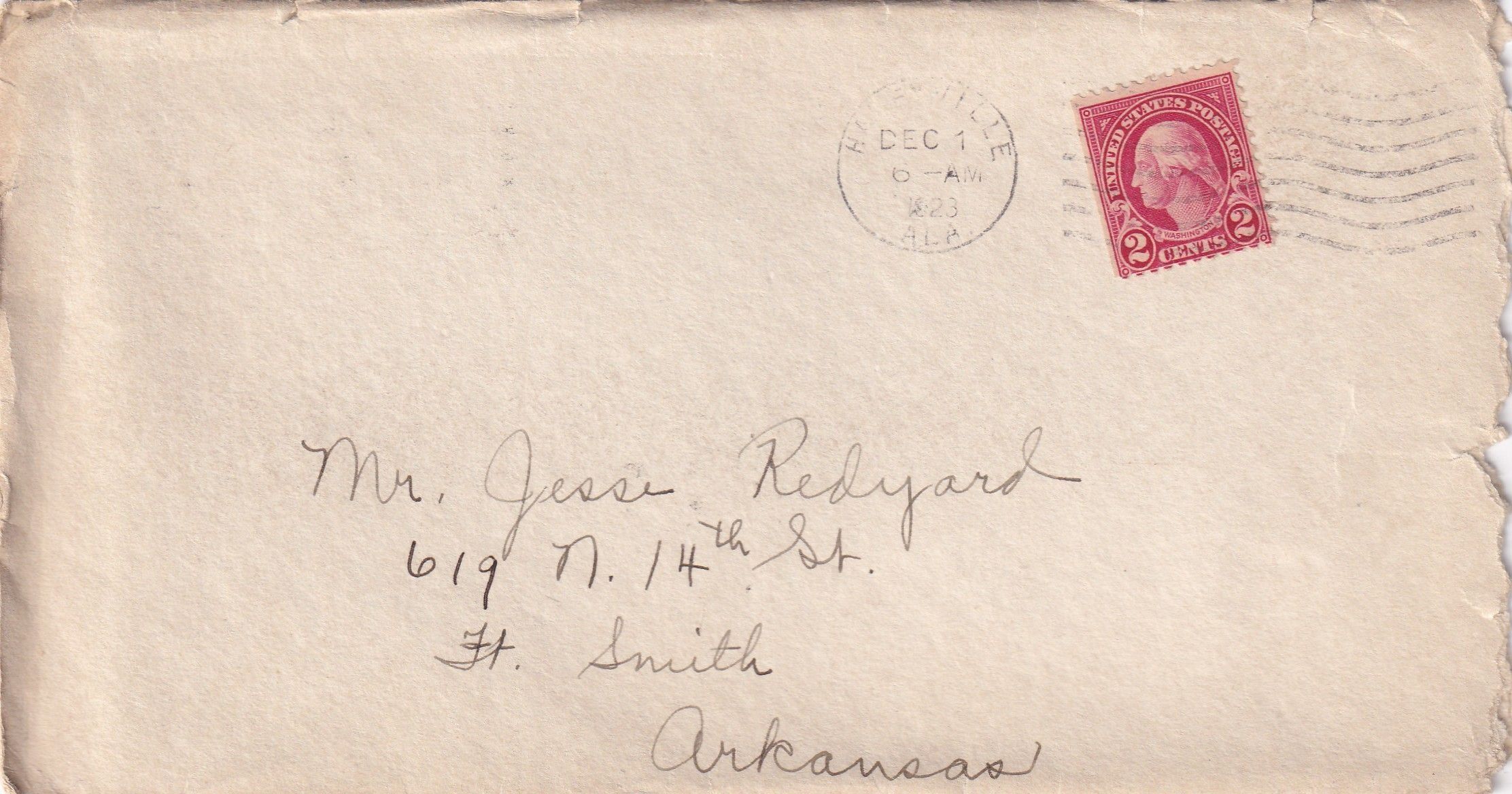
U.S. 2-cent Washington stamp (red) Postmark: Hartford, Arkansas – November 1922 (envelope reused or part of grouped correspondence) Addressed to: Mr. Jesse Redyard, Fort Smith, Arkansas (Note: Envelope appears to be from earlier correspondence within the same collection and may not match the exact letter date—common in preserved letter groupings.)
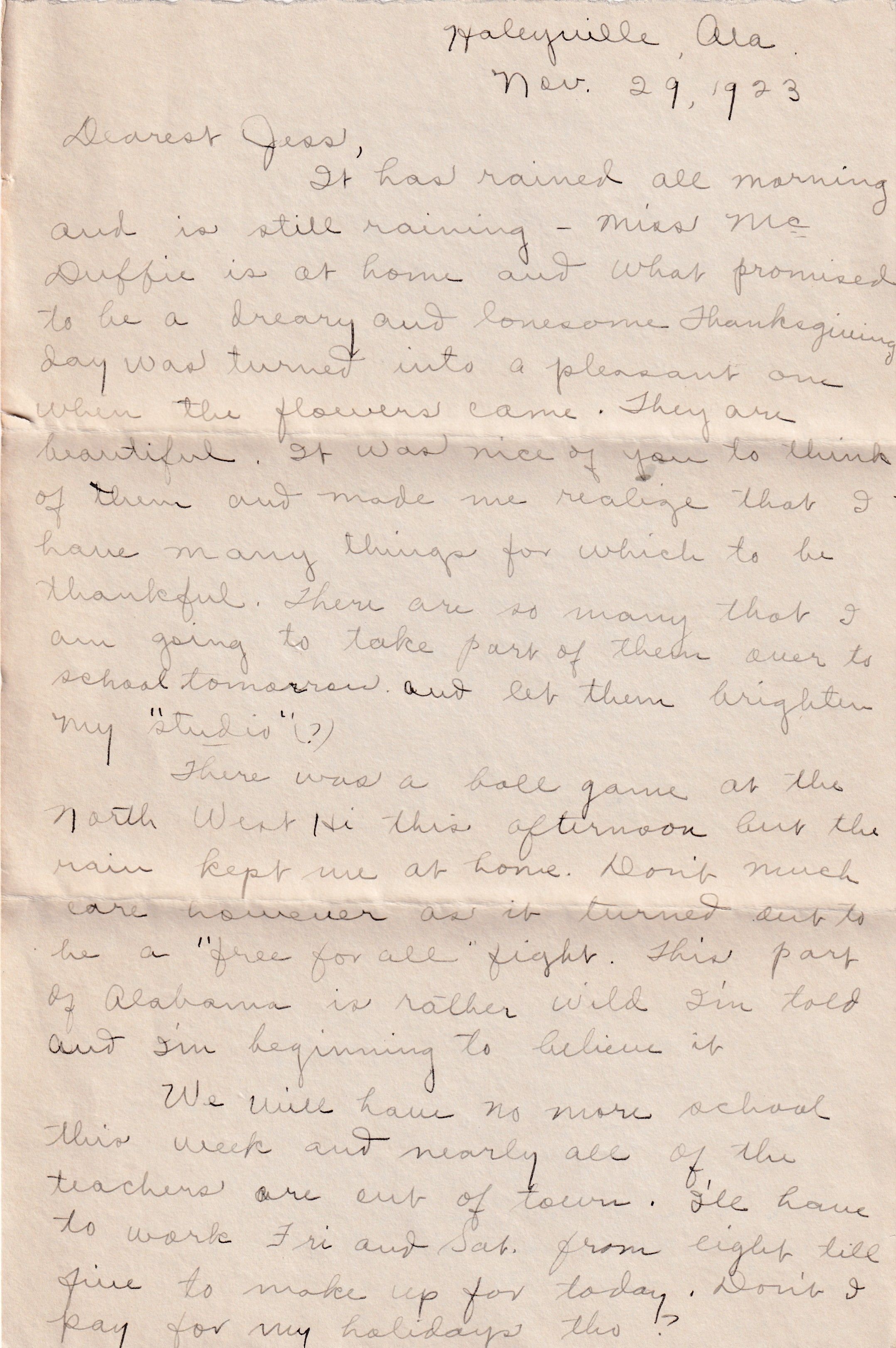
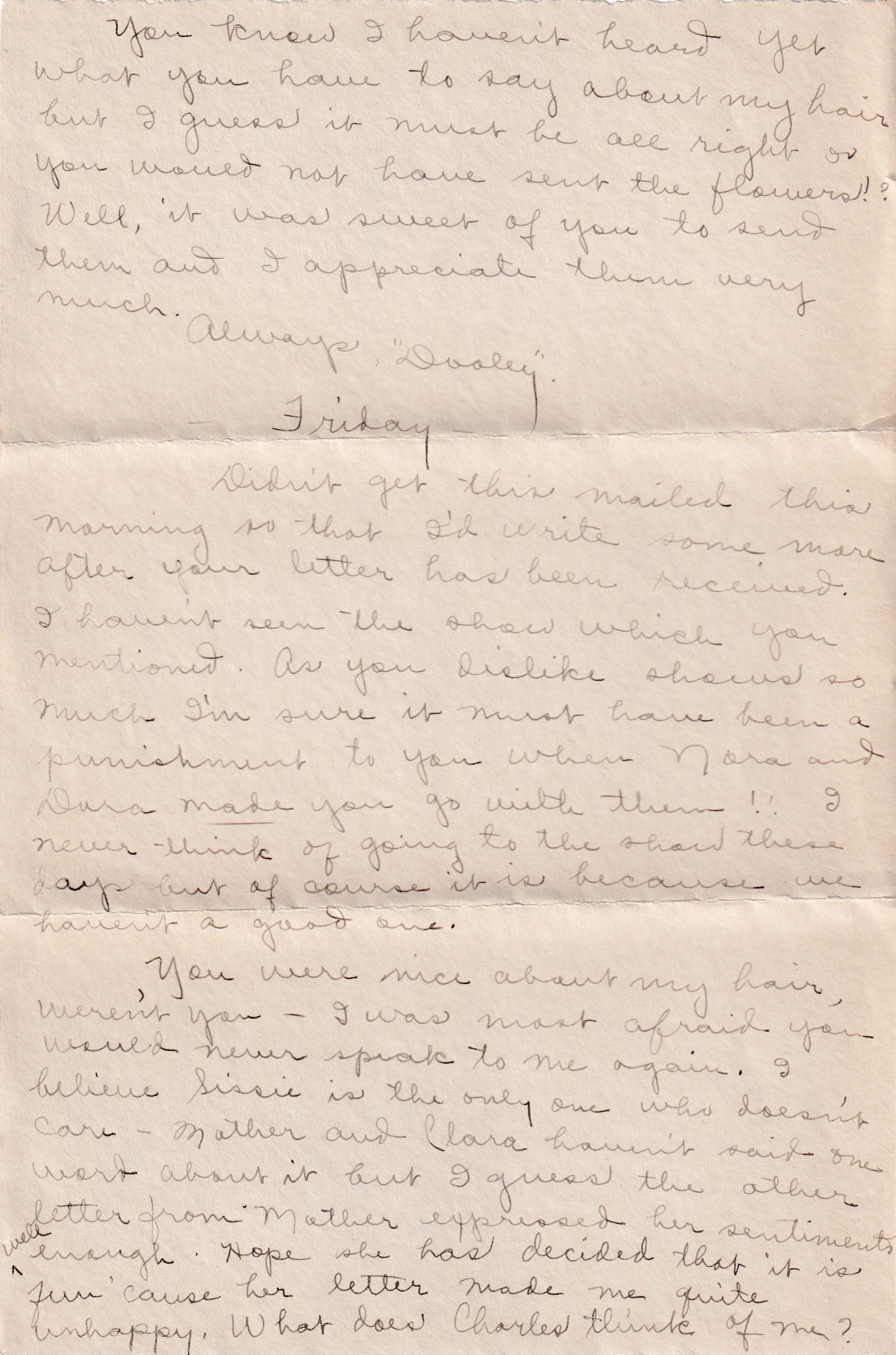
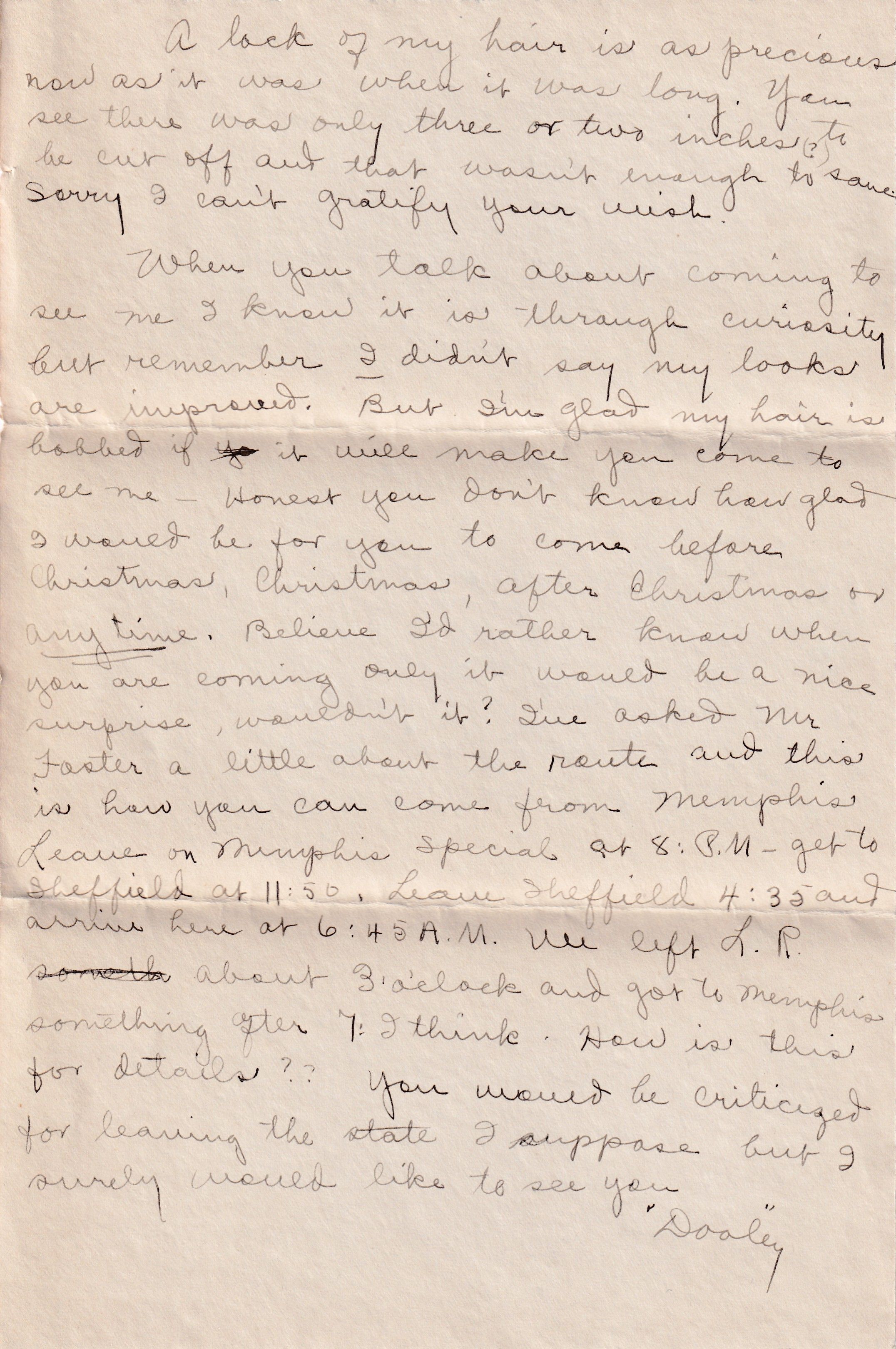
Valleyville, Ala. Nov. 29, 1923 Dearest Jess, It has rained all morning and is still raining. Miss McDuffie is at home and what promised to be a dreary and lonesome Thanksgiving Day was turned into a pleasant one when the flowers came. They are beautiful. It was nice of you to think of them and made me realize that I have many things for which to be thankful. There are so many that I am going to take part of them over to school tomorrow and let them brighten my “studio” (?) There was a ball game at the North West Hi this afternoon but the rain kept me at home. Don’t much care however as it turned out to be a “free for all” fight. This part of Alabama is rather wild I’m told and I’m beginning to believe it. We will have no more school this week and nearly all of the teachers are out of town. I’ll have to work Fri. and Sat. from eight till five to make up for today. Don’t I pay for my holidays tho? You know I haven’t heard yet what you have to say about my hair but I guess it must be all right or you would not have sent the flowers! Well, it was sweet of you to send them and I appreciate them very much. Always, “Dooley” Friday Didn’t get this mailed this morning so that I’ll write some more after your letter has been received. I haven’t seen the show which you mentioned. As you dislike shows so much, I’m sure it must have been a punishment to you when Nora and Dura made you go with them! I never think of going to the show these days but of course it is because we haven’t a good one. You were nice about my hair, weren’t you—I was most afraid you would never speak to me again. I believe Lissie is the only one who doesn’t care—Mother and Clara haven’t said one word about it but I guess the other letter from Mother expressed her sentiments enough. I hope she has decided that it is fine because her letter made me quite unhappy. What does Charles think of me? A lock of my hair is as precious now as it was when it was long. You see there was only three or two inches to be cut off and that wasn’t enough to save. Sorry I can’t gratify your wish. When you talk about coming to see me I know it is through curiosity but remember I didn’t say my looks are improved. But I’m glad my hair is bobbed if it will make you come to see me. Honest you don’t know how glad I would be for you to come before Christmas, Christmas, after Christmas or any time. Believe I’d rather know when you are coming only it would be a nice surprise, wouldn’t it? I’ve asked Mr. Foster a little about the route and this is how you can come from Memphis: leave on Memphis Special at 8 P.M., get to Sheffield at 11:50, leave Sheffield at 1:35 and arrive here at 6:45 A.M. We left here about 3 o’clock and got to Memphis something after 7 I think. Now is this for details?? You wouldn’t be criticized for leaving the state I suppose but I surely would like to see you. “Dooley”
English
This letter provides a rich glimpse into the lived experience of a young woman in the rural American South during the early 1920s. It reflects: Emerging modern femininity: The adoption of bobbed hair signals alignment with flapper-era independence and shifting gender norms. Social constraints and family influence: The writer expresses concern over her mother’s disapproval, highlighting generational tensions. Rural community life: References to local schools, church, and community events illustrate a tightly knit social structure. Courtship customs: Gift-giving (flowers), letter writing, and planned visits via rail represent standard romantic practices of the period. Mobility and infrastructure: Detailed train routes emphasize reliance on rail travel for maintaining relationships across distances.
Historical Note
Historical Notes Bobbed Hair (1920s): A defining symbol of the Roaring Twenties, often associated with rebellion, youth culture, and women’s growing independence. It could provoke strong reactions, especially in conservative or rural communities. Teaching Profession: Young unmarried women commonly worked as teachers, often living semi-independently but under social scrutiny. Rail Travel: The “Memphis Special” and connecting routes reflect early 20th-century passenger rail networks linking Southern towns. Thanksgiving Context: The emotional emphasis on flowers suggests the importance of symbolic gestures in long-distance relationships.